
The way people buy jewellery in India has changed significantly. Before visiting a showroom or making a purchase, most customers now compare brands, read reviews, check certifications, and research products online. As a result, SEO for Jewellery Brands in India has become essential for improving visibility and attracting customers who are actively searching for jewellery. Brands that appear prominently in search results are more likely to earn customer trust and become part of the buying journey.
The opportunity is substantial. India's jewellery market was valued at $95 billion in 2025 and is projected to reach $151 billion by 2034, with many buyers comparing three or more brands before making a purchase. A well-planned SEO strategy helps jewellery businesses increase search visibility, build customer trust, generate qualified traffic, and drive long-term organic growth in an increasingly competitive market. This guide covers the key SEO strategies that can help jewellery brands strengthen their online presence and attract more potential customers.
Why SEO Is Essential for Jewellery Brands in India
India has one of the world's largest and most competitive jewellery markets, where businesses compete not only on craftsmanship and pricing but also on online visibility. A well-designed website alone is no longer enough. Today's buyers compare designs, prices, certifications, customer reviews, and brand reputation online before making a purchase. If your brand doesn't appear in these searches, potential customers are likely to choose a competitor that does.
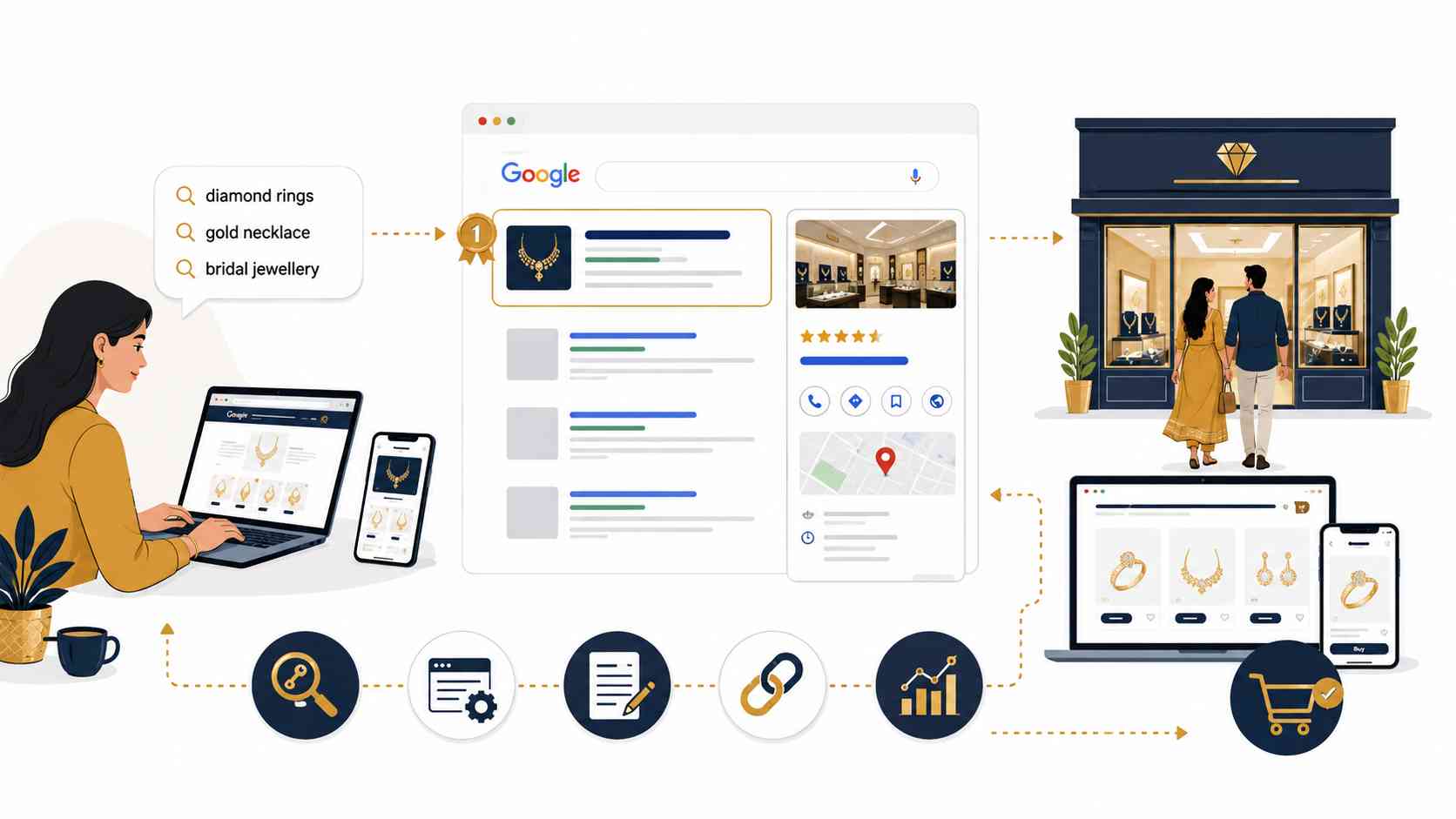
An effective SEO strategy helps your website stay visible throughout the customer's buying journey, from initial research to the final purchase. It also improves local visibility for searches such as "bridal jewellery store near me" or "diamond jeweller in Mumbai," helping attract nearby customers to your showroom. Unlike paid advertising, SEO continues to generate qualified traffic over time through optimized product pages, category pages, and valuable content.
For example: A jewellery store in Jaipur optimizing for "Kundan bridal jewellery in Jaipur" and maintaining an updated Google Business Profile can attract more online visitors, increase showroom footfall, and generate more qualified leads.
Benefits of SEO for Jewellery Brands in India
A successful SEO strategy delivers measurable business outcomes that extend far beyond higher Google rankings. It helps jewellery brands attract customers with genuine buying intent, improve engagement, strengthen credibility, and generate sustainable revenue growth over time. Unlike short-term advertising campaigns, SEO builds long-lasting digital assets that continue producing results long after they are published.
1. Increase Visibility Among High-Intent Buyers
Search engines connect businesses with customers who are actively looking for specific products or services. Someone searching for "buy solitaire engagement ring online", "22K gold necklace for wedding", or "925 sterling silver jewellery" is much closer to making a purchase than someone casually browsing social media. Ranking for these searches allows your brand to reach customers at the exact moment they are evaluating their options, increasing the likelihood of enquiries, showroom visits, or online purchases.
2. Reduce Customer Acquisition Costs Over Time
Acquiring customers through paid advertising can become increasingly expensive, particularly in highly competitive industries such as jewellery. Depending on the product category and competition, customer acquisition costs (CAC) can range between ₹1,500 and ₹20,000 per conversion. SEO helps reduce this dependency by generating consistent organic traffic from users who are already searching for your products. While SEO requires time and ongoing optimization, the long-term cost per acquisition is often significantly lower than continuously investing in paid campaigns.
3. Improve Organic Revenue and Website Performance
Well-planned SEO campaigns do more than increase website traffic. They improve the quality of visitors arriving on your website. Optimized product pages, better keyword targeting, faster loading speeds, and improved user experience encourage visitors to spend more time browsing products and completing purchases. Several jewellery SEO case studies have reported up to a 108% increase in organic revenue alongside a 33.5% improvement in revenue per session within a 90-day optimization period. Although results vary depending on competition and website quality, these figures demonstrate how strategic SEO improvements can directly influence business growth.
4. Attract Higher-Quality Organic Traffic
Traffic alone is not a reliable measure of success. What matters is attracting visitors who are genuinely interested in your products and services. Effective SEO for jewellery websites focuses on matching content with user intent, ensuring visitors arrive through highly relevant searches rather than broad, low-converting keywords. Technical improvements and content optimization have also been shown to produce an average 72% increase in organic traffic, while increasing average session duration by approximately 40%. Longer engagement often indicates that users are finding valuable information and are more likely to continue through the buying journey.
5. Strengthen Brand Trust and Authority
Jewellery is a high-value purchase where trust plays a major role in every buying decision. Customers want reassurance about product quality, certifications, pricing transparency, and the reputation of the business they are buying from. SEO supports this trust-building process by helping brands publish educational resources, buying guides, certification information, jewellery care tips, and detailed product descriptions. As your website consistently answers customer questions and appears across multiple relevant searches, it gradually becomes a trusted source of information for both users and search engines.
Understanding Search Intent for Jewellery Buyers
One of the biggest reasons jewellery websites struggle to rank is failing to match content with user search intent. Not every visitor is ready to buy immediately. Some are comparing brands, researching materials, or learning about certifications before making a purchase. Understanding these different stages helps you create relevant content that answers customer questions, builds trust, and naturally guides potential buyers toward a purchase.
1. Commercial Intent: Helping Buyers Compare Before They Decide
Commercial intent refers to searches made by users who have already decided to purchase jewellery but are still evaluating different brands, products, or price ranges before making their final decision. These customers are looking for confidence rather than persuasion.
Examples include:
- Best bridal jewellery brands in India
- Best lab-grown diamond jewellery
- Diamond ring price comparison
- Best gold jewellery website in India
- Hallmarked gold jewellery brands
These users look for comparison guides, customer reviews, certifications, pricing details, and evidence of product quality before making a decision. Creating collection pages, buying guides, and comparison content helps build trust while targeting emerging search trends such as lab-grown diamonds, anti-tarnish jewellery, oxidized silver, 925 sterling silver, and demi-fine gold jewellery, allowing brands to capture valuable organic traffic as demand continues to grow.
2. Transactional Intent: Turning Purchase Intent into Sales
Transactional searches come from customers who are ready to buy a product or visit a jewellery showroom. These keywords usually deliver the highest commercial value because the buying decision is already close to being made.
Examples include:
- Buy diamond earrings online
- Gold mangalsutra under ₹50,000
- Silver bracelet for women
- Wedding jewellery set online
- Jewellery store near me
Visitors searching with transactional intent expect a fast, secure, and trustworthy shopping experience. Product pages should include detailed specifications, hallmark and certification information, high-quality images, transparent pricing, delivery and return policies, and secure payment options. While strong rankings bring potential customers to your website, a seamless buying experience is what ultimately turns those visitors into buyers.
3. Informational Intent: Building Trust Before Customers Are Ready to Buy
Many jewellery buyers begin their journey by asking questions rather than searching for products. These informational searches may not generate immediate sales, but they play an important role in influencing future purchasing decisions.
Examples include:
- How to identify real gold
- Difference between 18K and 22K gold
- Is lab-grown diamond worth buying?
- How to clean silver jewellery
- Which diamond cut is best?
Publishing accurate and easy-to-understand content helps position your brand as a trusted source of information, reducing customer uncertainty and building confidence throughout the buying journey. Since jewellery is a high-value purchase, customers often research extensively before making a decision, and brands that consistently provide helpful content are more likely to earn their trust while improving long-term search visibility.
Keyword Strategy for Jewellery SEO
A strong keyword strategy is the foundation of successful Jewellery SEO, helping your website attract qualified visitors who are actively searching for your products. Instead of focusing only on broad, competitive keywords like "gold jewellery" or "diamond rings," target a mix of category, product-specific, local, and informational keywords. Optimizing your product pages, collections, blogs, and location pages around these search terms strengthens topical authority, improves search visibility, and attracts customers at every stage of the buying journey.
1. Target Long-Tail Keywords to Capture Qualified Traffic
Long-tail keywords are longer and more specific search phrases that generally have lower competition but much stronger purchase intent. Although they may generate fewer searches individually, they often produce higher conversion rates because they closely match what customers are looking for.
Examples include:
- Buy certified diamond rings online in India
- 22K gold bridal necklace under ₹2 lakh
- Hallmarked gold bangles for wedding
- 925 sterling silver jewellery for women
- Lab-grown diamond engagement rings India
These keywords help attract visitors who already know what they want, making them more likely to enquire, visit your showroom, or complete a purchase.
When selecting long-tail keywords, consider factors such as product type, material, occasion, price range, location, and buyer preferences. Combining these elements allows you to target highly relevant searches while reducing competition from broader industry terms.
2. Build Category and Collection Pages Around High-Value Keywords
Category and collection pages often generate significantly more organic traffic than individual product pages because they target broader searches with higher monthly search volume. Rather than creating generic category pages, organize your collections around how customers actually search for jewellery. Separate pages for engagement rings, bridal jewellery, daily wear gold chains, diamond pendants, temple jewellery, silver bracelets, and gemstone collections make it easier for both users and search engines to understand your website.
Each collection page should include a unique introduction, optimized headings, descriptive content, internal links, FAQs, and properly structured metadata. Avoid relying solely on product listings, as search engines require contextual information to understand the page's relevance. Well-optimized category pages also support future growth by allowing new products to be added without creating duplicate or competing pages.
3. Create Seasonal and Festival Content That Matches Search Demand
Jewellery purchases in India are closely linked to cultural events, festivals, and wedding seasons. Search behaviour changes throughout the year as consumers look for products suited to specific occasions.
Publishing seasonal content allows jewellery brands to capture these recurring search opportunities before demand reaches its peak.
Examples include:
- Akshaya Tritiya gold jewellery buying guide
- Diwali diamond jewellery collections
- Wedding jewellery trends for the upcoming season
- Raksha Bandhan silver gift ideas
- Valentine's Day diamond jewellery gifts
- Karwa Chauth jewellery collection
Planning this content several months before seasonal demand increases gives search engines enough time to index and rank these pages. Updating them annually with fresh designs, pricing insights, and current trends also helps maintain their search visibility.
Create High-Quality Product Pages That Rank
Product pages are the most important revenue-generating assets on a jewellery website, making their optimization essential for both SEO and conversions. Many brands rely on generic manufacturer descriptions or provide only basic details, which makes it difficult for search engines to understand the page and gives customers little confidence when making a high-value purchase. Every product page should offer unique, informative content that answers common buyer questions while clearly showcasing the product's value.
Include detailed descriptions covering the jewellery's material, purity, weight, gemstone quality, craftsmanship, dimensions, certifications, available sizes, and care instructions. Support this information with high-quality images from multiple angles, zoom functionality, lifestyle photos, and product videos to help customers examine the jewellery more closely. A well-optimized product page not only improves search visibility but also builds trust and encourages visitors to complete their purchase.
Product pages should also include:
- Unique title tags and meta descriptions
- Optimized image alt text
- Customer reviews
- Frequently asked questions
- Internal links to related collections
- Delivery and return information
- Trust badges and certification details
Together, these elements improve both user experience and search performance while encouraging visitors to complete their purchase.
On-Page SEO Best Practices for Jewellery Websites
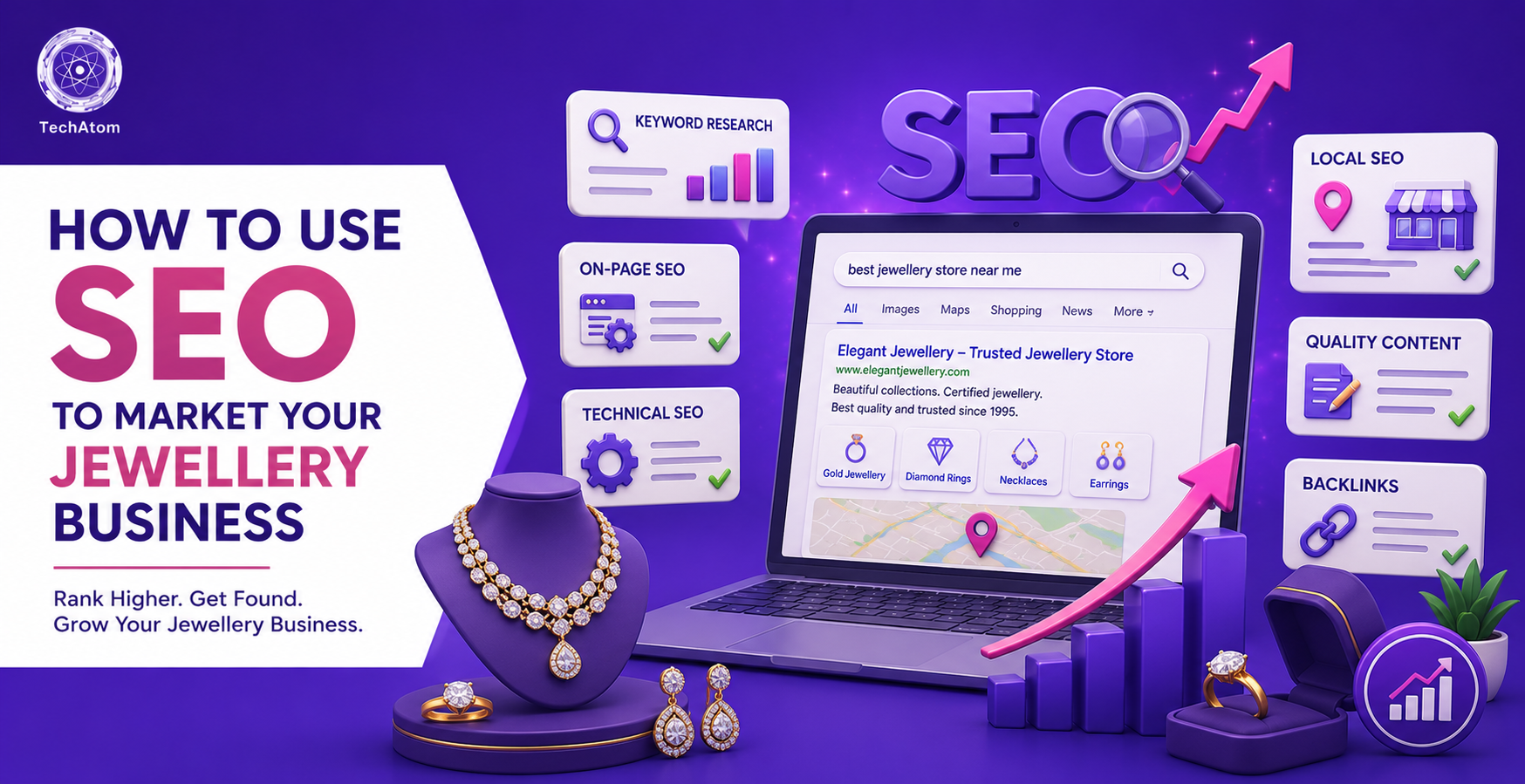
On-page SEO helps search engines understand your website while making it easier for customers to navigate and find the information they need. Every page should have a unique title tag, compelling meta description, clear heading structure, original content, and naturally placed keywords that match the user's search intent. Well-optimized pages improve visibility, increase click-through rates, and provide a better browsing experience.
For jewellery websites, every product page should include detailed descriptions, high-quality images with descriptive alt text, internal links to related collections, and essential information such as hallmark certifications, sizing, shipping, and return policies. Adding FAQs and a clear call to action further improves user experience, builds customer trust, and increases the likelihood of converting visitors into buyers.
Technical SEO for Jewellery Brands
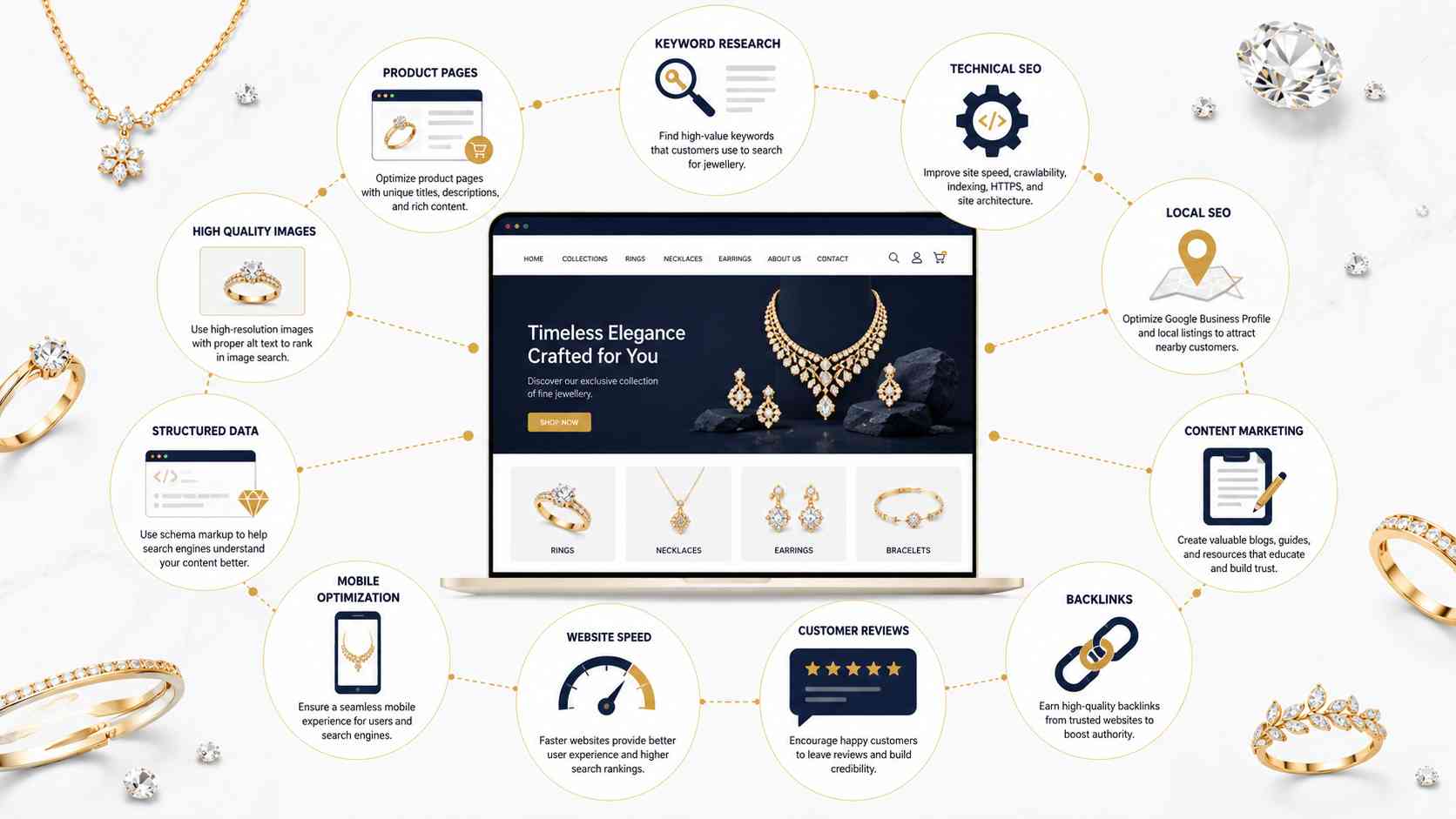
Technical SEO creates the foundation that allows search engines to crawl, understand, and index your website efficiently. Even excellent content can struggle to rank if technical issues prevent search engines from accessing important pages or if users experience slow loading times.
For jewellery brands managing hundreds or thousands of products, maintaining a technically optimized website is essential for long-term search performance.
1. Implement Structured Data to Improve Search Visibility
Structured data helps search engines better understand your website by providing additional information about products, reviews, pricing, availability, FAQs, and business details. For jewellery websites, Product Schema is particularly valuable because it can display information such as prices, ratings, stock availability, and customer reviews directly within search results. These enhanced listings often attract higher click-through rates because they provide useful information before users even visit the website. Other valuable schema types include Organization Schema, Breadcrumb Schema, FAQ Schema, Local Business Schema, and Review Schema.
2. Optimize Images Without Reducing Quality
Jewellery websites rely heavily on high-resolution images to showcase craftsmanship and product details. However, large image files can slow down page loading speeds and negatively impact both rankings and user experience. Compress images without compromising quality, use modern formats such as WebP where appropriate, implement lazy loading, and write descriptive alt text for every image. Image filenames should also describe the product instead of using generic names such as "IMG001.jpg." A descriptive filename like diamond-solitaire-engagement-ring.jpg provides additional context for search engines and supports image search visibility.
3. Improve Website Architecture for Better Navigation
A clear website structure benefits both customers and search engines. Visitors should be able to reach any important product or category within a few clicks from the homepage. Organize products into logical categories based on material, jewellery type, occasion, gender, collection, or gemstone. Breadcrumb navigation further improves usability while helping search engines understand the relationship between different pages. As your product catalogue grows, maintaining a well-organized structure becomes increasingly important for indexing and long-term SEO performance.
4. Improve Website Performance and Core Web Vitals
Website speed directly affects both user experience and search rankings. Jewellery shoppers expect pages to load quickly, especially when browsing multiple products on mobile devices. Slow-loading websites often experience higher bounce rates because visitors leave before pages finish loading. Improving website performance therefore contributes to better engagement as well as stronger SEO.
Some of the most effective optimization techniques include:
- Enabling browser caching
- Using a reliable hosting provider
- Minimizing unnecessary JavaScript
- Compressing CSS and HTML files
- Using a Content Delivery Network (CDN)
- Reducing server response times
Regularly monitoring Core Web Vitals helps identify performance issues before they begin affecting search visibility or customer satisfaction.
Local SEO for Jewellery Showrooms
For jewellery businesses with physical stores, local SEO is just as important as traditional website optimization. Many customers begin their buying journey online but prefer visiting a showroom before making a high-value purchase. Appearing prominently in local search results increases both visibility and foot traffic.
Local SEO focuses on helping your business appear when users search for jewellery stores within a specific city or neighbourhood. Searches such as "gold jewellery showroom near me", "diamond jeweller in Delhi," or "bridal jewellery store in Ahmedabad" often indicate immediate buying intent.
1. Optimize Your Google Business Profile for Local Searches
Your Google Business Profile serves as your digital storefront within Google's local search results and Maps. A fully optimized profile increases your visibility in local searches, builds trust with potential customers, and helps drive more calls, website visits, showroom appointments, and direction requests. Regularly updating your profile with fresh photos, posts, and customer reviews also improves engagement and signals that your business is active and reliable.
Keep your profile complete and accurate by including:
- Business name
- Address
- Phone number
- Business hours
- Website
- Categories
- High-quality showroom photographs
- Product images
- Regular business updates
Consistency between your Google Business Profile and website information strengthens local search signals and improves customer trust.
2. Encourage Customer Reviews to Build Trust
Reviews influence both local rankings and purchasing decisions. Positive customer feedback demonstrates credibility while helping new buyers feel more confident about visiting your showroom or placing an online order. Encourage satisfied customers to leave genuine reviews after completing their purchase. Respond professionally to both positive and negative feedback, showing that your business values customer satisfaction. Consistent review generation creates stronger local authority over time while improving visibility within Google's local search results.
3. Create Dedicated Location Pages for Every Showroom
If your business operates in multiple cities, avoid using a single generic contact page. Instead, create dedicated pages for each showroom that include location-specific information such as store address, nearby landmarks, business hours, available collections, parking details, customer testimonials, and embedded Google Maps.
These pages increase the likelihood of ranking for searches such as "jewellery showroom in Pune" or "gold jeweller in Hyderabad" while providing visitors with the information they need before visiting your store.
Content Marketing Strategies for Jewellery Brands
Content marketing plays an important role in building long-term organic visibility. While product and category pages help capture transactional searches, informative content allows jewellery brands to attract potential customers much earlier in their buying journey. It also strengthens topical authority, making it easier for search engines to understand your expertise across the jewellery industry.Rather than publishing articles simply to increase content volume, focus on answering genuine customer questions and addressing common buying concerns.
Topics such as jewellery care, gemstone education, certification guides, styling tips, investment insights, and seasonal buying advice provide lasting value while naturally supporting your product pages through internal linking. Video content, buying guides, comparison articles, and FAQs can also improve user engagement by helping customers make informed purchasing decisions. Over time, a consistent content strategy builds trust, attracts backlinks, and expands your website's keyword coverage.
Build High-Quality Backlinks
Backlinks remain one of Google's strongest ranking signals because they act as endorsements from other websites. When reputable publications, industry blogs, or business directories link to your website, search engines view your content as more trustworthy and authoritative. However, quality is far more important than quantity. A few links from respected websites provide significantly more value than hundreds of low-quality directory submissions or purchased links.
Jewellery brands can naturally earn backlinks by publishing original research, trend reports, educational guides, press releases, or collaborating with fashion publications, wedding websites, lifestyle magazines, and local business organizations. Participating in community events, exhibitions, and industry associations can also generate valuable local citations and media coverage. Avoid link schemes or spammy backlink services, as these can harm your website's long-term performance instead of improving it.
E-commerce SEO for Jewellery Stores
Managing SEO for an ecommerce jewellery website requires more than optimizing individual products. As inventory grows, maintaining a clear website structure, preventing duplicate content, and improving the shopping experience become increasingly important. Collection pages should target broad commercial keywords, while individual product pages should focus on specific search queries related to design, material, certification, and pricing. Filtering options, breadcrumb navigation, and well-organized categories help customers find products quickly while improving crawlability for search engines.
Product availability should also be managed carefully. Instead of deleting discontinued products, consider redirecting them to similar collections or keeping the page active with alternative recommendations if it has valuable search rankings or backlinks. Regularly reviewing internal links, fixing broken pages, updating product descriptions, and monitoring indexing issues ensures your ecommerce website continues performing as your catalogue expands.
Common SEO Mistakes Jewellery Brands Should Avoid
Even businesses that invest in SEO often overlook issues that limit long-term growth. Identifying and correcting these mistakes can significantly improve search performance. Small technical errors, outdated optimization practices, and gaps in content strategy can gradually reduce visibility and prevent your website from reaching its full potential. Addressing these challenges proactively helps create a stronger foundation for sustainable rankings, higher organic traffic, and better conversion rates.
Some of the most common SEO mistakes include:
- Publishing duplicate product descriptions supplied by manufacturers.
- Targeting only broad, highly competitive keywords.
- Ignoring local SEO despite operating physical showrooms.
- Using poor-quality or uncompressed product images.
- Creating thin category pages with little or no descriptive content.
- Neglecting technical SEO audits and website maintenance.
- Failing to update outdated content or discontinued products.
- Overlooking mobile usability and website speed.
- Publishing blogs without a clear keyword strategy or internal links.
SEO is not a one-time project. Regular monitoring and continuous improvements are essential to maintaining rankings as search algorithms and customer behaviour evolve.
SEO Tools for Jewellery Brands
The right tools help jewellery businesses make informed decisions based on data rather than assumptions. They simplify keyword research, monitor rankings, identify technical issues, and measure website performance.
Some of the most valuable SEO tools include:
- Google Search Console for monitoring search performance, indexing, and keyword visibility.
- Google Analytics 4 for understanding user behaviour, conversions, and traffic sources.
- Google Keyword Planner for identifying keyword opportunities.
- Semrush for keyword research, competitor analysis, backlink monitoring, and technical audits.
- Ahrefs for backlink analysis, keyword tracking, and content research.
- Screaming Frog SEO Spider for identifying technical SEO issues across large websites.
- PageSpeed Insights for evaluating website speed and Core Web Vitals.
These tools provide valuable insights, but long-term success depends on consistently applying the data to improve your website.
How to Measure SEO Success for a Jewellery Brand
SEO success should be measured through business outcomes rather than rankings alone. While keyword positions are important, they provide only part of the overall picture. A page ranking first but failing to generate qualified traffic or conversions delivers limited business value. The ultimate goal of SEO is to attract the right audience, improve user engagement, and turn organic visitors into paying customers.
Key performance indicators include:
- Growth in organic traffic.
- Improvement in keyword rankings.
- Increase in product page visibility.
- Organic conversions and enquiries.
- Revenue generated through organic search.
- Showroom visits from local search.
- Click-through rates from search results.
- Average engagement time and bounce rate.
- Growth in backlinks and referring domains.
Tracking these metrics regularly helps identify which strategies are producing results and where further improvements are needed. Since SEO is an ongoing investment, consistent monitoring ensures your website continues adapting to changing search trends and customer behaviour.
Future SEO Trends for Jewellery Brands in India
Search behaviour continues to evolve as consumers become more informed and digitally connected, making it essential for jewellery brands to adapt their SEO strategies. In the coming years, businesses should focus on creating helpful, trustworthy content that answers customer questions, demonstrates expertise, and provides a seamless user experience. Search engines are increasingly rewarding websites that offer accurate information, transparent business practices, and content that genuinely helps users make informed decisions.
Mobile-first optimization will remain a key ranking factor as more jewellery searches and purchases take place on smartphones. Faster loading pages, intuitive navigation, and a smooth shopping experience will continue to influence both rankings and conversions. At the same time, visual search and demand for categories such as lab-grown diamonds, sustainable jewellery, certified gemstones, and premium silver collections are expected to grow. Brands that optimize product images, create dedicated category pages, and regularly publish content around these emerging trends will be better positioned to capture long-term organic traffic and maintain a competitive advantage.
Need Professional SEO Support for Your Jewellery Brand?
If you want to improve your jewellery brand's online visibility, attract more qualified customers, and increase organic sales, working with an experienced SEO team can make a significant difference. Techatom provides SEO services tailored to businesses looking to strengthen their search presence through technical SEO, content optimization, local SEO, and long-term organic growth.
Conclusion
SEO for jewellery brands in India is a long-term investment that helps businesses increase online visibility, attract high-intent customers, and build lasting credibility. By combining technical SEO, optimized product pages, valuable content, and strong local SEO, jewellery brands can improve search rankings and drive consistent organic traffic. As competition in the Indian jewellery market continues to grow, relying solely on paid advertising is no longer enough. A well-planned SEO strategy reduces customer acquisition costs while delivering sustainable leads and sales over time. Brands that invest in SEO today will be better positioned to strengthen their digital presence, outperform competitors, and achieve long-term business growth.
Frequently Asked Questions
1. How long does SEO take to show results for a jewellery website?
Most jewellery websites begin seeing measurable improvements within three to six months, depending on website authority, competition, and the quality of optimization. More competitive keywords and newer websites may require additional time to achieve consistent first-page rankings.
2. Should jewellery brands invest in SEO or Google Ads?
Both strategies serve different purposes. Google Ads provides immediate visibility, while SEO builds long-term organic traffic and reduces dependence on paid advertising. For sustainable growth, many successful jewellery brands invest in both, using SEO as the foundation of their digital marketing strategy.
3. Does having a physical jewellery showroom help with SEO?
Yes. A verified Google Business Profile, consistent business information, customer reviews, and location-specific landing pages strengthen local SEO. These signals improve your chances of appearing in Google Maps and local search results, driving more showroom visits.
4. Can a jewellery website rank without adding new blog content?
It is possible, but consistent content publishing significantly improves long-term SEO performance. Educational articles, buying guides, jewellery care tips, and trend-based content help attract new keywords, strengthen topical authority, and support product and category pages through internal linking.
5. Which jewellery categories usually generate the highest organic traffic?
While demand varies throughout the year, categories such as bridal jewellery, engagement rings, gold necklaces, diamond earrings, 925 sterling silver jewellery, lab-grown diamonds, and wedding collections consistently attract strong organic search interest. Seasonal collections and festival-focused pages also perform well when published ahead of peak buying periods.
People are also reading