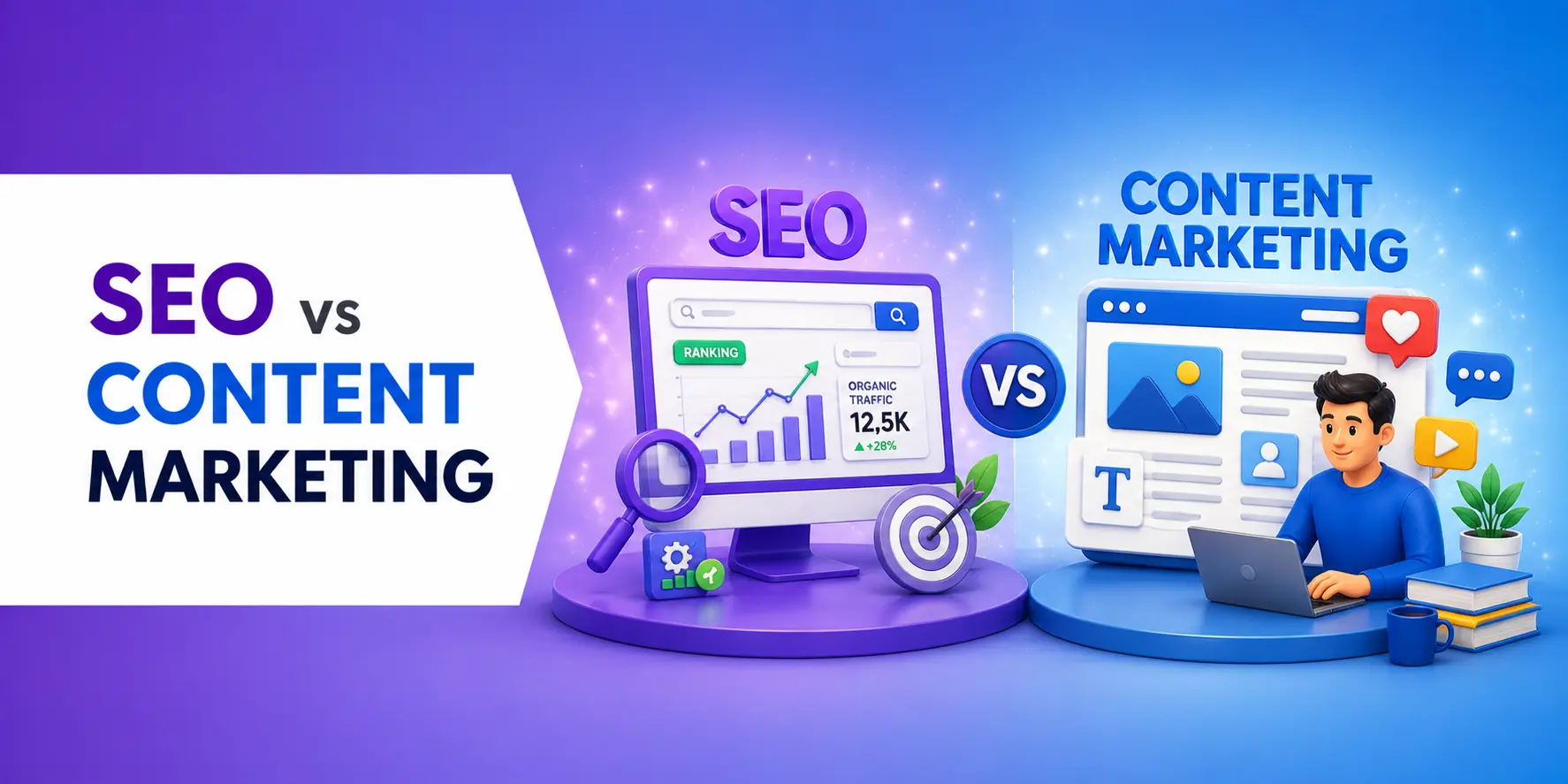
At some point, almost every business asks the same question: Do we need SEO or content marketing? This usually comes up when traffic is not growing, leads are slowing down, or marketing budgets are being reviewed. Many businesses treat SEO and content marketing as separate strategies, but they work best when combined.
The truth is simple, SEO is how people find you, and content marketing is why they stay. SEO helps your website appear in search results, while content marketing provides valuable information that builds trust and encourages visitors to take action. Together, they create a strong foundation for long-term online growth.
What Is SEO?
SEO, or Search Engine Optimization, is the process of improving your website so search engines can understand and rank it for relevant searches. It includes technical improvements such as site speed, mobile-friendliness, indexing, internal linking, and keyword optimization. The goal is to increase visibility and attract people who are actively searching for your products, services, or information.
A good SEO strategy helps drive organic traffic without paying for every click. However, SEO alone cannot create value. It simply helps search engines find and understand the content that already exists on your website.
What Is Content Marketing?
Content marketing focuses on creating useful and relevant content that helps your audience solve problems, answer questions, and make informed decisions. This content can include blog posts, videos, guides, case studies, newsletters, and other educational resources.
Unlike SEO, which focuses on search engines, content marketing focuses on people. The goal is to build trust, establish authority, and create stronger relationships with potential customers. Valuable content keeps visitors engaged and encourages them to return to your website.
SEO vs Content Marketing: What Is the Difference?
SEO and content marketing are often mentioned together, but they serve different purposes. SEO focuses on improving a website's visibility in search engines so users can find relevant content more easily. Content marketing focuses on creating valuable and engaging content that helps educate, inform, and build trust with an audience. While SEO helps attract visitors to a website, content marketing helps keep them engaged and encourages them to take action.
The Core Differences
|
Feature |
SEO |
Content Marketing |
|
Primary Goal |
Increase visibility in search engines |
Build engagement and trust |
|
Primary Focus |
Keywords, rankings, technical optimization |
Audience needs and valuable content |
|
Core Question |
How can search engines rank this page? |
What information does the audience need? |
|
Success Metrics |
Rankings, traffic, visibility |
Engagement, conversions, loyalty |
Although SEO and content marketing work together, they focus on different objectives. SEO is primarily concerned with helping search engines understand and rank content. Content marketing focuses on creating information that people find useful and engaging. SEO measures success through rankings and organic traffic, while content marketing measures engagement and conversions. Understanding these differences helps businesses use both strategies more effectively.
SEO Is How People Find You, and Content Marketing Is Why They Stay
SEO ensures that your website appears in search for topics related to your business. Through keyword optimization, technical improvements, and search visibility, SEO helps attract relevant visitors to your website. Without SEO, even excellent content may struggle to reach its intended audience. Search engines need signals that help them understand and rank your pages.
Once users arrive on your website, content marketing becomes equally important. Helpful articles, guides, videos, and resources keep visitors engaged and provide answers they are looking for. Valuable content builds trust and encourages users to spend more time on your website. This improves user experience and increases the likelihood of conversions. Together, SEO and content marketing create a complete customer journey.
Examples of SEO and Content Marketing in Action
A simple example shows how SEO and content marketing work together in real-world situations. Imagine someone searches for "best project management software" on Google. SEO helps a website rank for that search term through keyword optimization and technical improvements. Once the visitor lands on the page, helpful comparisons, guides, and recommendations keep them engaged and encourage them to take action.
Another example is a business publishing educational blog content about its industry. SEO helps potential customers discover the content through search results, while content marketing builds trust by answering questions and providing useful information. Together, they help attract visitors and turn them into potential customers.
Why SEO and Content Marketing Matter for Business Growth
Businesses need both SEO and content marketing because each supports a different stage of the customer journey. SEO helps potential customers find your website when they are searching for information. Content marketing helps those visitors understand your expertise and trust your brand. Together, they create a stronger online presence and improve the chances of generating leads and sales.
As online competition continues to grow, businesses need more than just visibility. They also need meaningful interactions with their audience. SEO provides the visibility, while content marketing provides the value. When combined, they help businesses attract qualified visitors, improve engagement, and build long-term customer relationships. This makes them essential for sustainable growth.
How They Work Together
SEO and content marketing are most effective when they work together. SEO helps your content appear in search results by improving visibility through keyword research, technical optimization, and search-friendly website structure. Content marketing provides the valuable information that users are looking for when they click on those search results. Without quality content, SEO has little to rank, and without SEO, great content may struggle to reach its audience.
When combined, SEO and content marketing create a stronger digital marketing strategy. SEO helps attract the right visitors, while content marketing keeps them engaged and encourages them to take action. This partnership can increase organic traffic, improve user experience, build trust, and support long-term business growth. Rather than treating them as separate strategies, businesses should use them together to achieve better results.
Why SEO Needs Content Marketing (and Vice Versa)
SEO and content marketing depend on each other to achieve the best results. SEO helps people find your website by improving visibility in search results, but it needs valuable content to rank. Without useful articles, guides, videos, or resources, search engines have little content to index and display to users. Content marketing provides the information that SEO helps promote and makes it easier to attract relevant visitors.
Content marketing also needs SEO to reach a wider audience. Even high-quality content can struggle to generate traffic if it is not optimized for search engines. SEO helps content appear in relevant search results, bringing visitors who are actively looking for information. When combined, SEO and content marketing increase visibility, improve engagement, build trust, and support long-term business growth.
Common Misconceptions About SEO and Content Marketing
One common misconception is that SEO is only about keywords. While keywords are important, modern SEO also includes technical performance, user experience, content quality, and search intent. Search engines evaluate many factors before deciding which pages deserve higher rankings. Focusing only on keywords often leads to missed opportunities.
Another misconception is that content marketing does not require SEO. Even the most helpful content can struggle to attract visitors if it is not optimized for search visibility. Some businesses also believe they must choose between SEO and content marketing because of budget limitations. In reality, the best results usually come from combining both strategies in a balanced way.
When to Prioritize One Over the Other
For new websites, SEO often deserves more attention in the beginning. Building a strong technical foundation, conducting keyword research, and improving website structure help create visibility in search results. Without these basics, even great content may struggle to gain traction. A strong SEO foundation makes future content efforts more effective.
For established websites that already receive traffic, content marketing may become a higher priority. Improving content quality, addressing customer questions, and creating additional resources can increase engagement and conversions. However, this does not mean SEO should be ignored. Both strategies should continue working together, with priorities adjusted based on business goals.
SEO vs Content Marketing: Which Delivers Faster Results?
Both SEO and content marketing require time and consistency, but the results often appear at different speeds. Content marketing can generate engagement relatively quickly when valuable content is shared through websites, email campaigns, or social media channels. SEO, on the other hand, usually takes longer because search engines need time to crawl, index, and evaluate content before rankings improve.
|
Strategy |
Typical Results Timeline |
|
Content Marketing |
Weeks to a few months |
|
SEO |
Several months to long-term growth |
|
Combined Strategy |
Short-term engagement and long-term traffic |
Businesses looking for sustainable growth should avoid focusing on speed alone. The strongest results usually come from combining SEO and content marketing so they support both immediate audience engagement and long-term search visibility.
How to Combine SEO and Content Marketing for Better Results
SEO and content marketing deliver the best results when they work together as part of a single strategy. By aligning search optimization with valuable content, businesses can improve visibility, engagement, and long-term growth.
1. Start with Keyword Research
Keyword research helps businesses understand what their audience is searching for online. By identifying relevant keywords and search intent, businesses can create content that matches user needs. This improves the chances of ranking higher in search results and attracting qualified traffic. A strong keyword strategy creates the foundation for both SEO and content marketing success.
2. Create Valuable and Optimized Content
Once you know what your audience is searching for, create content that provides clear and useful answers. Content should be optimized naturally with relevant keywords while remaining easy to read and engaging. Well-structured content helps search engines understand the topic and improves the user experience. This combination supports both rankings and audience engagement.
3. Monitor, Update, and Improve Content
SEO and content marketing require ongoing improvement. Businesses should regularly update existing content, improve internal linking, and review performance data. Tracking results helps identify opportunities to improve rankings, engagement, and conversions. Consistent optimization ensures that content remains relevant and continues delivering long-term value.
Don't Choose One, Choose Both
By now, it should be clear that SEO and content marketing are not competing strategies. SEO helps your website appear in search results, while content marketing provides the information and value that visitors are looking for. One attracts people to your website, and the other helps build trust, engagement, and conversions. Businesses that use both strategies together are more likely to achieve consistent and sustainable growth.
In 2026, online competition is stronger than ever, and customers discover brands through search engines, AI-powered results, social media platforms, and other digital channels. Relying only on SEO or only on content marketing can limit your results. A combined approach helps increase visibility, strengthen authority, and create a better experience for users. Instead of choosing one over the other, businesses should focus on making both work together as part of a long-term marketing strategy.
Conclusion
The debate between SEO and content marketing often misses the bigger picture. SEO helps people find your website, while content marketing gives them a reason to stay, trust your brand, and take action. Neither strategy is as effective when used alone. Businesses that combine SEO and content marketing create a stronger online presence, attract more qualified visitors, and build sustainable growth over time. Instead of choosing one over the other, the smartest approach is to invest in both and make them work together.
Frequently Asked Questions
1. Is SEO better than content marketing?
Neither is better than the other because they serve different purposes. SEO helps users find your website, while content marketing helps keep them engaged. Businesses achieve the best results when both strategies work together. Choosing one while ignoring the other can limit overall performance.
2. Can content marketing work without SEO?
Content marketing can work without SEO, but its reach may be limited. Without search optimization, valuable content may struggle to attract consistent traffic. SEO helps ensure content reaches people who are actively looking for information. This makes content marketing more effective.
3. Which should a small business focus on first?
Small businesses should start with basic SEO foundations while creating useful content for their audience. SEO helps improve visibility, while content builds trust and authority. A balanced approach often provides better long-term results than focusing entirely on one strategy.
4. How long does it take to see results?
SEO and content marketing are long-term strategies. Some improvements may be visible within a few months, but significant results often take six months or longer. Consistency and ongoing optimization are important for success. Businesses that stay committed usually see stronger results over time.
5. Do SEO and content marketing need separate strategies?
SEO and content marketing have different goals, but they should work together as part of a single marketing strategy. SEO helps improve visibility and bring visitors to your website, while content marketing focuses on educating, engaging, and converting those visitors. When both strategies are aligned, businesses can attract the right audience and provide the information they are looking for. This creates better user experiences and stronger long-term results.
People are also reading