
Every year, especially after major Google algorithm updates or the rise of new technologies like AI tools, ChatGPT, and AI Overviews, the same question resurfaces: Is SEO dead?
The truth is simple but often misunderstood. SEO is not dead. What has died is the old version of SEO that relied on keyword stuffing, low-quality backlinks, and shortcut tactics. Modern SEO in 2026 is more advanced, more intelligent, and more focused on user intent than ever before.
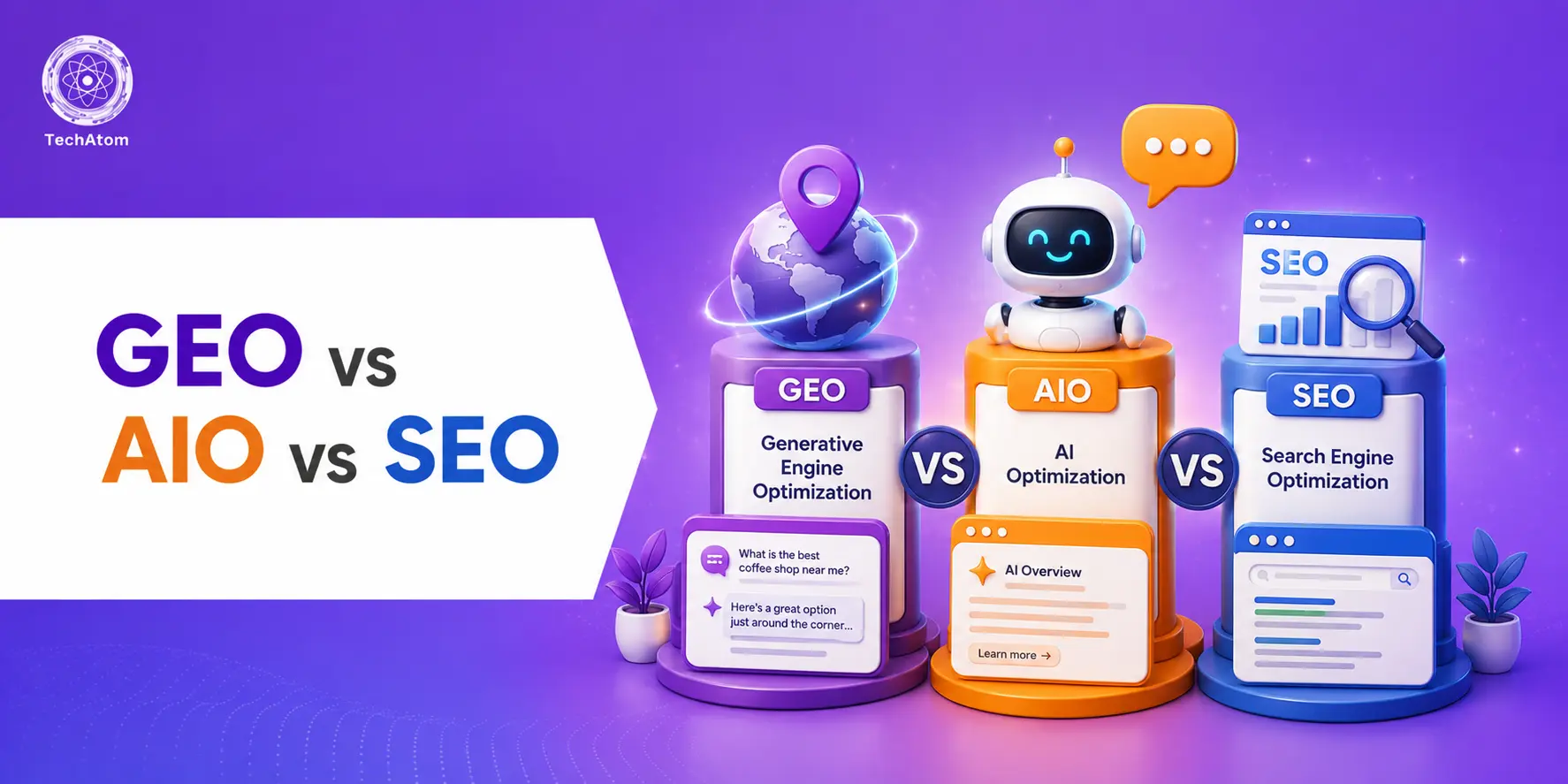
Today, SEO is no longer just about ranking on Google. It is about being visible across multiple search systems, including AI tools, voice search, and generative engines.
What People Really Mean by “SEO Is Dead”
When people say SEO is dead, they are usually reacting to real changes in the digital landscape:
- Search rankings are harder to achieve than before.
- AI-generated answers reduce direct website clicks.
- Google frequently updates its algorithms.
- Paid ads dominate top positions in many industries.
- Old SEO tactics no longer work.
However, these changes do not eliminate SEO they transform it.
The Evolution of SEO (Old vs New Era)
SEO has evolved significantly over the years, transforming from a simple keyword-based system into a complex, intelligent ecosystem driven by user intent, authority, and AI understanding.
1. Keyword
Earlier SEO strategies focused heavily on repeating keywords to rank pages. Today, Google goes beyond keywords and understands the intent, meaning, and context behind every search query, rewarding content that truly satisfies user needs.
2. Backlinks
Backlinks are still important, but their role has shifted. Instead of quantity, search engines now prioritize quality, relevance, and trustworthiness, along with overall domain authority and topical expertise.
3. Desktop
SEO is now heavily mobile-driven. Google primarily evaluates websites based on their mobile version, focusing on page speed, usability, and Core Web Vitals to ensure a smooth user experience.
4. Search Results AI-Powered Search Systems
Search is no longer limited to traditional “blue links.” AI-driven systems like Google AI Overviews, ChatGPT, and Perplexity are reshaping how users discover and consume information, often summarizing answers directly.
5. Content Quantity
Publishing more content is no longer enough. Modern SEO rewards depth, originality, and usefulness. Well-structured, in-depth content that fully answers user queries consistently outperforms thin or repetitive articles.
Why SEO Is NOT Dead (Real Facts)
SEO continues to be one of the strongest digital marketing channels in 2026.
1. Google Still Dominates Search
Google handles billions of searches daily and remains the primary source of organic website traffic worldwide.
2. SEO Has Long-Term ROI
SEO keeps generating traffic long after publishing, unlike paid ads that stop when spending stops.
3. AI Still Depends on SEO Content
Tools like ChatGPT, Gemini, and Perplexity rely on indexed web pages for accurate and updated information.
4. Commercial Keywords Still Convert
Searches with buying intent continue to drive high conversions, leads, and real business revenue.
How AI Has Changed SEO (Important Shift)
AI has transformed how search works, but it has not replaced SEO. Instead, it has changed how content is discovered, ranked, and consumed.
AI Overviews
Google now generates AI-powered summaries for many search queries, which reduces clicks on basic informational content. However, sources are still pulled from SEO-optimized websites.
Zero-Click Searches
More users now get answers directly on search results pages without visiting websites. This makes visibility and authority more important than ever.
New Discovery Platforms
Search is no longer limited to Google. Users now rely on ChatGPT, Perplexity, Gemini, and voice assistants for answers.
Still SEO-Driven Ecosystem
Even AI platforms depend on indexed, optimized, and authoritative web content. Without SEO, these systems would have no reliable information sources.
SEO in the AI Search Era
Search is changing with AI tools like Google AI Overviews, ChatGPT, and Perplexity. Users now expect direct answers instead of browsing multiple websites. This shifts search from “finding links” to “getting instant answers.” Content now needs to be clear and structured so AI systems can use it. However, SEO is still the foundation because AI depends on web content to generate responses. The focus has moved from only ranking on Google to also being visible in AI-generated answers.
What Has Not Changed in SEO
Even though SEO has evolved rapidly with AI, algorithm updates, and new search systems, the core principles of SEO remain the same.
Google’s main goal is still unchanged to deliver the most relevant and helpful result to the user’s query.
That means some fundamentals continue to matter just as much as before:
- High-quality content still outperforms thin or low-value content
- Search intent is still the foundation of every ranking decision
- Authority and trust are still required to compete in search results
- Organic visibility remains one of the most sustainable traffic sources
- User satisfaction is still a key signal behind rankings
While tools, algorithms, and search interfaces have changed, the basic purpose of SEO has not changed. It is still about helping users find the best possible answer.
Why SEO Feels “Dead” for Some People
SEO often feels “dead” to beginners or outdated practitioners, but the reality is different. The problem usually isn’t SEO itself it’s the approach.
- They expect instant rankings instead of focusing on long-term growth.
- They rely on outdated SEO tactics that no longer work.
- They ignore content quality, depth, and proper structure.
- They target highly competitive keywords without a clear strategy.
- They fail to adapt to constant Google algorithm updates.
Modern SEO Strategy in 2026
SEO in 2026 is no longer just about keywords it’s about how well your content serves users and how clearly Google understands your authority on a topic.
- Helpful Content System: Content must genuinely solve user problems, not just target search terms.
- E-E-A-T Signals (Experience, Expertise, Authority, Trust): Google prioritizes content created by credible and experienced sources.
- Entity-Based SEO: Search engines now understand topics, brands, and concepts as “entities,” not just isolated keywords.
- Topical Authority: Websites that cover a subject in depth and from multiple angles rank higher than those with scattered content.
- User Experience Signals: Factors like readability, engagement, page experience, and time spent on page influence rankings.
Old SEO vs New SEO
|
Old SEO (Past) |
New SEO (2026) |
|
Keyword stuffing |
Search intent optimization |
|
Low-quality backlinks |
Authority + trust signals |
|
Thin blog posts |
Deep, helpful content |
|
Desktop-first |
Mobile-first indexing |
|
Ranking pages |
AI citation + visibility |
|
Google-only SEO |
Multi-platform SEO |
Future of SEO
SEO is not staying the same it is evolving into a broader discovery system powered by AI and user intent.
Search is now influenced by:
- AI-generated answers like Google AI Overviews
- Voice-based queries and conversational search
- Entity understanding (topics, brands, and concepts)
- Personalized results based on user behavior
- Answer-focused optimization instead of only ranking pages
SEO is not disappearing; it is simply changing its form.
AEO Alongside Traditional SEO
Answer Engine Optimization (AEO) is the practice of structuring content so it can be cited and used by AI systems, not just ranked in traditional search results. Instead of focusing only on blue links, it focuses on how clearly content is understood and extracted by tools like Google AI Overviews, ChatGPT, and other AI search engines.
It requires writing direct, clear answers, using proper structure, and showing real expertise so AI systems can easily interpret the content. AEO and traditional SEO are not separate or competing strategies. They work together, as both rely on similar signals like authority, relevance, clarity, and trust.
A strong approach is intent-first SEO, where content is built around what users actually want to achieve rather than just keywords. This naturally improves performance in both search engines and AI-driven platforms.
Real Truth: SEO Is NOT Dead
SEO in 2026 is still powerful, but it no longer rewards outdated methods.
Success now depends on:
- Content that actually helps users
- Strong topic authority, not random posts
- Real expertise and experience
- Clear structure and useful formatting
- A user-first mindset, not just keyword targeting
The people who adapt will grow. The ones who don’t will think SEO is “dead.”
Conclusion
SEO has simply evolved over time. The strategies that worked years ago are no longer effective, but the core principle remains unchanged: helping users find the most relevant and helpful answer to their query.
In 2026, SEO is more powerful, more intelligent, and more competitive than ever. Those who adapt to modern search systems will continue to dominate visibility across Google and AI-powered platforms.
Frequently Asked Questions
1. Is SEO dead in 2026?
No, SEO is evolving, not dying. It is becoming more advanced and AI-integrated.
2. What has replaced SEO?
Nothing has replaced SEO. AI search and SEO now work together.
3. Is AI killing SEO traffic?
AI reduces some informational clicks but increases the importance of authority content.
4. Can beginners still learn SEO?
Yes, SEO is still one of the most valuable digital skills in 2026.
5. What is the future of SEO?
SEO will focus on AI search, entity optimization, and user intent.
People are also reading: