
Search Engine Optimisation SEO has come a long way since its early days. There was a time when ranking on search engines was more about tricks than real value, but that time is now gone. Today, SEO is more about understanding people, solving their problems, and building trust.
The strategies that once dominated search rankings have evolved drastically, reflecting both the sophistication of search engines and the changing behavior of users. In this article, we will explore the differences between old SEO and modern SEO in 2026, what has truly changed, and how businesses can adapt to stay ahead.
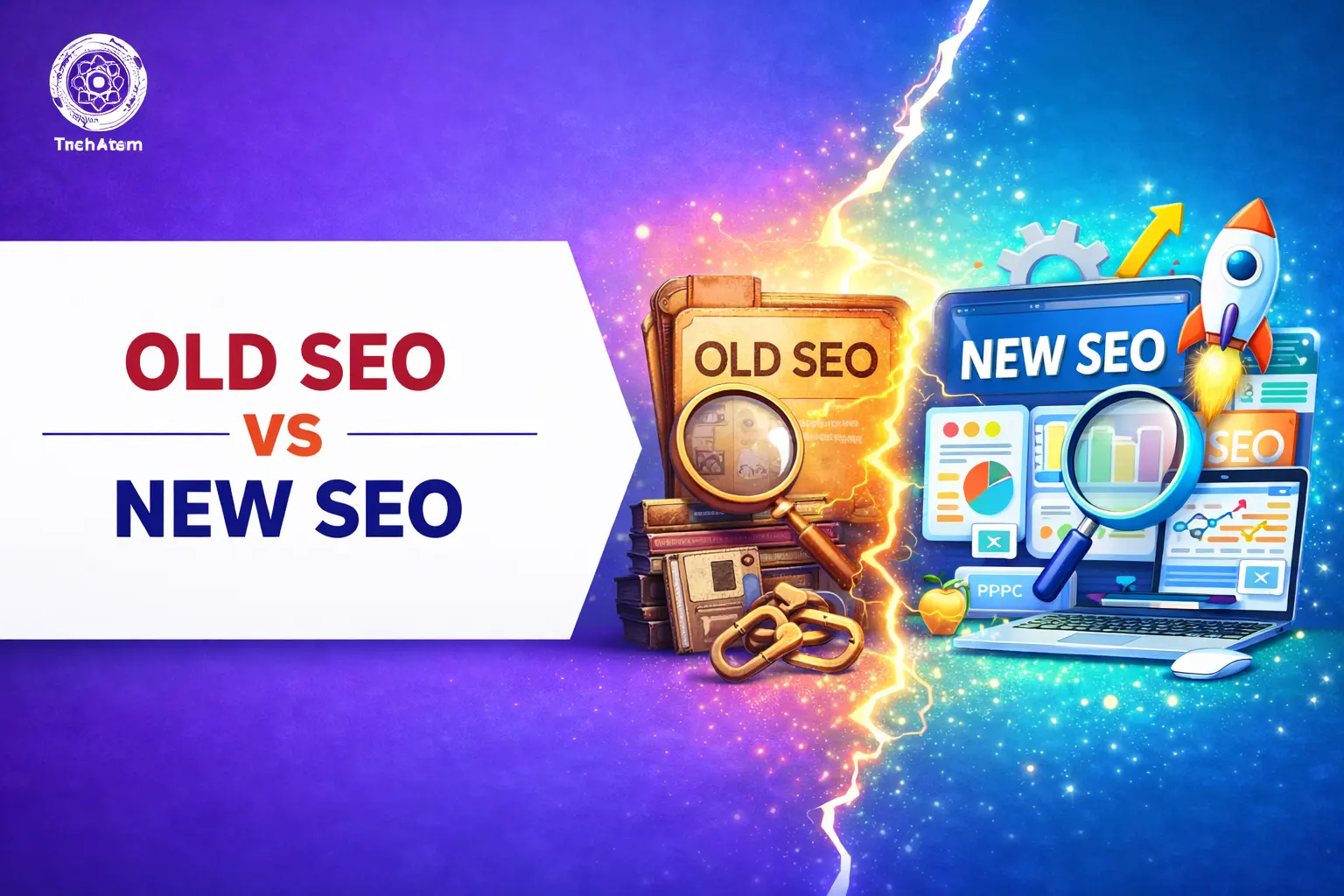
Old SEO vs New SEO Strategies Comparison
|
Factor |
Old SEO |
New SEO 2026 |
|
Focus |
Search engines |
Users and intent |
|
Keywords |
Stuffed and repeated |
Natural and meaningful |
|
Content |
Thin and duplicate |
Helpful and in depth |
|
Links |
Quantity over quality |
Quality and relevance |
|
Goal |
Rank higher |
Solve user problems |
Part I: The Era of Old SEO (The Golden Age of Manipulation)
In the early days of SEO, ranking on Google and other search engines often required exploiting algorithm weaknesses. Many marketers focused on quantity over quality, using shortcuts to achieve higher visibility. Let’s look at some of the most common old school tactics:
1. Keyword Stuffing
Keyword stuffing was a hallmark of old SEO. Pages were overloaded with repeated keywords in an attempt to signal relevance to search engines.
Example: “Best coffee machines 2026. Buy coffee machines 2026. Top coffee machines 2026. Coffee machines reviews 2026.”
This approach made content unreadable and frustrating for users, but it often worked until search engines became smarter.
2. Link Spamming
Links were considered the ultimate ranking factor. Marketers would engage in aggressive link building, often paying for links or spamming forums and blogs. The quality of links was usually ignored.
Example Table:
|
Strategy |
Old Approach |
Downside |
|
Blog Comment Links |
Posting links on any blog |
Spammy and low trust |
|
Directory Submissions |
Submitting to many low quality directories |
No real traffic benefit |
|
Paid Links |
Buying links from link farms |
High risk of penalties |
3. Cloaking and Hidden Text
Cloaking involved showing different content to search engines than to users. Hidden text like white on white text filled with keywords was another way to manipulate rankings.
4. Thin and Duplicate Content
Many sites would publish short, low value pages or copy content from other sources just to increase page count. This tactic offered little real benefit to users but could temporarily boost rankings.
5. Exact Match Domains
Early SEO favored websites with domains that exactly matched search queries, even if the content was low quality.
Example: buybestheadphonesonline.com
Part II: The Great Shift From Algorithms to Audience
The turning point in SEO came when search engines started prioritizing user experience over manipulative tactics. Google’s algorithm updates, including Panda, Penguin, and Hummingbird, began rewarding sites that provided genuine value.
This shift meant that:
- Content needed to answer real user questions
- Links needed to be earned naturally rather than bought
- Technical performance like page speed and mobile optimization became critical
SEO moved from being a game of tricks to a discipline focused on audience satisfaction.
Part III: The Pillars of New SEO (2026 Strategies)
Modern SEO in 2026 is far more sophisticated, blending technical performance, user experience, and trust signals.
1. E E A T: Experience, Expertise, Authoritativeness, and Trust
Google now evaluates content based on the credibility and reliability of its creators.
- Experience: First hand knowledge in the content niche
- Expertise: Recognized subject matter authority
- Authoritativeness: Recognition by other trusted sources
- Trust: Secure website, accurate information, and clear disclosures
Example: A medical blog written by certified doctors with citations from peer reviewed journals will outrank a generic article on the same topic.
2. Topical Authority and Content Clusters
Rather than focusing on individual keywords, modern SEO emphasizes building authority around topics.
Example of Content Cluster:
|
Core Topic |
Cluster Articles |
|
SEO Strategies, Social Media Tactics, Email Campaigns |
|
|
Coffee Machines |
Best Coffee Beans, Brewing Tips, Machine Maintenance |
Creating content clusters improves internal linking, topic depth, and user experience, signaling expertise to search engines.
3. Core Web Vitals and User Experience
Google’s ranking now depends heavily on website performance and usability. Core Web Vitals measure:
- Largest Contentful Paint (LCP): Page loading speed
- First Input Delay (FID): Responsiveness
- Cumulative Layout Shift (CLS): Visual stability
Sites that perform well across these metrics retain users longer and rank higher.
4. Search Intent Optimisation
Understanding the “why” behind a user’s query is now essential. Search intent can be:
- Informational: “How to brew coffee at home”
- Transactional: “Buy espresso machine online”
- Navigational: “Starbucks nearest store”
Optimizing content according to intent ensures it satisfies user needs, improving engagement and rankings.
Part IV: The Future of SEO: AEO, GEO, and Beyond
The future of SEO is no longer limited to ranking on search engine result pages. It is expanding into a space where users expect direct answers, quick solutions, and meaningful interactions. Search is becoming smarter, more conversational, and more personalized. This shift is being driven by technologies like voice assistants, AI powered search, and generative platforms.
Instead of just asking “How do I rank?”, the better question today is “How do I become the best answer?” That is where AEO, GEO, and the human element come into play.
1. AEO (Answer Engine Optimisation)
Answer Engine Optimisation is all about making your content the exact answer a user is looking for. Instead of focusing only on ranking, the goal is to get featured in positions where users may not even need to click further.
This includes places like featured snippets, voice search results, and instant answers shown directly on the search page.
What AEO looks like in practice:
- Writing clear and direct answers to common questions
- Using simple language that is easy to understand
- Structuring content with headings, FAQs, and short paragraphs
- Adding schema markup to help search engines understand your content
Example: If someone searches “How to boil eggs,” the best AEO content will:
- Give a direct step by step answer at the top
- Use bullet points for clarity
- Avoid unnecessary long introductions
The idea is simple, if your content answers faster and better, it gets picked.
2. GEO (Generative Engine Optimisation)
GEO is the next step in the evolution of SEO. It focuses on optimizing content for AI driven search systems that generate answers instead of just listing links.
These systems pull information from multiple sources and create a combined response. So your content needs to be clear, trustworthy, and easy to extract.
Key focus areas for GEO:
- Writing fact based and accurate content
- Keeping information well structured and organized
- Using headings and sections that are easy to scan
- Covering topics in depth so your content becomes a reliable source
Example: If someone asks a generative search tool, “Best budget smartphones in 2026,” the system will:
- Combine insights from multiple websites
- Highlight key features and comparisons
- Present a summarized answer
If your content is well written and detailed, it has a higher chance of being included in that generated response.
3. The Human Element in a Machine World
Even with all this technology, one thing remains constant, people connect with people. Search engines are becoming smarter, but they still look for signals that reflect real human value.
Content that feels genuine, helpful, and trustworthy will always stand out.
What makes content more human:
- Sharing real experiences and insights
- Writing in a clear and relatable tone
- Avoiding over complicated language
- Focusing on solving real problems instead of just targeting keywords
Example: A product review that includes personal experience, honest pros and cons, and practical use cases will always feel more trustworthy than a generic list of features.
Common SEO Mistakes to Avoid in 2026
- Focusing only on keywords and ignoring intent
- Creating content without real value
- Ignoring website speed and mobile experience
- Not updating old content
- Building low quality backlinks
Quick SEO Checklist for 2026
- Write content based on user intent
- Use clear headings and structure
- Improve website speed
- Build content clusters
- Add internal links
- Focus on trust and credibility
- Optimize for answers and featured results
Real World Case Study
A small blog in the digital marketing niche was struggling to get traffic. Earlier, they were writing keyword focused articles with little depth. The content was ranking poorly and users were leaving quickly.
They changed their approach completely. Instead of focusing on keywords, they started creating detailed guides based on real experience. They improved their website speed, added internal links, and answered user questions clearly.
Within three to four months, their traffic started growing. Users spent more time on the site, and some articles even appeared in featured results. This showed that when you focus on value and user experience, results follow naturally.
Conclusion
SEO has clearly moved beyond tricks and shortcuts and is now all about real value and user experience. What matters today is how well you understand your audience and how honestly you solve their problems. As search continues to evolve with AEO and GEO, the focus will stay on clarity, trust, and relevance. The smarter approach is simple, create helpful content and build genuine authority. That’s what will keep working in the long run.
Frequently Asked Questions
1. What is the main difference between old SEO and new SEO?
The main difference is focus. Old SEO was mainly about manipulating search engines using tactics like keyword stuffing and spam links. New SEO focuses on users, providing helpful content, understanding search intent, and building trust. Today, quality matters more than shortcuts.
2. What is E-E-A-T in SEO and why is it important?
E E A T stands for Experience, Expertise, Authoritativeness, and Trust. It helps search engines understand how reliable your content is. Content created by knowledgeable and trustworthy sources is more likely to rank higher because it provides real value to users.
3. What is search intent in SEO?
Search intent means understanding why someone is searching for something. It could be to learn, buy, or find a specific website. When your content matches the user’s intent, it performs better because it directly solves their problem.
4. What is AEO and how is it different from SEO?
AEO or Answer Engine Optimisation focuses on providing direct answers to user questions. While SEO aims to rank pages, AEO aims to get featured in answer boxes, voice search, and instant results where users may not even need to click.
5. How can beginners improve their SEO in 2026?
Beginners should focus on creating helpful content, understanding their audience, and improving website performance. It is important to write clearly, use proper structure, and build trust instead of trying shortcuts. Consistency and quality are the key to long term success.
People are also reading: