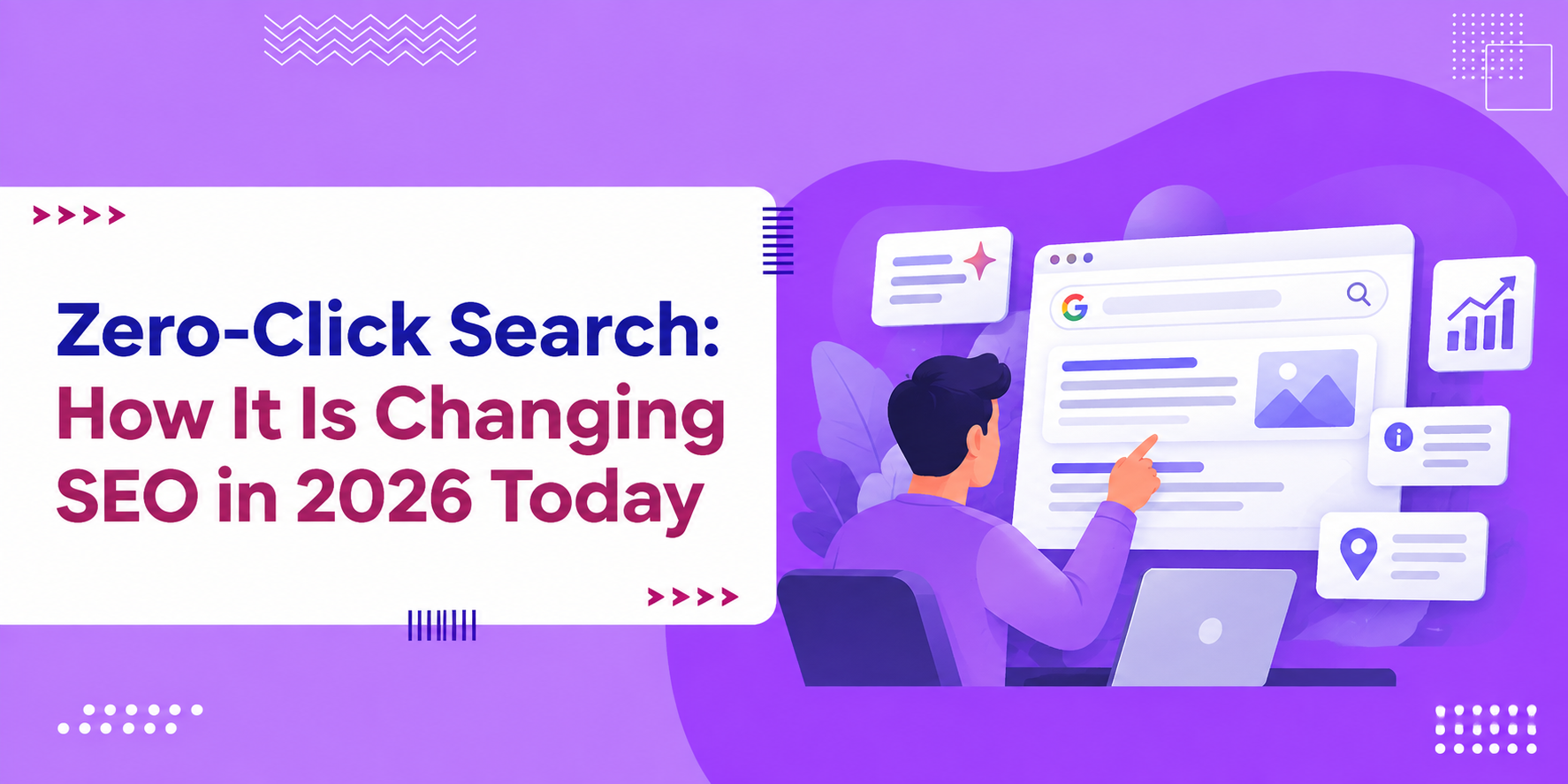

Search is no longer just a page of links. Today, Google can answer a question, show a map, summarize information, recommend products, or provide an AI-generated response without requiring the user to visit a website. When a search ends without a click to a website, it is commonly described as a zero-click search.
This matters for SEO because getting a high ranking is no longer the whole story. Your content can appear in an AI Overview, featured snippet, local result, or another search feature and influence a user even when they never visit your site.
And this behavior is growing. SparkToro's analysis of Similarweb clickstream data found that 68.01% of U.S. Google searches ended without a click during the first four months of 2026, compared with 60.45% in 2024. SparkToro also notes that the datasets are not perfectly comparable, so the figures should be viewed as directional rather than a precise year-over-year measurement.
So, what does zero-click search actually mean for SEO?
Let's look at how search has changed, which SERP features matter, and what you can do about it.
Key Takeaways
- Zero-click search means users find enough information in the search results without clicking through to a website.
- AI Overviews now reach more than 2.5 billion monthly active users, according to Google. AI Mode has passed one billion monthly users.
- AI Overviews, featured snippets, direct answers, knowledge panels, local packs, and People Also Ask can all contribute to zero-click behavior.
- Zero-click does not mean SEO is dead. It means visibility, clicks, and conversions need to be considered separately.
- Google says its AI search features are built on its existing Search ranking and quality systems, so strong SEO fundamentals still matter.
- The best strategy is not to chase every SERP feature. It is to understand search intent, create useful content, and decide where a click is actually valuable.
What Is a Zero-Click Search?
A zero-click search occurs when a person enters a query into a search engine and gets the information they need directly within the search results, without clicking through to an external webpage.
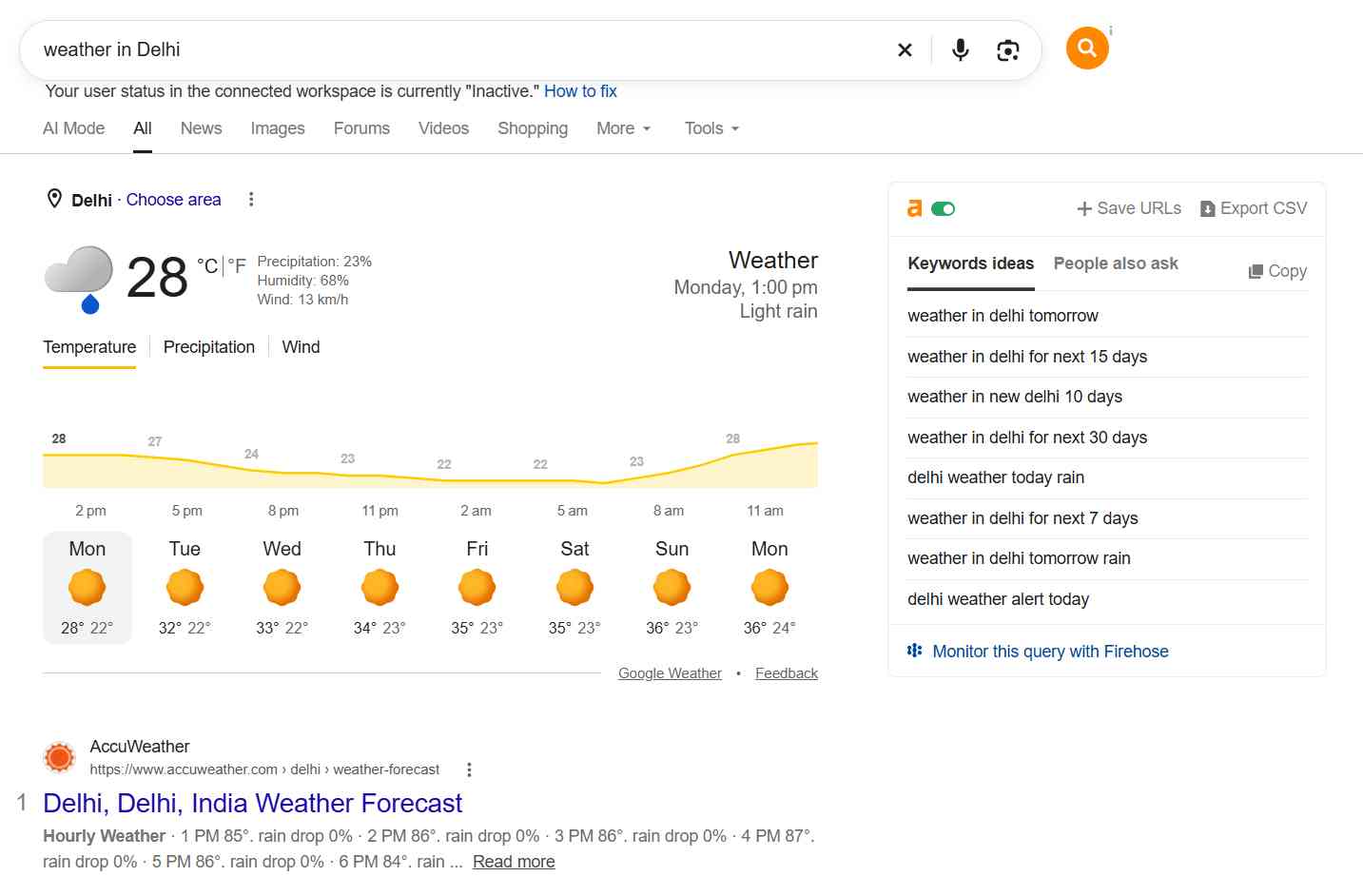
For example, someone searching:
- "What is technical SEO?"
- "Weather in Delhi"
- "How many centimeters are in a meter?"
- "Who founded Apple?"
- "Best restaurants near me"
may find the answer directly in Google's search interface.
Google can display information through different SERP features rather than simply showing ten traditional blue links.
Why Are Zero-Click Searches Increasing?
The growth of zero-click searches is tied to the way search engines are changing.
Search Answers Are Becoming More Direct
For simple questions, users often do not need a full webpage. If they want a definition, calculation, date, or basic fact, an answer at the top of the results can be enough.
Google has spent years building features that reduce the need to open another page.
AI Is Changing the Search Experience
AI has accelerated that shift.
Google says AI Overviews now have more than 2.5 billion monthly active users, while AI Mode has surpassed one billion monthly users. Google also says AI Mode queries have more than doubled every quarter since its launch.
These experiences are particularly relevant to more detailed and conversational searches.
Pew Research Center analyzed 68,879 Google searches collected in March 2025 and found that 18% produced an AI summary. Only 8% of one- or two-word searches produced an AI summary, compared with 53% of searches containing 10 or more words.
That is a useful signal for content creators: people are not only searching for keywords. They are increasingly asking complete questions.
Google Is Keeping More Tasks Inside Search
Search results now cover much more than traditional webpages.
Maps, shopping results, videos, images, flights, local businesses, knowledge panels, and AI-generated answers can all satisfy parts of a user's search without requiring a website visit.
Search Happens Outside Google Too
Google is not the only place people look for information.
Depending on what they need, users may turn to YouTube for demonstrations, Reddit for personal experiences, Amazon for products, or AI platforms for research and summaries.
That means SEO is becoming less about one search-results page and more about being discoverable throughout the user's research journey.
How Do Zero-Click Searches Affect SEO?
The biggest concern is obvious: fewer clicks can mean less organic traffic.
Pew Research Center found that users who encountered an AI summary clicked a traditional search result in 8% of visits, compared with 15% of visits when no AI summary appeared. Only 1% of visits involved clicking a link directly from the AI summary in its study.
But that does not mean every website will lose the same amount of traffic.
A simple informational query may be satisfied immediately, while a product comparison, service search, tutorial, or detailed guide can still give users a strong reason to visit a website.
So the relationship is not:
Zero-click = no SEO value
It is closer to:
Zero-click = a different kind of search visibility
A brand can be seen, cited, remembered, and searched again even when the first interaction does not produce a click.
That is why rankings, impressions, CTR, conversions, and brand visibility should be looked at together.
Types of Zero-Click Search Results
Google uses several SERP features that can satisfy a search without requiring a website visit.
AI Overviews
AI Overviews provide an AI-generated response within Google Search and can include links to supporting webpages.
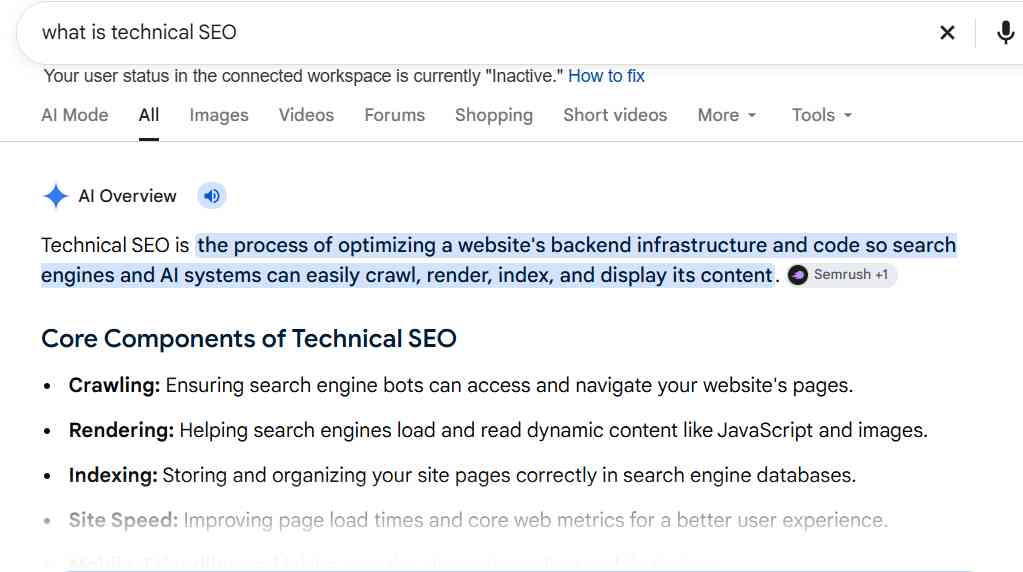
For website owners, there is an important point here: Google says there are no additional technical requirements specifically for appearing in AI Overviews or AI Mode. A page needs to be indexed and eligible to appear in Google Search with a snippet.
That means there is no secret piece of "AI SEO" code you need to add.
Good technical SEO, useful content, clear structure, and strong relevance remain the foundation.
AI Mode
AI Mode takes search further by allowing users to ask follow-up questions and continue researching a topic conversationally.
Google says AI Mode has already surpassed one billion monthly active users globally.
For content creators, this makes comprehensive topic coverage more useful. A page that answers one tiny question may be less helpful than a well-organized resource that answers the main question and the related questions a reader is likely to ask next.
Featured Snippets
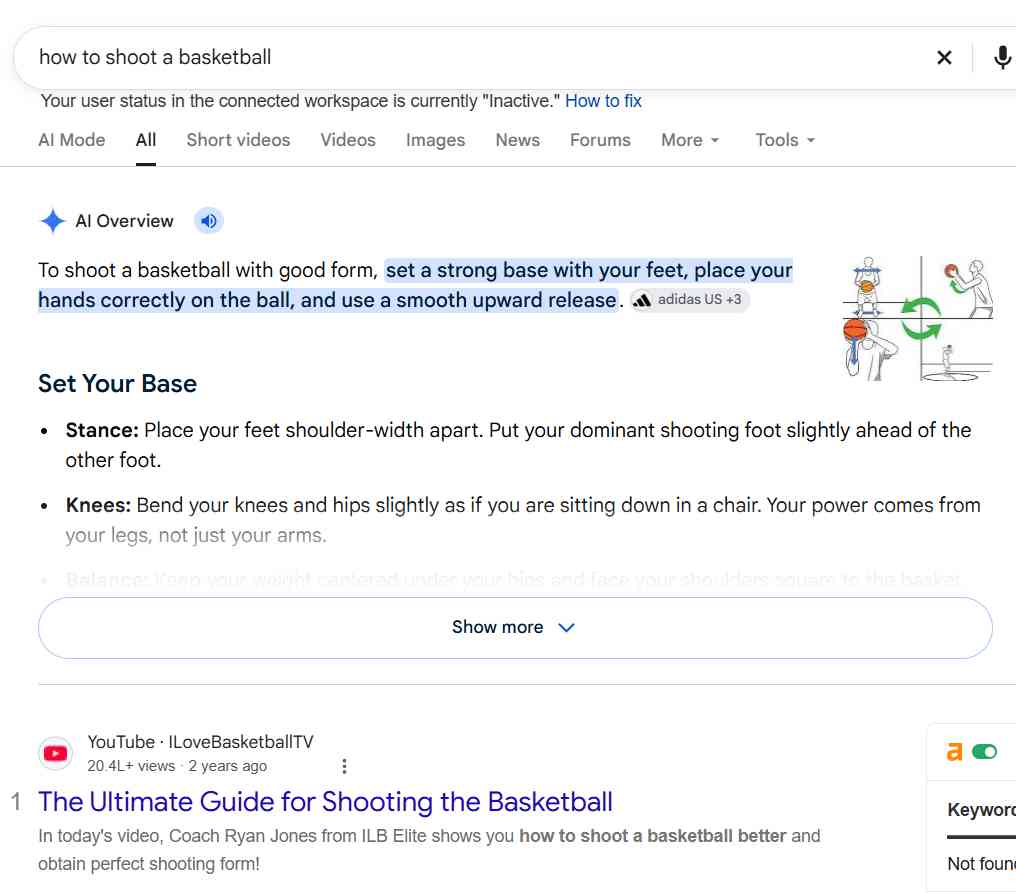
Featured snippets show a concise answer from a webpage near the top of the search results.
They can appear as paragraphs, lists, tables, and other formats.
The best approach is not to write unnatural content just to win a snippet. Give the reader a clear answer under the relevant heading and then explain the subject properly.
For example:
What Is Technical SEO?
Technical SEO improves the technical foundation of a website so search engines can crawl, understand, and index its pages effectively.
That answers the question quickly without sacrificing the rest of the article.
Direct Answers
Some searches are so straightforward that users have little reason to click.
Queries such as "What is 15% of 200?" or "How many days are in a year?" can be answered directly.
These searches can generate visibility, but they may have limited traffic value.
That is why keyword selection matters as much as keyword volume.
Knowledge Panels
Knowledge panels provide information about recognized people, brands, organizations, places, and other entities.
For a company, a strong and consistent online presence can help users understand who the business is and what it does before they ever reach the website.
Your website should clearly communicate your organization, services, location, contact details, and other important business information.
Local Packs
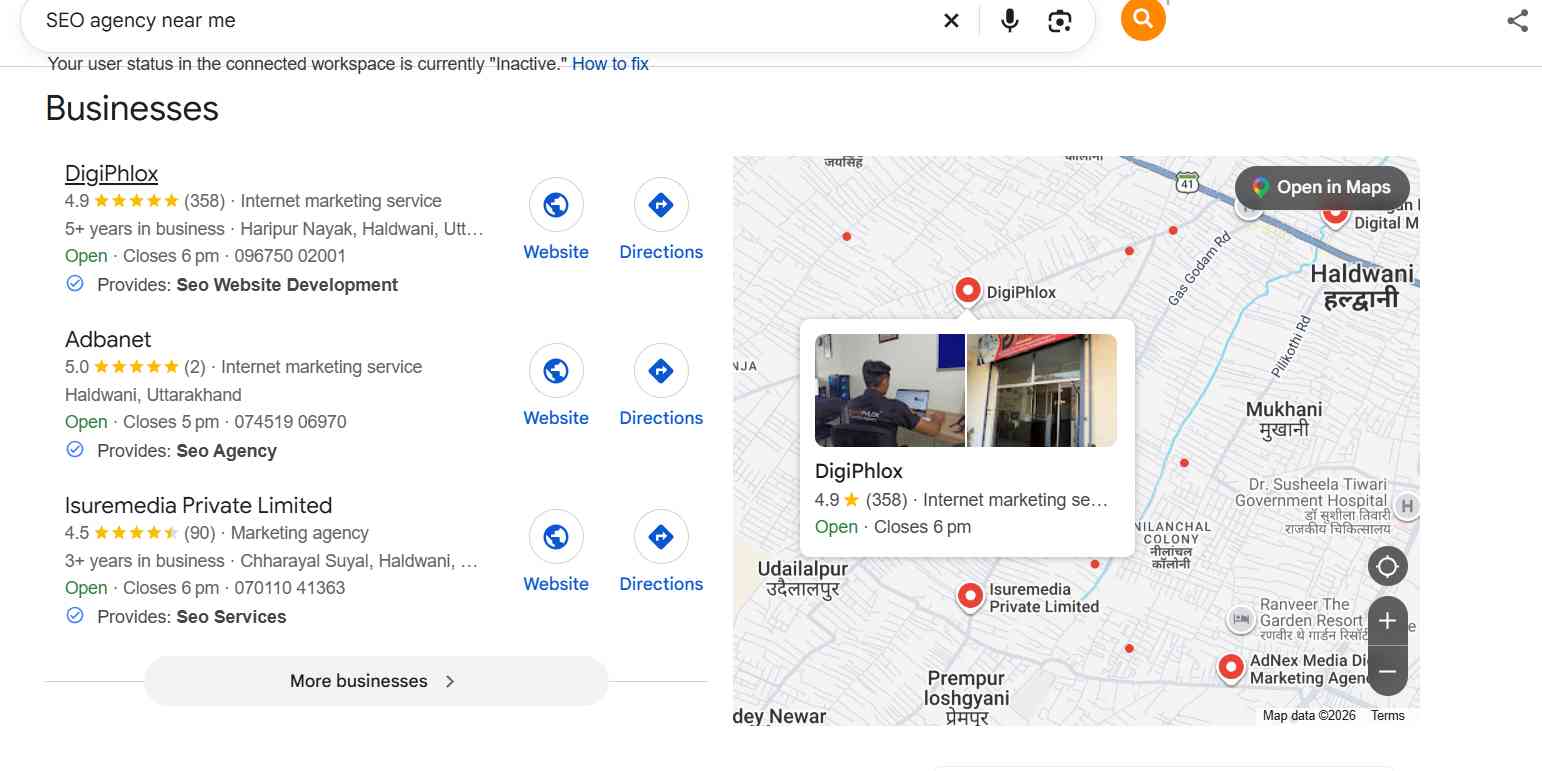
Local packs appear when Google detects local intent.
For example, a search for: "SEO agency near me"
can show a map and business listings before traditional organic results.
This makes local SEO important for businesses that depend on nearby customers. A well-maintained Google Business Profile, accurate business information, genuine reviews, and relevant local content can all contribute to local visibility.
People Also Ask
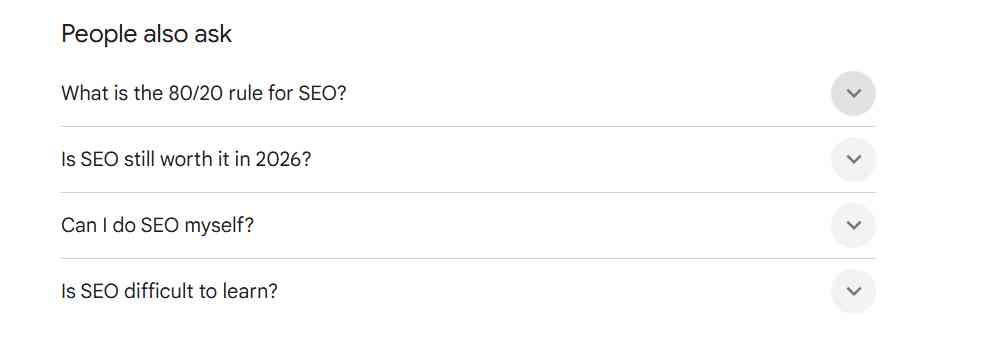
People Also Ask shows related questions beneath search results.
For content creators, it is useful because it reveals the kinds of questions Google considers related to the original search.
Instead of writing an article around one keyword repeatedly, use these related questions to make the page genuinely more useful.
How to Optimize for Zero-Click Search
You cannot control which search features Google displays, but you can optimize your content to increase its visibility across them. Focus on understanding the SERP, answering questions clearly, and giving users a reason to visit your website.
Here are six practical ways to optimize for zero-click search:
Be Strategic With Your Keyword Selection
Not every keyword that triggers a zero-click result offers the same opportunity. Check the SERP before targeting a keyword to see which features appear and whether the query is more likely to drive visibility, traffic, or both.
Search intent matters too. A query like “what is zero-click search” may need a quick answer, while “zero-click search SEO strategy” suggests that the user wants more detailed information. Choose keywords based on what the searcher is actually trying to accomplish.
Structure Content for Search Features
Make your content easy for both users and search engines to understand.
- Answer the main question early
- Use clear headings and short paragraphs
- Use lists and tables where they add value
- Cover related questions naturally
- Match the content to search intent
For example, if you want to appear for a definition-based query, give a clear answer near the top of the page before expanding on the topic.
Give Users a Reason to Click
A zero-click result can increase visibility, but your content still needs to offer value beyond the information shown in Google.
Add useful elements such as:
- Original insights or research
- Practical examples
- Step-by-step guidance
- Comparisons
- Screenshots or visuals
- Supporting data
The goal is to answer the immediate question while giving users a reason to learn more on your website.
Build Trust Into Your Content
Clear, reliable information matters in both traditional search and AI-powered search experiences.
Support important claims with credible sources, keep content updated, and make authorship clear. Where relevant, demonstrate first-hand experience and provide useful evidence instead of making unsupported claims.
Use Structured Data Where It Makes Sense
Structured data helps search engines understand the information on your page and can make content eligible for certain search features. Depending on the page, you may use schema such as Article, Organization, Product, Breadcrumb, or LocalBusiness.
Keep in mind that structured data does not guarantee rankings or rich results. Google decides whether and how eligible features appear.
Monitor Changes in Search Performance
Zero-click SEO requires more than tracking rankings. Monitor impressions, clicks, CTR, and queries in Google Search Console, and pay attention to changes in the SERP.
If your CTR drops, check whether new features such as AI Overviews, featured snippets, or People Also Ask are taking up more space in the results.
The goal is to understand where your content appears, how users interact with it, and whether that visibility leads to meaningful traffic or brand exposure.
How to Find Zero-Click Opportunities
Finding these opportunities does not need to be complicated. Start with your existing keyword list and search important terms manually. Look at the results and ask three questions: What is Google showing? What does the user actually want? Is there a reason for the user to visit a website?
If Google shows a direct answer for a simple factual query, the click potential may be limited. If the results show comparisons, guides, products, services, or detailed resources, there may be a much stronger opportunity to earn a visit. You can then create content that answers the main question quickly while providing more useful information than the SERP itself.
How to Measure Zero-Click SEO
Clicks still matter, but they should not be the only measure of success. Look at impressions, CTR, rankings, conversions, branded searches, and organic revenue alongside clicks. Google has also started giving website owners more visibility into their performance in generative AI search. In June 2026, Google announced dedicated Search Console reporting for impressions from generative AI features such as AI Overviews and AI Mode, with the rollout reaching websites worldwide by August 31, 2026.
That is a meaningful change in how SEO performance can be evaluated. Suppose your page receives more impressions but a lower CTR. Don't immediately assume the page has become worse. Check the live SERP. An AI overview, featured snippet, video carousel, or other feature may now be taking up more of the screen. The right response depends on why the click changed.
Search Everywhere: What Comes After Google?
Zero-click search is part of a bigger shift. People no longer discover information in just one place. Depending on the question, they may use Google, YouTube, Reddit, TikTok, Amazon, or an AI platform. That does not mean you need to publish the same content everywhere. It means you should understand where your audience actually searches.
A SaaS company may need Google, AI search, YouTube, and developer communities. A local business may care more about Google Search, Maps, reviews, and local listings. An e-commerce brand may need Google, Shopping, YouTube, and social platforms. The principle is simple: Be visible where your customers are looking. Google's own 2026 updates show how quickly this search ecosystem is changing, with AI Overviews and AI Mode now reaching billions of users.
Common Zero-Click SEO Mistakes
One mistake is trying to optimize for every zero-click result. You don't need to win every featured snippet or appear for every question. Another is writing extremely short content just because Google may extract a short answer. A useful page should answer the question quickly and give readers a reason to continue.
It is also a mistake to treat schema as a shortcut, measure SEO only through clicks, or publish generic content that simply repeats what already exists. The better approach is straightforward: understand the SERP, match the intent, answer clearly, and provide something genuinely useful beyond the basic answer.
Conclusion
Zero-click search is changing how people interact with Google, but SEO is not going away. AI Overviews, AI Mode, featured snippets, local results, and other SERP features can answer questions without a traditional click, making visibility more important than rankings alone.
Focus on search intent, clear answers, useful content, strong technical SEO, and the metrics that matter beyond clicks. Modern SEO is not just about earning the click. It is about staying visible and useful throughout the search journey.
Frequently Asked Questions
1. What is a zero-click search?
A zero-click search occurs when a user gets the information they need directly from the search results without clicking through to a website.
2. Are zero-click searches bad for SEO?
Not necessarily. They can reduce clicks for some informational searches, but they can also provide valuable brand visibility through AI Overviews, featured snippets, local results, knowledge panels, and other SERP features.
3. How can I optimize for zero-click searches?
Start with search intent and the live SERP. Give clear answers early, structure your content well, provide useful depth, build topical authority, use relevant structured data, and maintain strong technical SEO.
4. Do AI Overviews reduce organic clicks?
Research suggests they can. Pew Research Center found that traditional search-result links were clicked in 8% of visits where an AI summary appeared, compared with 15% where one did not in its March 2025 dataset.
5. Can zero-click results still help a website?
Yes. A website can gain visibility when its content is cited in an AI Overview, appears in a featured snippet, shows up in a local result, or becomes associated with a brand or entity.
6. Does schema guarantee a rich result?
No. Structured data can help Google understand eligible content, but it does not guarantee that a particular search feature will appear.
7. Is SEO still important with AI search?
Yes. Google says its generative AI search experiences are rooted in its core Search ranking and quality systems, so established SEO fundamentals remain important.
8. Should I optimize every article for zero-click search?
No. First understand the query's intent and click potential. Some searches are naturally satisfied by a quick answer, while others require deeper research and are more likely to lead users to a website.
People are also reading: