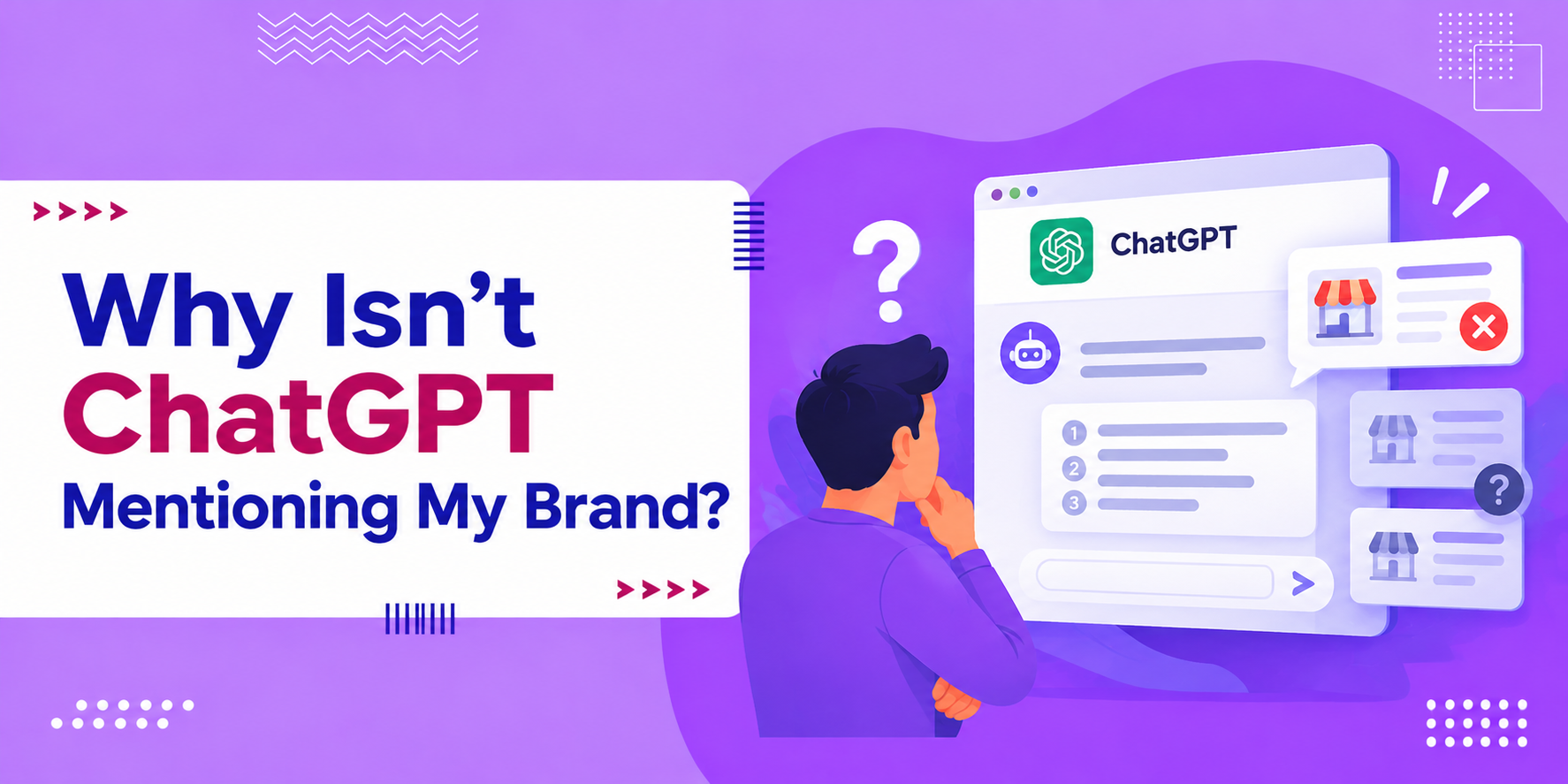

Your competitors appear in ChatGPT recommendations, but your brand does not. Even when your product offers similar features, AI-generated answers may recommend other businesses instead.
This matters because search behavior is changing. A July 2025 study by Pew Research Center analyzed browsing activity from 900 US adults and found that users clicked a traditional Google search result in 8% of visits when an AI summary appeared, compared with 15% when it did not. The study examined Google Search, not ChatGPT, but it illustrates why visibility within AI-generated answers deserves attention.
ChatGPT may not mention your brand because it lacks relevant information, cannot access important pages through search, or has limited evidence connecting your business with a particular product category. Your competitors may also have clearer product descriptions and more coverage on relevant websites.
The solution is to identify the gap, improve your website's accessibility and content, and build a credible presence across relevant sources. Here is how to approach each issue.
Here is how to approach each issue and improve your brand's visibility, including practical steps on how to rank on ChatGPT.
Why AI Answers Skip Some Brands Entirely
AI-generated answers depend on the question being asked and the information available to the system. ChatGPT can answer using its existing model knowledge or retrieve current web information when search is used. Google AI Overviews and other AI search experiences use their own retrieval and response-generation systems.
This means a brand can rank in Google Search but still be absent from a ChatGPT recommendation. It may be relevant to a specific feature question but not sufficiently represented for a broader category query.
Understanding LLM SEO can help you evaluate how your brand's content is presented to AI-powered search experiences.”
Why Would ChatGPT Mention a Competitor Instead of My Product?
Your competitor may have more relevant information available across independent reviews, product comparisons, industry publications, and customer discussions.
For example, a competing SaaS product might have detailed documentation, recent customer reviews, and several comparison articles explaining its use cases. Your product might offer similar features, but its website may provide little information beyond a general marketing description.
Compare your brand with two or three competitors and identify differences in:
- Third-party reviews and relevant brand mentions.
- Product descriptions and documented use cases.
- Visibility for category-specific search queries.
- Accuracy and availability of business information.
- Pages cited in AI-generated answers.
Use these differences to decide what to improve rather than assuming that one technical change will solve the problem.
Which Brands Do AI Assistants Mention?
AI assistants may mention brands that are relevant to a user's question and supported by accessible information. The exact selection process differs across platforms.
Three factors are particularly useful to investigate:
- Existing model knowledge: The model may already have information about established brands, depending on its training and development.
- Live web retrieval: Search-enabled experiences can retrieve current webpages and use relevant information to generate answers.
- Available evidence: Product reviews, documentation, comparisons, and independent coverage can help establish what a business offers and whom it serves.
These are useful ways to understand AI visibility, not a guaranteed ranking formula. A company does not need to appear on every major website to be recommended, and no single mention guarantees inclusion.
Is Your Brand Mentioned Enough on Other Sites?
Your website explains your business, but independent sources can provide additional information about your products and expertise.
Relevant sources include industry publications, software review platforms, comparison websites, partner pages, professional associations, interviews, and genuine customer discussions.
What to Do
- Identify competitor mentions: Search for competing brands alongside phrases such as "alternatives," "best tools for," and "review." Record the relevant websites and publications.
- Pitch useful information: Offer original research, expert commentary, practical guides, or customer case studies to publications that cover your industry.
- Collect genuine reviews: Ask customers for honest feedback on relevant review platforms. Keep product listings accurate and respond professionally to criticism.
- Build industry relationships: Participate in relevant events, collaborate with partners, and contribute useful information to professional communities.
- Correct outdated information: Where possible, request updates to inaccurate product descriptions, obsolete pricing, and incorrect company details.
Focus on relevant, credible references rather than the number of mentions alone. Avoid fake reviews, manipulative link schemes, and paid placements presented as independent editorial coverage.
Is Your Business Information Consistent Across Directories and Profiles?
Inconsistent business information can make it harder for customers and search systems to understand which references belong to the same company.
For example, your website might describe your product as an AI writing assistant, while a software directory categorizes it as a general marketing agency. An outdated LinkedIn description or duplicate business listing can create further confusion.
How to Fix Inconsistent Brand Information
Create a reference document containing your official company name, product name, website, business description, main features, target customers, and official social profiles.
Then update your:
- Website and About page.
- LinkedIn company page and relevant executive profiles.
- Software review and comparison platforms.
- Industry directories and partner listings.
- Google Business Profile and other local listings, where relevant.
Remove or correct duplicate profiles where possible. Ensure that descriptions reflect the actual product and do not make unsupported claims.
Does Your Website State What You Do in Clear Sentences?
Vague marketing language makes it difficult for readers to understand your product.
For example, "We empower businesses with innovative digital solutions" does not explain what a company offers.
A clearer description would be: "[Brand] provides project management software that helps remote teams organize tasks, manage deadlines, and track project progress."
The second statement identifies the product, audience, and main use cases.
“Follow these practices to optimize content for AI search while keeping your website useful for readers.”
How to Improve Your Website Content
- Clarify your homepage: Explain what your business does, who it serves, and which problems it solves.
- Improve service pages: State the service and intended audience in the opening paragraph.
- Use customer-focused headings: Address real questions about features, pricing, integrations, and use cases.
- Answer questions directly: Put a concise answer below each question-based heading, followed by supporting details.
- Add useful evidence: Include product documentation, examples, case studies, and accurate feature descriptions.
Avoid creating multiple pages that repeat the same information for slightly different keywords. Each page should answer a distinct question or help customers make a decision.
Do You Use Structured Data?
Structured data is a standardized format that helps search engines interpret information about a website, organization, product, or service.
Relevant schema.org types may help describe your business, but structured data does not guarantee a ChatGPT mention or placement in Google AI Overviews.
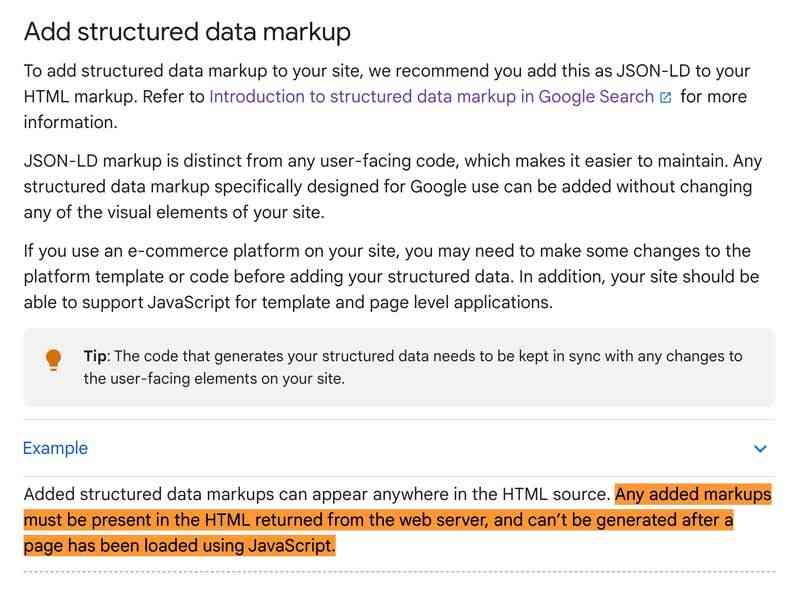
Google's official AI features and your website documentation confirms that AI Overviews and AI Mode do not require additional technical requirements or special AI-specific schema.
How to Use Structured Data Correctly
- Choose schema types that accurately describe your page.
- Make sure the markup matches information visible to users.
- Keep organization names, URLs, logos, and other details current.
- Validate the markup and correct errors.
- Never invent reviews, ratings, or product features.
Do not rely on schema markup or llms.txt as a shortcut to AI visibility. Start with accurate content and established SEO fundamentals.
Can Crawlers Reach Your Website?
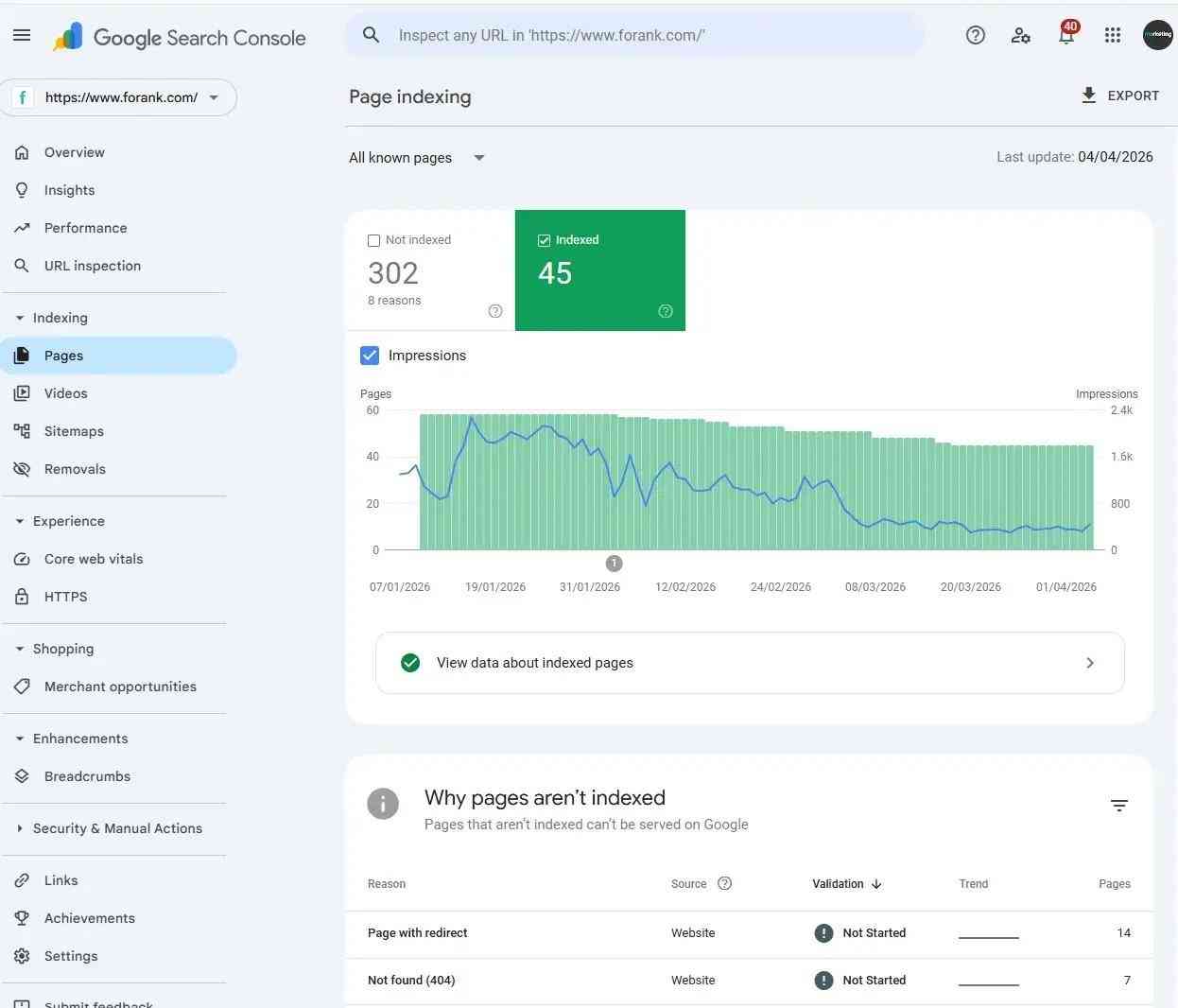
Technical barriers can prevent search systems from accessing important pages, even when the content is useful.
1. Review Your robots.txt File
Check whether your robots.txt file blocks crawlers that you want to allow.
OpenAI uses different crawlers for different purposes. OAI-SearchBot helps surface websites in ChatGPT search results, while GPTBot crawls content that may be used to train OpenAI's AI models.
Allowing OAI-SearchBot can help your website appear in ChatGPT search results, but it does not guarantee that your content will be cited. Blocking it prevents your website from appearing in ChatGPT search answers through that crawler.
2. Check Firewall and Hosting Restrictions
Your hosting provider, firewall, or content delivery network may block crawler requests independently of robots.txt.
Review server logs and security settings if important pages appear inaccessible. Confirm legitimate crawler traffic before changing security rules.
3. Make Important Content Available as Text
Ensure that essential product descriptions, pricing, features, and documentation are available as readable text. Do not rely exclusively on images or content that may be inaccessible without client-side JavaScript execution.
4. Check Indexing and Internal Links
Use Google Search Console to identify indexing issues, incorrect canonical URLs, and accidental noindex directives.
Link important pages from relevant sections of your website so visitors and search engines can find them.
5. Test the Changes
After fixing technical issues, check the affected pages again and monitor crawling and indexing where possible. Better accessibility makes content available for retrieval but does not guarantee that an AI system will select it.
How to SEO for Google AI Overviews: The Technical Baseline
Google AI Overviews and ChatGPT are different products, but established SEO practices provide a useful foundation for search visibility.
Your website needs accessible, indexable pages with useful content to improve its chances of appearing in AI-generated search results.
Use this checklist:
- Allow crawling of the pages you want indexed.
- Resolve indexing and canonicalization problems.
- Keep important information available as text.
- Use clear internal links.
- Publish helpful, accurate, original content.
- Provide real author information where appropriate.
- Ensure structured data matches visible content.
- Monitor indexing and performance through Search Console.
Meeting these requirements does not guarantee inclusion in AI-generated results. Continue improving the relevance, clarity, and usefulness of your content.
What Actually Earns AI Citations?
No publicly established checklist guarantees that a brand will appear in every AI-generated answer. However, several areas deserve attention when improving your online presence.
1. Relevant Brand Mentions
Build a presence on websites that cover your industry and audience. A relevant product comparison or expert interview may provide more value than numerous unrelated directory listings.
2. Earned Media and Independent Reviews
Help customers and publications evaluate your product through useful documentation, genuine reviews, original research, and verifiable case studies.
3. Cross-Domain Presence
Keep your company's core information consistent across your website, software profiles, partner pages, and relevant industry publications.
4. Entity Consistency
Ensure that your official company name, product name, category, and use cases are represented accurately across your online profiles.
5. Original Expertise
Publish material that offers something beyond generic advice. Depending on your industry, this might include research, practical benchmarks, detailed product documentation, or transparent customer case studies.
The objective is to make your brand easier to understand and evaluate, not to manufacture mentions for their own sake.
Where LinkedIn and Outbound Fit into AI Visibility
LinkedIn can help B2B companies communicate their expertise and explain how their products solve customer problems.
Individual Profiles and Consistent Publishing
Founders and subject-matter experts can share practical advice, research findings, product updates, and examples from their work.
For example, a cybersecurity SaaS founder could publish a guide to common security mistakes or explain how businesses can assess their security requirements. Relevant product information can appear naturally when it adds value to the discussion.
Signal-Based Outreach and Earned Coverage
Reach out to relevant journalists, partners, and industry publications when you have something useful to share, such as original research, a product launch, or a documented customer success story.
Generic mass outreach does not guarantee coverage. Focus on credible information that genuinely matches the publication's audience.
Connect Content, Reviews, and Partnerships
Build a repeatable process:
- Identify a customer problem.
- Publish useful content or research.
- Share it through relevant professional channels.
- Contact appropriate publications or partners.
- Encourage honest customer reviews.
- Track the resulting mentions and visibility.
Measure the relevance and quality of coverage rather than simply counting posts.
How Do You Measure a Brand's Visibility in AI Answers?
AI responses can vary, so one test is not enough to establish whether your brand has improved its visibility.
Step 1: Build a List of Customer Questions
Include category recommendations, competitor comparisons, feature-specific queries, pricing questions, and use-case questions.
Focus on queries where your product is genuinely relevant.
Step 2: Test Across AI Platforms
Ask the same questions in ChatGPT, Gemini, Perplexity, and Google AI Overviews where available. Record the date and whether live search was used.
Step 3: Record the Results
For each answer, note:
- Whether your brand appears.
- Whether the product description is accurate.
- Which competitors are mentioned.
- Which sources are cited.
- Whether the brand is recommended or merely referenced.
Step 4: Review the Sources
Investigate the pages cited in competitor recommendations. Look for gaps in your own product documentation, relevant comparisons, and third-party coverage.
Treat these sources as clues, not proof of a particular ranking factor.
Step 5: Repeat and Compare
Run the same tests periodically. Track AI mentions alongside organic visibility, branded searches, referral traffic, and qualified leads where measurable.
Which Service Solves Which Problem?
These terms describe related but different areas of search visibility.
- Search Engine Optimization (SEO): Improves visibility in traditional search results through technical accessibility, useful content, and other established practices.
- Answer Engine Optimization (AEO): Focuses on making information suitable for systems that provide direct answers.
- Generative Engine Optimization (GEO): Focuses on brand and content visibility in generative AI responses.
- AI Overview Optimization (AIO): A term sometimes used for improving visibility in Google's AI-generated search summaries.
Definitions vary across the industry, and these practices overlap. They should not be treated as separate systems with guaranteed outcomes.
If your pages cannot be crawled or indexed, start with technical SEO . If your website is clear but lacks relevant independent coverage, focus on building credible references. If your brand is described incorrectly, correct the information across your website and profiles.
Will AI Overviews Replace Organic Clicks Entirely?
Organic clicks are unlikely to disappear entirely, but AI-generated summaries can change how users interact with search results.
Research suggests that users may be less likely to click traditional search results when an AI summary appears. However, the impact can vary by search query, industry, and audience.
Businesses should therefore measure more than website traffic. Track qualified visits, conversions, brand searches, relevant AI citations, and customer acquisition alongside traditional SEO metrics.
An AI mention does not automatically produce a sale, just as a high search ranking does not guarantee a conversion.
Final Thoughts
If ChatGPT is not mentioning your brand, start by identifying the actual problem. Check whether your website explains your product clearly, whether important pages are accessible, and whether relevant independent sources provide accurate information about your business.
Correct inconsistencies, improve your product documentation, build credible industry relationships, and test the questions your customers actually ask.
There is no guaranteed shortcut to AI recommendations. A clear website, reliable information, and a credible presence across relevant sources give your brand a stronger foundation for visibility in AI-powered search.
Frequently Asked Questions
1. Why Isn't ChatGPT Mentioning My Brand?
ChatGPT may lack clear, relevant information about your brand across your website and other sources. Improve your content and build relevant brand mentions.
2. How Do I Rank in Google AI Overviews in 2026?
Follow SEO best practices, including crawlability, useful content, and internal linking. These practices improve eligibility but do not guarantee inclusion.
3. Does Schema Markup Help My Brand Appear in AI Answers?
Schema markup helps search engines understand your content and business information. However, it does not guarantee AI citations.
4. Why Does ChatGPT Mention My Competitor but Not My Brand?
Your competitor may have clearer product information or more relevant mentions across trusted websites. Compare both brands to identify content gaps.
5. How Long Does It Take to Appear in ChatGPT Answers?
There is no fixed timeline for appearing in ChatGPT answers. Monitor your brand's visibility regularly across relevant queries.
People are also reading:
- Four functions of management
- Best campaign management software
- Best lead generation tools
- Best digital marketing courses