
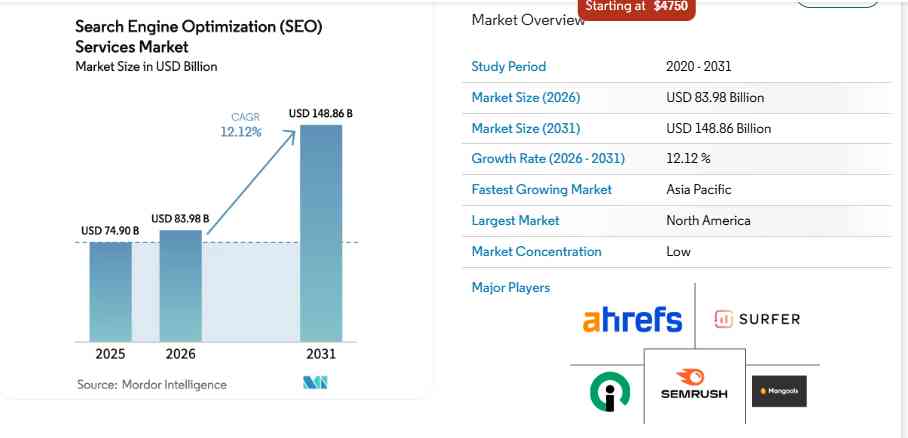
Search engines are one of the main ways people find information, products, services, and businesses online. SEO marketing helps businesses improve their visibility in organic search results so potential customers can find them when searching for relevant topics, products, or services. It combines keyword research, content optimization, technical improvements, website authority building, and performance tracking to attract relevant visitors without paying for every individual click. The global SEO services market is valued at $83.98 billion in 2026 and is projected to reach $148.86 billion by 2031, showing the growing importance of search optimization in digital marketing.
What Is SEO Marketing?
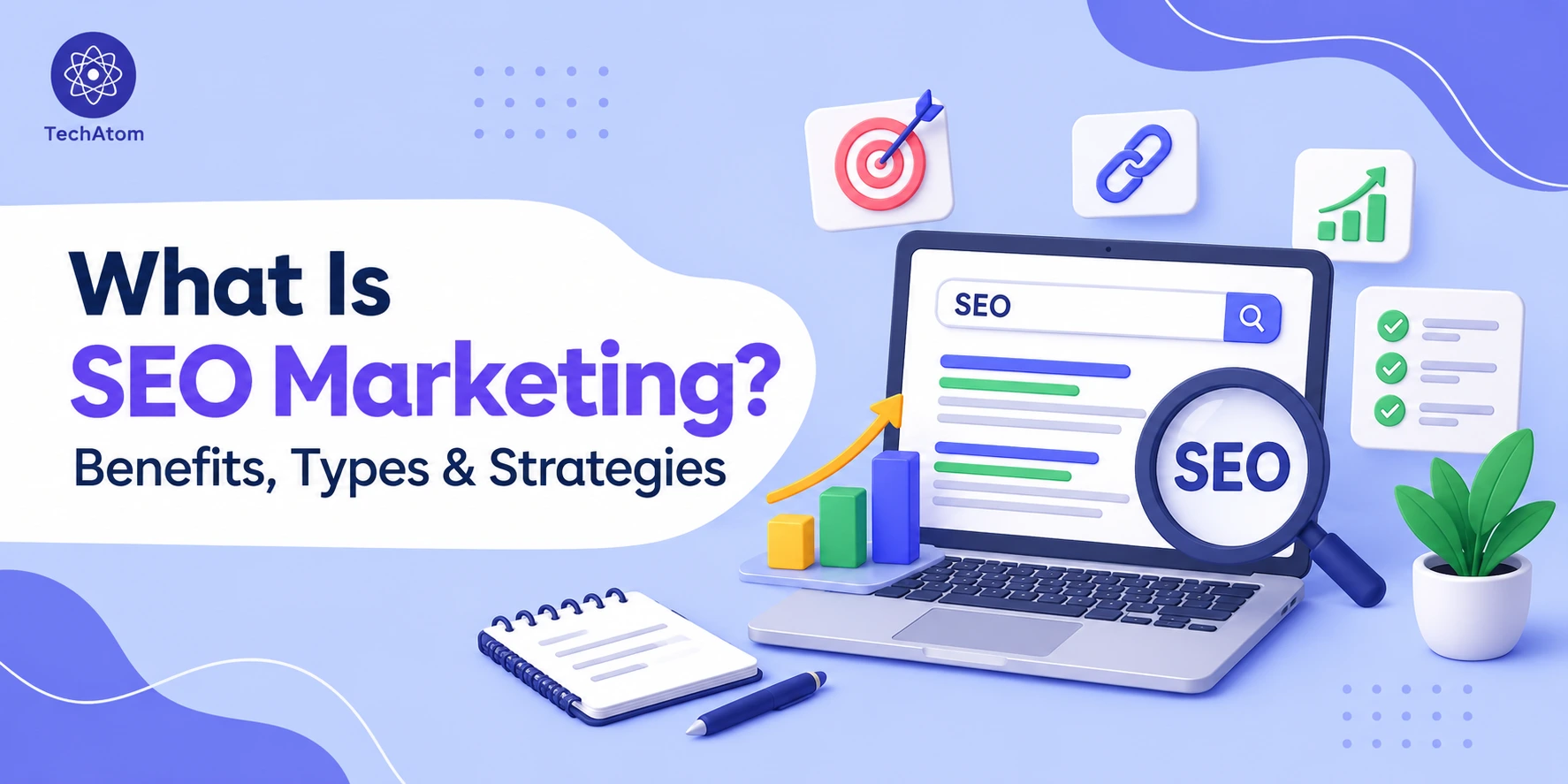
SEO marketing is the practice of improving a website to increase its visibility and rankings in unpaid, organic search results. In simple terms, it means making your website easier for search engines to understand while providing useful information that matches what people are searching for. SEO marketing can include researching keywords, creating helpful content, optimizing titles and headings, improving internal links, fixing technical problems, making pages mobile-friendly, improving website speed, earning relevant backlinks, and optimizing a business's local search presence. The goal is not simply to rank for more keywords but to attract the right audience and provide a useful experience once visitors reach the website.
How SEO Marketing Works
Search engines such as Google use automated programs called crawlers to find and access webpages. The information they collect is processed and stored in a search index. When someone enters a query, search systems analyze indexed content and determine which pages are most relevant and useful for that particular search. SEO marketing supports this process by improving three important areas:
- Relevance: Creating content that matches the words, questions, and search intent behind a user's query.
- Authority: Building credibility through useful content, reputable references, and relevant backlinks.
- Technical experience: Making the website fast, secure, mobile-friendly, crawlable, and easy for search engines to understand.
These areas are commonly addressed through on-page, off-page, and technical SEO activities. The aim is to help search engines understand a website while also giving users a useful and accessible experience.
SEO Marketing vs. Paid Search Marketing
SEO and paid search both help businesses attract visitors through search engines, but they work in different ways. SEO focuses on improving unpaid organic listings, while paid search places advertisements in sponsored areas of search results. SEO does not have a direct cost for every organic click, but businesses still invest time, content, tools, developers, or professional SEO services to achieve results. Paid search requires an ongoing advertising budget and can provide visibility soon after a campaign starts, while SEO generally takes longer to build ranking momentum. Another major difference is longevity: paid search traffic usually stops when the campaign or budget ends, whereas a well-performing organic page can continue generating traffic after active optimization is reduced.
|
SEO Marketing |
Paid Search Marketing |
|
Focuses on organic search results |
Focuses on paid advertisements |
|
No direct advertising cost for each organic click |
Usually charges for clicks or other ad interactions |
|
Takes time to build visibility |
Can provide visibility quickly |
|
Requires ongoing optimization |
Requires an ongoing advertising budget |
|
Can generate long-term organic traffic |
Traffic generally stops when campaigns stop |
Key Benefits of SEO Marketing for Businesses
SEO marketing can help businesses attract relevant visitors, improve brand visibility, strengthen credibility, and create a long-term source of website traffic. Organic search is a major source of website visits across the web, although the exact percentage varies by website and industry. A frequently cited industry benchmark puts organic search at around 53% of website traffic, so it is better viewed as a general benchmark rather than a fixed percentage for every business. SEO can also complement other marketing channels by giving businesses another way to reach people who are already searching for information, products, or services.
1. Increases organic traffic
SEO helps pages appear for relevant searches, which can bring a steady flow of visitors without a direct advertising charge for each click. Unlike paid campaigns, where traffic generally decreases once the budget stops, a useful page can continue attracting visitors as long as it maintains its visibility and remains relevant to searchers. This can make organic traffic a valuable long-term marketing asset, although maintaining rankings still requires regular updates and optimization.
2. Builds credibility and trust
Appearing prominently for relevant searches can increase a business's visibility and familiarity among potential customers. A website that provides accurate information, clear navigation, secure connections, fast pages, and useful content can also create a better experience for visitors. However, high rankings alone do not guarantee trust. A business still needs to demonstrate expertise, provide reliable information, maintain a good reputation, and deliver a quality customer experience.
3. Improves online visibility
SEO increases the number of relevant searches where a business can appear. This visibility is not limited to traditional organic listings and may include local results, images, featured results, and other search features depending on the query. Even when users do not click a result, repeated exposure to a business name can contribute to brand awareness.
4. Attracts relevant visitors
SEO focuses on reaching people based on what they are actively searching for. Someone searching for a specific product, service, or solution may already have a clear need, making that visitor potentially more valuable than someone reached through a general advertising message. Matching content with search intent helps businesses attract visitors who are more likely to engage with the website or take a desired action.
5. Supports long-term marketing results
A well-created and optimized page can continue attracting organic visitors for months or even years. Articles, product pages, service pages, guides, and other resources can become long-term digital assets. However, SEO is not completely passive because competitors, search behavior, industry information, and search algorithms change, so important pages should be reviewed and updated when necessary.
6. Reduces dependence on paid advertising
SEO can help businesses diversify their sources of website traffic instead of depending entirely on paid campaigns. Although SEO requires investment in content, technical work, tools, or professional services, organic traffic does not carry the same direct per-click advertising cost as paid search. Over time, a strong organic presence can help reduce the pressure to pay for every website visit.
Different Types of SEO Marketing and How They Help Your Website Grow
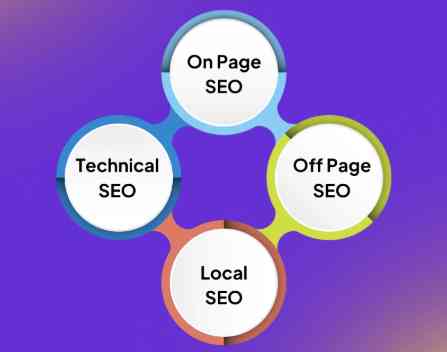
The four main types of SEO marketing are On-Page SEO, Off-Page SEO, Technical SEO, and Local SEO. They address different parts of a website's search visibility, but they work best when used together. Strong content may struggle if a website has serious technical problems, while a technically sound website may not attract enough visitors if its content does not match user needs.
1. On-Page SEO
On-Page SEO focuses on improving individual webpages and their content, structure, and HTML elements to make them easier for both search engines and visitors to understand. It involves optimizing the information that appears directly on a webpage, including its headings, text, images, links, title tag, and meta description. Good On-Page SEO helps search engines understand the main topic of a page and determine how closely it matches a user's search intent. It also improves readability and navigation, making it easier for visitors to find the information they need.
Common activities include:
- Using relevant keywords naturally
- Writing descriptive title tags and meta descriptions
- Organizing content with H1, H2, and H3 headings
- Improving content quality and relevance
- Optimizing images where appropriate
- Creating useful internal links
- Using clear and descriptive URLs
The main purpose is to help search engines understand what a page is about while making the information easy for visitors to read and use.
2. Off-Page SEO
Off-Page SEO covers activities outside your own website that can help build credibility and authority. Backlinks are an important part of this area because relevant links from reputable websites can indicate that other sources consider your content useful or trustworthy. Off-page SEO can involve earning editorial backlinks, digital PR, industry relationships, brand mentions, original research, and publishing resources that other websites have a genuine reason to reference. The focus should be on quality and relevance rather than collecting large numbers of unrelated links.
3. Technical SEO
Technical SEO focuses on improving the structure, accessibility, and performance of a website so that search engines can crawl, understand, and index its pages properly. It deals with the technical elements that work behind the scenes but can directly affect how easily search engines access a website and how smoothly visitors can use it. A technically well-structured website also reduces issues that may prevent important pages from being crawled, indexed, or displayed correctly in search results.
Important areas include:
- Website speed and performance
- Mobile usability
- Crawlability and indexability
- XML sitemaps
- Canonical URLs
- Redirects and broken links
- HTTPS security
- JavaScript rendering
- Structured data where appropriate
A technically healthy website makes it easier for search engines to access and understand pages while also providing visitors with a smoother experience.
4. Local SEO
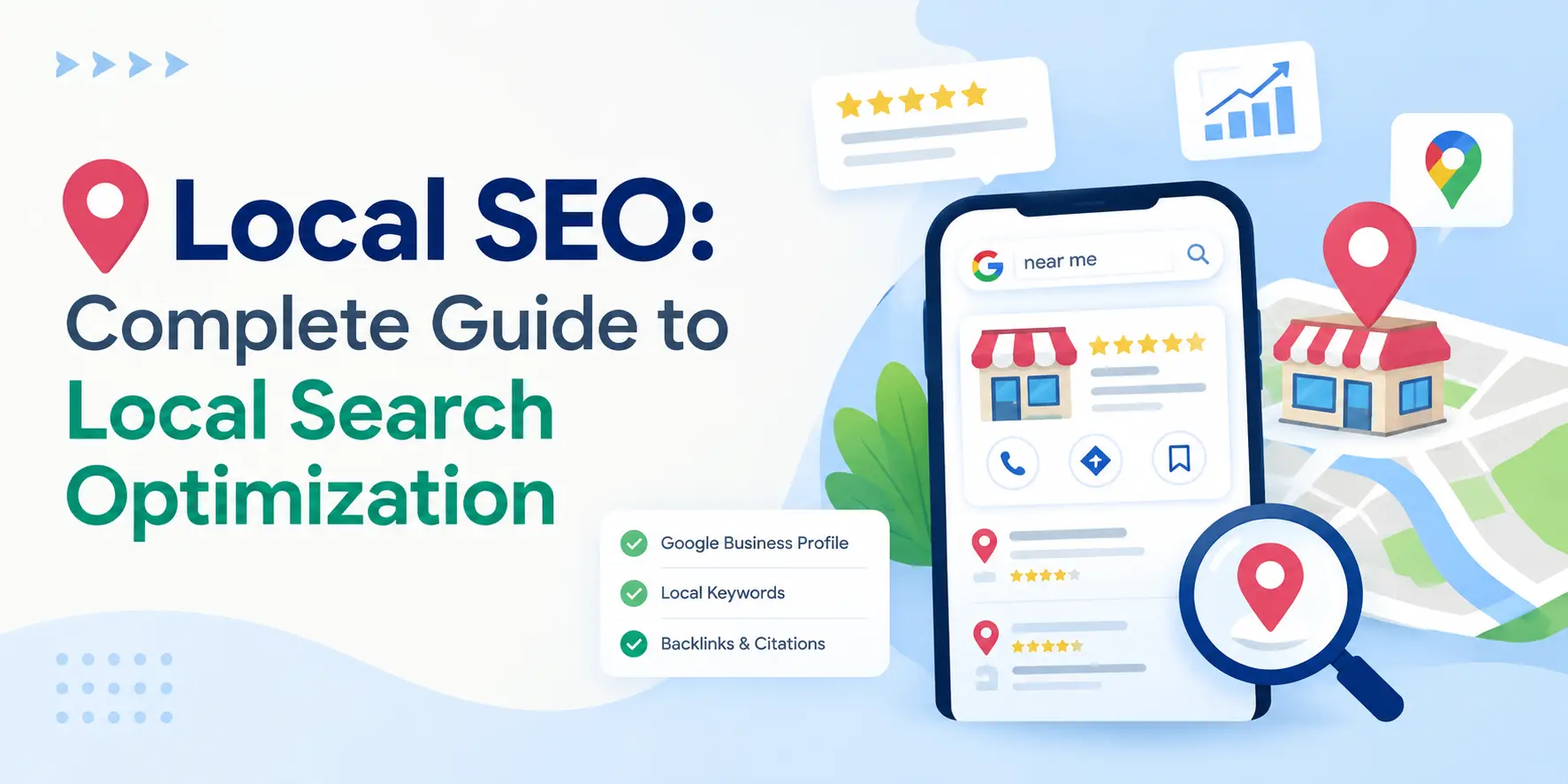
Local SEO focuses on helping businesses appear in searches connected to a specific location. It is especially useful for physical stores, restaurants, clinics, hotels, agencies, and local service providers. Common activities include creating and maintaining a Google Business Profile, keeping business information accurate, collecting genuine customer reviews, using relevant local keywords, creating location-specific content, and earning relevant local links. These activities can help businesses reach nearby customers when they search for products or services in their area.
How to Build an Effective SEO Marketing Strategy
An effective SEO marketing strategy starts with understanding your audience, identifying what they search for, creating content that meets those needs, improving the website's technical foundation, and measuring the results. SEO should be treated as an ongoing process because search behavior, competitors, content, and search results change over time.
1. Understand Your Audience and Search Intent
First, identify your target audience and the problems, questions, or needs they have. Then consider the intent behind their searches. Some searches are informational, while others are navigational, commercial, or transactional. For example, someone searching for "what is technical SEO" is looking for information, while someone searching for "SEO services for small business" may be comparing service providers. Creating content that matches the actual intent behind a query makes it more useful and gives the page a better chance of satisfying the searcher.
2. Conduct Keyword Research
Keyword research helps identify the words and phrases people use when searching for topics related to your business. Start with your main products, services, and industry topics, then use SEO tools to analyze search volume, competition, related keywords, and variations. Long-tail keywords can be particularly useful because they are more specific and often represent a clearer user need. Instead of focusing only on keywords with the highest search volume, choose terms based on relevance, ranking potential, search intent, and their potential value to the business.
3. Optimize Content and On-Page Elements
Create content that directly addresses the searcher's needs and provides enough useful information to answer the query. Use descriptive titles and headings, place keywords naturally, organize information clearly, and avoid keyword stuffing. You should also optimize URLs, images, internal links, page speed, mobile usability, and other important on-page and technical elements. The focus should be on making the page useful for people first while ensuring search engines can understand its topic and structure.
4. Build Website Authority and Earn Backlinks
Build authority by publishing resources that other websites genuinely want to reference. Original research, useful statistics, detailed guides, tools, templates, and expert resources can create natural opportunities for backlinks. Internal links should also connect related pages so users and search engines can understand the relationship between your content. When building external links, prioritize relevant and reputable sources rather than trying to obtain as many links as possible.
5. Track, Review, and Improve SEO Performance
Use tools such as Google Search Console and analytics platforms to monitor organic traffic, impressions, clicks, rankings, engagement, and conversions. Review older pages regularly to update outdated information, improve weak sections, add useful details, and fix broken links or technical problems. SEO performance should guide future decisions, so continue improving pages based on actual data rather than following the same strategy indefinitely.
SEO Marketing Best Practices for Long-Term Success
Long-term SEO success comes from consistent optimization rather than shortcuts. Create accurate, useful, people-first content and make sure every important page has a clear purpose. Keep the website technically healthy by addressing crawlability, indexability, mobile usability, speed, security, navigation, and other technical issues. Use keywords naturally instead of repeating them unnecessarily, and focus on satisfying search intent rather than writing only for search engines. Build authority by creating resources worth referencing and earning relevant backlinks. Finally, review SEO performance regularly and make changes when data, competitors, user behavior, or search results show that improvements are needed.
Overcoming Common SEO Challenges
SEO can be challenging because rankings are affected by competition, technical issues, content quality, algorithm changes, and changing search behavior. Some of the most common challenges include:
- Algorithm updates: Search engines regularly change and improve their systems, which can cause ranking fluctuations. Focus on useful, reliable, people-first content instead of tactics designed around temporary ranking changes.
- Technical problems: Slow loading, mobile usability issues, broken links, or indexing problems can limit organic visibility and should be addressed promptly.
- Content saturation: Many businesses target the same broad topics, making it harder for generic content to stand out. Focus on specific user needs, original information, updated resources, and stronger answers.
- Slow results: SEO often takes time, so businesses should evaluate progress over a reasonable period rather than expecting immediate rankings.
- Changing search behavior: Search engines are introducing more answer-focused features, including AI-generated search experiences, which can change how users interact with traditional organic listings.

Current industry research from Ahrefs reports that AI Overviews are associated with a 58% lower average click-through rate for the top-ranking organic result, showing why businesses should consider visibility, engagement, and conversions in addition to traditional rankings.
How to Measure SEO Marketing Success
SEO success should be measured using a combination of search visibility, traffic, engagement, and business outcomes rather than rankings alone. A page can receive thousands of visits without producing meaningful results if those visitors are not relevant to the business. Measuring several metrics together provides a clearer picture of whether SEO is actually contributing to growth.
Organic Traffic and Keyword Rankings
Organic traffic shows how many visitors reach your website through unpaid search results, while keyword rankings help you monitor how important pages perform for target queries. Track non-brand and business-relevant keywords where possible and look for changes over time instead of focusing on one ranking position. Search Console can also show impressions, clicks, click-through rates, and average positions for your pages. The first organic result receives about 27.6% of clicks on average, according to widely cited industry research, although actual CTR varies depending on the query, device, search features, and competition. This is why ranking position should be considered alongside impressions and clicks rather than treated as the only measure of success.
Click-Through Rate and User Engagement
CTR shows how frequently users click your search result after seeing it. If a page receives many impressions but relatively few clicks, the title, search intent, or SERP features may need closer review. After users reach your website, engagement metrics can help determine whether the content is meeting their expectations. Depending on the website, useful measures may include engaged sessions, engagement time, page interactions, and other events.
Leads, Conversions, and Revenue
Traffic becomes much more valuable when it contributes to actual business results. Measuring conversions helps you understand whether visitors coming from organic search are taking meaningful actions on your website, rather than simply increasing the number of visits. It also shows which pages, keywords, and search topics are more likely to support your business goals and generate potential customers or sales.
Track actions such as:
- Contact form submissions
- Product purchases
- Phone calls
- Quote requests
- Demo bookings
- Newsletter sign-ups
- Account registrations
Connecting these actions to organic traffic helps you understand which pages and search topics contribute to leads and revenue rather than simply generating visits.
Backlinks and Website Authority
Monitor the quality and growth of referring domains instead of focusing only on the total number of backlinks. Relevant links from reputable websites can be more valuable than large numbers of unrelated links. You can also monitor natural brand mentions and references generated by original research, useful guides, digital PR, and other content assets.
How SEO Marketing Supports Business Growth
SEO marketing can support business growth by increasing online visibility, attracting people who are actively searching for relevant products or services, and creating a long-term source of organic traffic. It can help businesses reach customers at different stages of the buying journey, from people looking for basic information to those comparing options or ready to make a purchase. SEO can also strengthen brand familiarity, improve website usability, and reduce dependence on paid acquisition channels.
The main ways SEO can support business growth include:
- Drives qualified traffic: Relevant search terms can bring visitors who already have an interest in a product, service, or solution.
- Creates long-term value: Well-optimized pages can continue attracting visitors after publication, although they may require maintenance.
- Builds brand credibility: Consistent visibility for relevant searches can make a business more familiar to potential customers.
- Improves user experience: SEO often encourages improvements to website structure, mobile usability, speed, navigation, and content clarity.
- Supports cost efficiency: Organic search does not carry the same per-click advertising cost as paid search, helping businesses diversify customer acquisition.
The size of the SEO industry also reflects continued investment in organic visibility. The global SEO services market is estimated at $83.98 billion in 2026, with projections reaching $148.86 billion by 2031.
If you need help turning your SEO strategy into measurable business results, TechAtom can help with SEO, content, and digital marketing strategies tailored to your goals. The focus is on building sustainable organic visibility, attracting relevant traffic, and supporting long-term growth.
Conclusion
SEO marketing helps businesses improve organic search visibility, attract relevant visitors, build credibility, and create long-term digital assets. It combines on-page, off-page, technical, and local SEO with keyword research, content creation, authority building, and performance tracking. The most effective approach is to focus on what users need, create useful content, maintain a technically healthy website, and continuously improve based on real performance data. While SEO takes time and consistent effort, it can become a valuable part of a long-term digital marketing strategy.
Frequently Asked Questions
1. How Long Does SEO Marketing Take to Show Results?
SEO can take several weeks to several months to produce noticeable results, depending on competition, website authority, technical condition, content quality, and the changes being made. Some changes can appear relatively quickly, while significant ranking improvements often require longer-term effort.
2. How Much Does SEO Marketing Cost?
SEO marketing costs vary depending on website size, competition, goals, content requirements, technical work, tools, and whether SEO is handled internally or by an agency or specialist. There is no single fixed cost for every business.
3. Is SEO Marketing Suitable for Small Businesses?
Yes. SEO can be particularly useful for small businesses that target specific services, locations, customer problems, or long-tail searches. Local SEO can also help smaller businesses reach customers searching for nearby products and services.
4. What Is the Difference Between SEO and SEO Marketing?
SEO is the process of optimizing a website for search engines, while SEO marketing applies SEO as part of a broader marketing strategy to increase visibility, attract relevant traffic, generate leads, and support business growth.
5. Can SEO Marketing Increase Website Sales and Leads?
Yes. SEO can bring people to your website who are actively searching for products, services, or solutions. However, rankings and traffic alone do not guarantee sales. Conversion-focused pages, useful offers, competitive pricing, trust signals, and a good website experience also influence whether visitors become customers.
People are also Reading