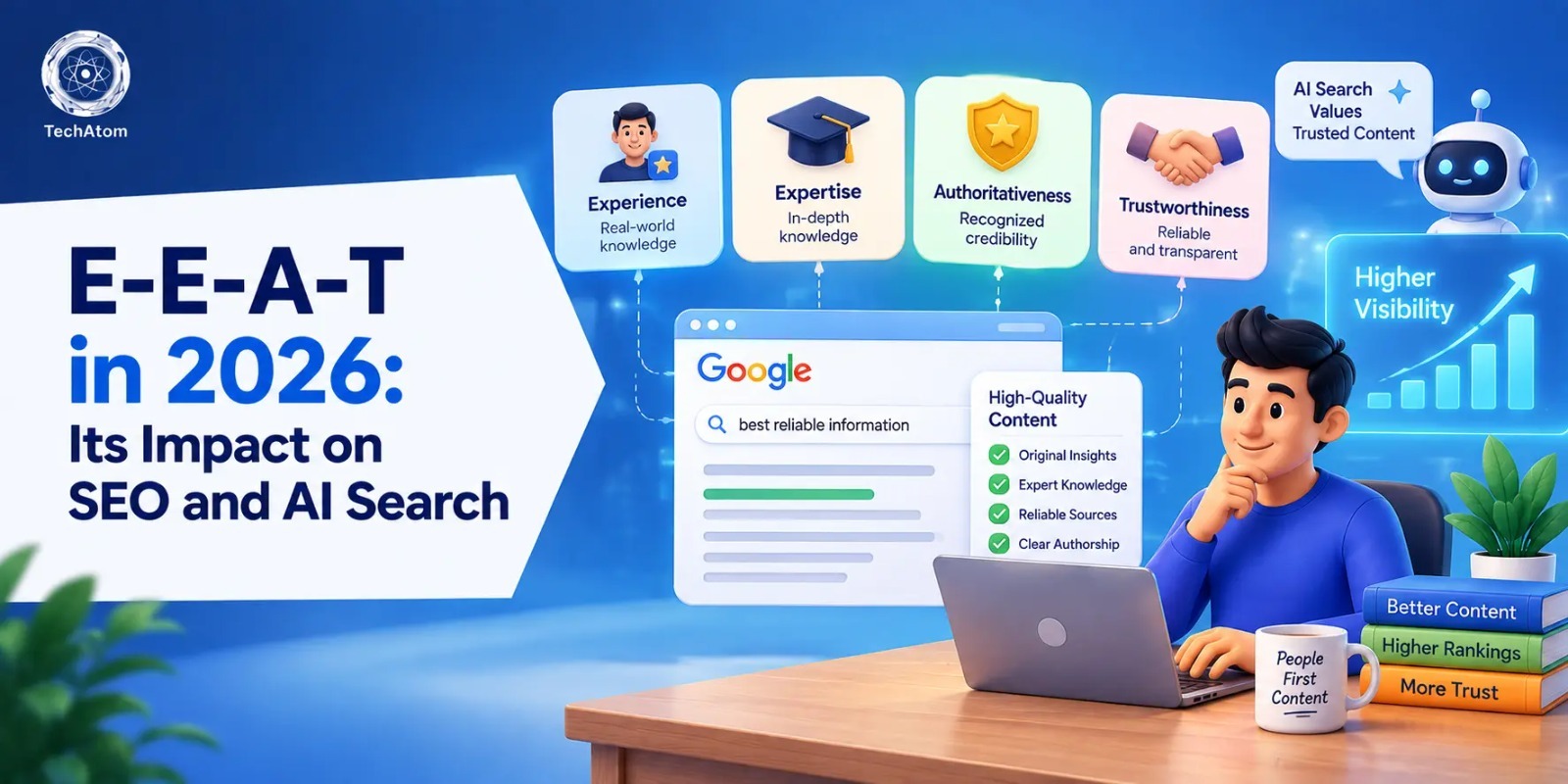

E E A T stands for Experience, Expertise, Authoritativeness, and Trustworthiness. It is a framework described in Google's Search Quality Rater Guidelines for evaluating the quality and credibility of content. E E A T is not a single ranking score or direct Google ranking factor, but it provides a useful framework for understanding what makes content helpful, reliable, and trustworthy. In 2026, E E A T remains increasingly relevant as search continues to evolve with AI powered features. In 2026, 100% of surveyed marketers agree that E E A T matters more than ever as Google and AI search engines increasingly prioritize content tied to a real, accountable human entity.
AI powered search can quickly summarize information that already exists online, making original experience, expert knowledge, reliable sources, and transparent authorship more valuable. For publishers, simply matching search intent may not be enough. Content should demonstrate genuine knowledge, provide original value, support important claims with reliable evidence, and clearly identify who created the information and why they are qualified to discuss the subject. These principles can help strengthen content quality across both traditional search and emerging AI search experiences.
What Is E-E-A-T?
E-E-A-T represents four qualities that help describe the overall quality and credibility of content: Experience, Expertise, Authoritativeness, and Trustworthiness. Each element addresses a different question about a page and its creator. Does the writer have direct experience with the subject? Do they understand the topic well? Is the creator or website recognized as a credible source? Can users trust the information being provided? Google does not assign websites a visible E-E-A-T score. Instead, its search systems use many different signals to identify helpful and reliable content. For content creators, E-E-A-T is therefore better viewed as a quality framework than a technical metric that can simply be increased.
The Four Pillars of E-E-A-T
1. Experience
Experience refers to firsthand involvement with the subject. A person who has actually used a product, visited a destination, tested a service, or performed a particular task can provide details that are difficult to obtain from generic research. For example, a product review becomes more useful when the writer explains how the product performed during actual use, including what worked well, what caused problems, and what they learned from the experience.
Useful signs of firsthand experience can include:
- Original photographs or videos
- Testing results and observations
- Personal examples
- Case studies
- Specific experiences and outcomes
The goal is not simply to claim experience but to demonstrate it through useful information.
2. Expertise
Expertise refers to the depth of knowledge demonstrated by the content creator. Good content should explain a topic accurately, answer relevant questions, and provide enough detail for readers to understand the subject. The type of expertise needed depends on the topic. Professional qualifications can be important for specialized subjects, while practical knowledge and demonstrated experience may be more relevant for others. For sensitive topics, particularly those involving health, finances, law, or safety, appropriate professional knowledge and reliable evidence are especially important.
3. Authoritativeness
Authoritativeness relates to the credibility and recognition of a creator, publication, or website within a particular subject area. Authority is generally developed over time through consistently useful content, genuine industry recognition, expert contributions, reputable mentions, and references from other credible sources. A website should not focus only on collecting backlinks. Building a recognizable reputation in a specific field is a broader process that involves producing information other people find useful enough to reference and trust.
4. Trustworthiness
Trustworthiness is the most important part of E-E-A-T according to Google's guidance. It concerns whether users can trust the content, the creator, and the website behind it. A trustworthy website should be transparent about who operates it, who creates its content, where important information comes from, and how users can contact the organization. Accurate information, clear authorship, reliable citations, transparent policies, and appropriate website security can all contribute to a stronger sense of trust.
Why Does E-E-A-T Matter for SEO?
E-E-A-T matters because search engines aim to provide users with useful and reliable information. Google's guidance emphasizes people first content that demonstrates original value rather than content created primarily to manipulate search rankings. E-E-A-T can therefore help publishers evaluate whether their content is genuinely useful, sufficiently supported, and credible enough for the audience they want to serve.
1. E-E-A-T Is Not a Direct Ranking Signal
There is no hidden E-E-A-T score that Google calculates and uses to determine where every page ranks. E-E-A-T itself is not a single direct ranking factor. Instead, Google's systems use a variety of signals and automated processes to identify content that demonstrates qualities associated with helpful and reliable information. These qualities can be supported by things such as original content, firsthand evidence, clear information about the creator, accurate claims, reliable sources, and a credible website reputation. This distinction is important. You cannot simply "add E-E-A-T" to a page and expect a ranking increase. The practical goal is to create content that genuinely demonstrates these qualities.
2. E-E-A-T and YMYL Topics
YMYL stands for "Your Money or Your Life." It refers to subjects that can significantly affect a person's health, financial stability, safety, or well being.
Examples include:
- Medical and health information
- Financial guidance
- Legal information
- Safety related advice
Google places greater importance on strong E-E-A-T for topics where inaccurate information could cause significant harm. For these subjects, publishers should pay particular attention to factual accuracy, appropriate expertise, trustworthy sources, and transparent authorship.
3. E-E-A-T and Long Term Search Visibility
Strong E-E-A-T does not guarantee that a page will maintain its rankings through every Google update. Search systems change regularly, and rankings can be affected by many factors. However, websites that consistently produce original, accurate, useful, and people first content have a stronger foundation for long term search visibility. Google encourages publishers to assess whether their content provides substantial value, demonstrates expertise, and offers a satisfying experience to readers. A strong reputation can also lead to returning visitors, recommendations, brand searches, and legitimate mentions from other websites.
E-E-A-T and Traditional SEO
|
Feature |
Traditional SEO |
E-E-A-T |
|
Primary Focus |
Helping search engines understand and access content |
Demonstrating content quality, credibility, and trust |
|
Core Goal |
Improve discoverability and relevance in search |
Provide information users can rely on |
|
Google Ranking Role |
Uses many technical, content, and relevance signals |
Not a single direct ranking factor or score |
|
On Page Approach |
Relevant titles, headings, internal links, structured content, and keywords |
Clear authorship, accurate information, citations, and firsthand experience |
|
Off Page Approach |
Relevant and authoritative links, mentions, and references |
Reputation, expert recognition, credible mentions, and trusted sources |
|
Content Focus |
Search intent, relevance, usefulness, and accessibility |
Experience, expertise, authority, and trust |
|
Content Creation |
Can be created by marketers, writers, experts, or AI assisted workflows |
Should demonstrate genuine knowledge, experience, and reliable information |
|
Risk Focus |
Poor technical SEO, irrelevant content, spam, or keyword manipulation |
Inaccurate, misleading, untrustworthy, or potentially harmful information |
|
Best Used Together |
Helps content become accessible and understandable to search engines |
Helps ensure the content is credible and valuable to users |
E-E-A-T and AI Search in 2026
AI search has changed how users receive information, but it has not made traditional content quality principles irrelevant. Google's current guidance says that AI features use core Search systems and that existing SEO fundamentals continue to apply. At the same time, Google's guidance for generative AI search encourages publishers to create unique, valuable content rather than producing large amounts of generic material simply to gain visibility. This makes firsthand experience, original research, expert analysis, and useful perspectives particularly valuable. A generic summary may be easy for an AI system to reproduce, while original evidence and genuine experience provide information that is harder to replicate.
1. Experience and Firsthand Information
Firsthand information gives readers details based on something the creator actually did or experienced.
For example, a travel writer can explain the real conditions at a destination, while a software reviewer can describe how a platform performed during a specific workflow. A product tester can provide observations that are not available in a manufacturer's specifications.
Original material can strengthen this type of content, including:
- Original photos and videos
- Custom screenshots
- Testing results
- Measurements and observations
- Personal experiences
- Original case studies
Specific details are particularly valuable. Explaining what went wrong, what was unexpected, and how the problem was solved can provide more value than simply stating that something "worked well."
2. Expertise and Reliable Information
AI systems can generate basic explanations quickly, so content needs to provide meaningful value beyond commonly repeated facts. Expert content should explain difficult concepts clearly, provide appropriate context, and support important claims with reliable evidence. The creator should also have relevant knowledge or experience that matches the subject. Clear author profiles can help readers understand who created the content and what background they bring to the topic. For specialized subjects, identifying relevant qualifications or professional experience can make the content easier to evaluate.
3. Authoritativeness and Source Credibility
Authority develops when a website or creator becomes recognized as a reliable source within a particular field. Relevant mentions from reputable publications, industry organizations, experts, and other credible websites can contribute to that reputation. Original research, detailed industry reports, expert commentary, and genuinely useful resources can also help establish authority. However, authority should not be reduced to backlink numbers. A large number of irrelevant or low quality links does not automatically make a website authoritative.
4. Trustworthiness in AI Search
Trust remains essential when users rely on search results to make important decisions. A trustworthy website should be transparent, accurate, and easy to verify. Readers should be able to identify who operates the site, who created the content, and where important claims originated. If an error is identified, correcting it rather than leaving inaccurate information in place is an important part of maintaining credibility. Website security, privacy practices, clear policies, accessible contact information, and honest communication can also contribute to a trustworthy experience.
The growing focus on AI search is also reflected in optimization strategies, with 43% of marketers adopting Generative Engine Optimization (GEO) and AI optimization as part of their 2026 strategies for tracking LLM visibility and AI citations.
How to Improve E-E-A-T for SEO
Pages with strong E E A T and clear source attribution earn 35% more clicks when cited directly inside Google AI Overviews, highlighting the potential value of credible and clearly attributed content in AI search experiences.
1. Demonstrate Firsthand Experience
When firsthand experience is relevant, show it instead of simply claiming it. Original evidence can make content more useful and distinguish it from generic summaries.
Consider including:
- Original photos and videos
- Product or service testing
- Custom screenshots
- Case studies with real results
- Original data and measurements
- Specific lessons and observations
For example, instead of describing a product as "easy to use," explain how you used it, which steps were simple, where you encountered difficulties, and what results you achieved.
2. Show Relevant Expertise
Make the creator's knowledge and background clear to readers. The person writing or reviewing the content should have appropriate knowledge for the subject.
Practical steps include:
- Use specialist writers when the subject requires specialized knowledge.
- Create detailed author bios with relevant experience and qualifications.
- Link authors to appropriate professional profiles or portfolios.
- Build comprehensive content around topics the website genuinely understands.
- Have specialized content reviewed by an appropriately qualified person when necessary.
3. Build Authoritativeness
Authority is built through consistent quality and recognition, not through a single SEO tactic. Focus on earning relevant editorial mentions, publishing original research, contributing expert insights, and becoming a useful resource within a specific industry. High quality backlinks can support authority when they come from relevant and reputable sources. Media coverage can also help establish recognition when it results from genuine expertise rather than artificial promotion.
4. Improve Trustworthiness
Make it easy for users to understand who operates your website and where your information comes from.
Important practices include:
- Provide clear contact information.
- Maintain an informative About page.
- Identify content authors.
- Cite reliable sources for significant claims.
- Correct factual errors when they are found.
- Review older content when important information changes.
- Maintain appropriate security and privacy practices.
When updating content, make meaningful improvements instead of changing the date simply to make an old article appear fresh. Google specifically advises against changing dates without substantial updates to the content.
E-E-A-T Best Practices for 2026
A strong E-E-A-T strategy is not about adding signals simply to improve rankings. It is about creating useful content that demonstrates genuine experience, relevant expertise, credible sources, and trust. In 2026, this approach is especially valuable as AI powered search can quickly summarize basic information, making original and trustworthy content more important.
1. Prove Firsthand Experience
Show genuine experience when the topic benefits from firsthand knowledge, such as product testing, travel, services, or practical guides. Use original photos, videos, screenshots, testing results, case studies, or specific observations to demonstrate what you actually experienced. Explain what worked, what did not, and what you learned instead of simply claiming that you have experience.
2. Use Identifiable and Relevant Authors
Make it clear who created the content and why they are qualified to discuss the subject. Provide useful author information such as relevant experience, qualifications, professional background, or areas of specialization when appropriate. For specialized and YMYL topics, content can benefit from being written or reviewed by someone with suitable professional knowledge.
3. Add Original Value
Avoid publishing content that simply repeats information already available on many other websites. Add original research, expert insights, practical examples, firsthand observations, comparisons, or case studies that give readers additional value. The goal is to provide something useful that a generic summary or rewritten article would not offer.
4. Use Reliable Evidence
Support important claims with reliable and relevant sources, particularly when discussing health, finance, law, science, or safety. Government websites, academic research, official documentation, recognized organizations, and primary sources can provide stronger evidence than unsupported secondary claims. Whenever possible, check the original source rather than repeating information that has been copied across multiple websites.
5. Earn Relevant Recognition
Build authority by becoming a trusted source within your specific industry or subject area. Publishing original research, contributing expert opinions, earning editorial mentions, and receiving relevant links from reputable websites can help establish credibility. Focus on the quality and relevance of recognition rather than simply trying to increase the number of backlinks.
6. Keep Content Accurate and Up to Date
Review content when important information changes, including statistics, product details, regulations, prices, research, and industry developments. Updating an article should involve checking its facts and making meaningful improvements rather than simply changing the publication date. Accurate and maintained information helps preserve user trust and keeps content useful over time.
7. Maintain Site Transparency
Make it easy for users to understand who operates the website and who is responsible for its content. Clear About Us information, author profiles, contact details, privacy information, and relevant editorial or commercial disclosures can make a website easier to evaluate. Transparency is particularly important when users need to make important decisions based on the information provided.
8. Prioritize People First Content
Create content primarily to solve the user's problem rather than producing pages simply to attract search traffic. Content should answer the main question clearly, provide meaningful information, and offer value beyond what is already available elsewhere. Google's guidance emphasizes helpful, reliable, people first content rather than material created mainly to manipulate search rankings.
9. Use Structured Data Correctly
Structured data can help Google understand eligible content when it is implemented correctly and accurately reflects information visible on the page. However, there is no special E-E-A-T schema or AI specific markup that guarantees visibility in AI Overviews or AI Mode. Google states that existing SEO fundamentals continue to apply to its AI search features, so structured data should support an overall SEO strategy rather than be treated as a shortcut to E-E-A-T.
Common E-E-A-T Mistakes to Avoid
E-E-A-T mistakes often occur when publishers focus on creating the appearance of credibility instead of actually providing useful, accurate, and trustworthy information. E-E-A-T is not a score that can be increased through a checklist, so adding superficial signals without improving the content will not create genuine credibility.
Common mistakes include:
- Treating E-E-A-T as a ranking score: There is no single E-E-A-T score that can be directly increased to improve rankings.
- Rewriting existing content without adding value: Simply changing the wording of information already available elsewhere does not demonstrate originality or meaningful expertise.
- Using vague author information: Generic bylines such as "Admin" or "Team" provide little information about who created the content or their relevant experience.
- Making unsupported claims: Important statements, statistics, and recommendations should be checked and supported by reliable sources where appropriate.
- Focusing on backlink quantity: Irrelevant or low quality backlinks do not automatically make a website authoritative. Relevant recognition from credible sources is more valuable.
- Hiding website ownership: Missing About pages, contact details, or information about the organization can make it harder for users to determine who is responsible for the content.
- Leaving outdated information: Old statistics, regulations, product details, or recommendations can reduce the usefulness and reliability of a page.
- Publishing large amounts of generic content: Sites relying on anonymous content or generic AI paraphrasing reportedly experienced traffic losses of up to 90% following Google's March core updates, highlighting the risks of publishing content without clear authorship or original value.
- Assuming AI generated content is automatically good or bad: The use of AI alone does not determine content quality. What matters is whether the final content is helpful, accurate, reliable, original, and created with the user's needs in mind.
Google's guidance does not say that using AI automatically makes content unacceptable. Instead, Google focuses on the quality and purpose of the content, and content created primarily to manipulate search rankings may violate its spam policies regardless of whether AI was involved.
Conclusion
E-E-A-T is not a hidden Google score or a shortcut to higher rankings. It is a useful framework for creating content that demonstrates real experience, appropriate expertise, credibility, and trust. In 2026, these principles are increasingly relevant as search experiences incorporate AI. Generic information can be summarized quickly, making firsthand experiences, original evidence, expert analysis, accurate information, and transparent authorship more valuable to users. The best approach is to create content that proves its value rather than simply claiming it. Show what you know, explain where your information comes from, identify who created the content, and give readers information they cannot easily get from a generic summary.
Frequently Asked Questions
1. What does E-E-A-T stand for?
E-E-A-T stands for Experience, Expertise, Authoritativeness, and Trustworthiness.
2. Is E-E-A-T a Google ranking factor?
No. E-E-A-T is not a single direct ranking factor or ranking score.
3. Why is E-E-A-T important for YMYL content?
YMYL topics can affect health, finances, safety, and well being, so reliable and accurate information is especially important.
4. Can backlinks improve E-E-A-T?
Relevant, high quality backlinks can support a website's authority, but backlinks alone do not establish E-E-A-T.
5. Does AI generated content hurt E-E-A-T?
Not automatically. Google focuses on whether content is helpful, reliable, original, and created for people.
People are also reading