
B2B SaaS stands for Business-to-business software as a Service. These companies provide technological utilities for companies as a one-time purchase or through a subscription model. So, instead of installing and using software locally for their requirements, businesses can purchase the utility through the cloud and integrate it with their tech stack.
Today, B2B SaaS companies are all the rage. As of 2023, it was reported that there are over 30,000 SaaS companies worldwide, and it’s expected to reach a market size of USD 1.3 trillion by 2030. This highlights the growing need for businesses to implement SaaS products into their workflows.
A major reason for their popularity is scalability; most SaaS products provide multiple pricing plans and the option to upgrade plans based on the company’s growth. This makes them an efficient long-term solution for businesses that want to focus on high-impact growth.
However, with the large number of B2B SaaS companies available today, it becomes difficult to choose one that fits your needs. So, in this post, we’ll take a look at the top B2B SaaS companies available today for multiple departments.
Let’s dive in!
What is B2B SaaS?
B2B SaaS refers to serving other businesses through Software as a Service. In this, you don’t sell to individuals like B2C SaaS, but cater to the needs of fellow businesses. It provides businesses with helping them streamline their operations, boost productivity, and scale their businesses. It helps support businesses on their growth journey.
B2B SaaS provides businesses with specialized tools and features, customized according to the business's needs and functions. Some common examples of B2B SaaS applications include:
- Project management software
- CRM systems
- Marketing automation platforms
It generally involves multiple strategies, such as:
- Content Marketing: Develop a content marketing strategy to develop the authority of your brand and attract online traffic to your website.
- Email campaigns: It tailors outreach via emails to nurture leads, drive conversions, and build customer relationships.
- Search Engine Optimization: B2B SaaS strategy helps improve your website’s visibility in search engines. It helps optimize your website for relevant keywords, improving your site’s search rankings.
- Paid Ads: It uses paid ads on platforms like Google Ads, LinkedIn Ads, and Facebook Ads to deliver your message to the targeted audience. It helps find new leads and draw targeted traffic.
Why B2B SaaS is Important for Businesses?
The following reasons will help you understand why B2B SaaS provides businesses with better opportunities for growth and success.
1. Expertise and Focus
B2B SaaS helps businesses attract the right leads. It helps quickly identify the prospects that are more likely to convert into customers.
B2B SaaS agencies know how to target the right decision-makers in businesses and craft appealing messages for the targeted audience.
2. Saves Time
B2B SaaS agencies free your internal team to focus on higher-value and strategic tasks by handling all software updates and maintenance tasks.
3. Cost-Effective
B2B SaaS reduces the large, upfront software and hardware costs of businesses. SaaS companies provide tools and expertise, making them a cost-effective option for businesses.
4. Advanced Tools and Technology
SaaS companies use advanced tools and software to enhance their outreach efforts. They track prospects’ behavior and optimize campaigns by using:
- CRM platforms
- Analytics tools
- Automation software
5. Improved Lead Quality
Lead generation agencies not only increase the number of leads but also deliver high-quality leads. They provide the sales teams of businesses with the leads that are most likely to convert.
10 Top B2B SaaS Companies In 2026
1. Salesforce
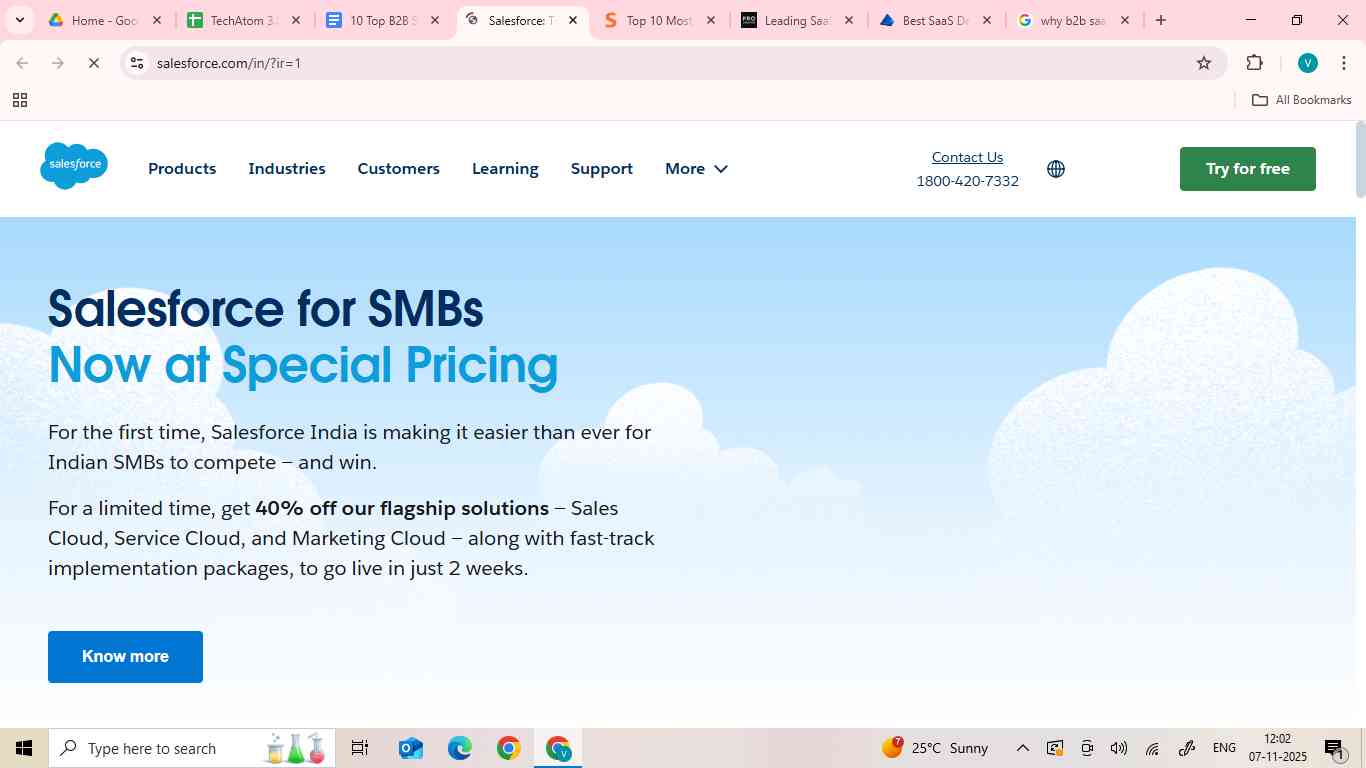
- Revenue: $37.9 billion in 2025
- Department: Customer Relationship Management (CRM)
- Founders: Marc Benioff, Dave Moellenhoff, Parker Harris, Frank Dominguez
- Founded: 1999
Salesforce is a giant in the B2B SaaS space, with almost 3 decades in the CRM industry. With its latest offering, Agentforce, it combines a human-centric approach with cutting-edge technology powered by AI.
With this platform, you’ll get a blend of customer service, commerce, sales, and even marketing to meet most of your enterprise’s needs. Due to its diverse offerings and standing in the B2B SaaS space, Salesforce is now used by over 150,000 global companies to manage their customer servicing requirements.
2. Adobe
- Revenue: $21.505 billion
- Department: Digital Marketing Solutions
- Founders: John Warnock, Charles Geschke
- Founded: 1982
Whether we’re aware of B2B SaaS or not, we’ve all heard of Adobe. From Adobe Acrobat Reader to Adobe Premiere Pro, we’ve used their software solutions at least once in our lives. What we may not be aware of, however, is the fact that the company has been around since 1982, making it one of the oldest B2B SaaS companies on this list!
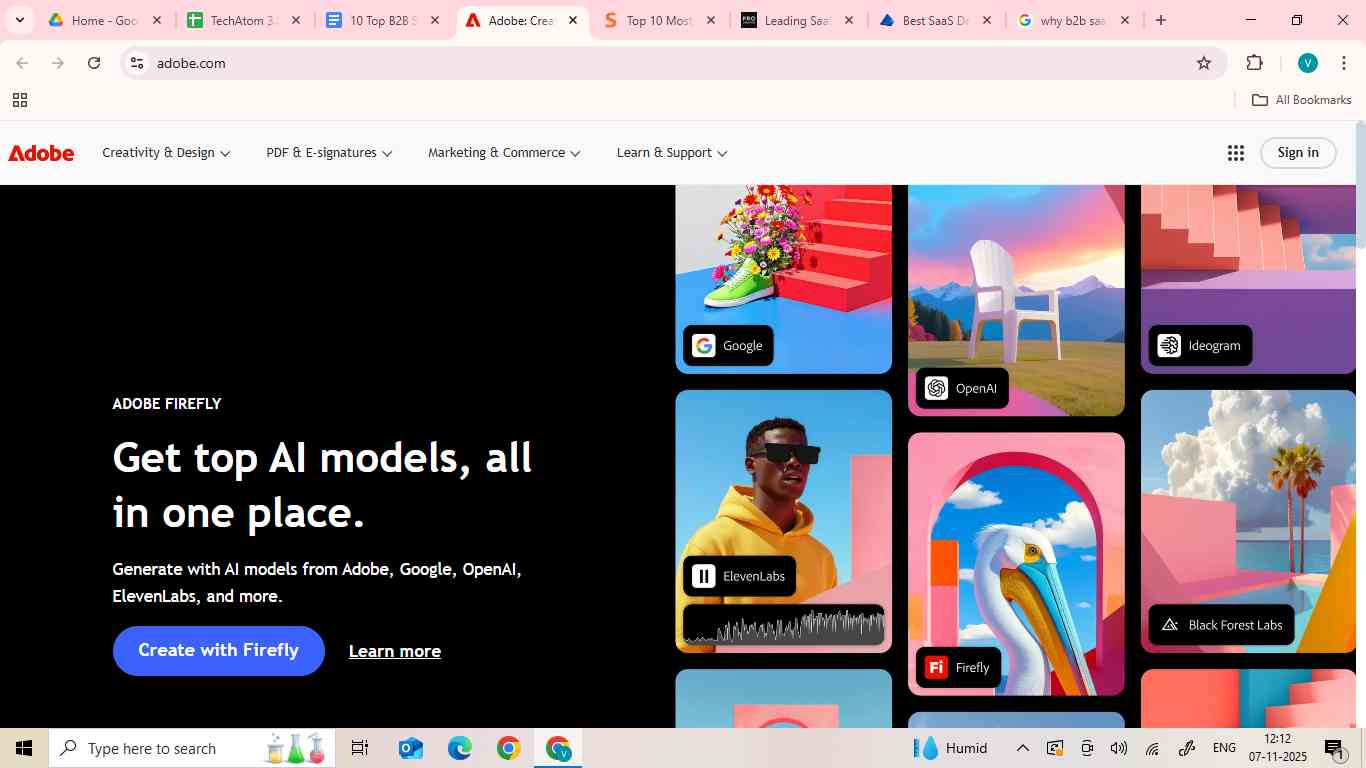
Adobe claims to offer “personalized digital experiences” through its products, often implementing Generative AI to deliver on its promise. A great example of this would be the Adobe GenStudio, which optimizes the content supply chain for marketers to manage brand-level content.
Overall, Adobe is a trailblazer for digital marketing solutions, laying the groundwork surprisingly early and showing no signs of slowing down!
3. Microsoft Azure
- Revenue: Part of Microsoft Intelligent Cloud’s $24 billion
- Department: Cloud Computing
- Founder: Bill Gates
- Founded: 2008
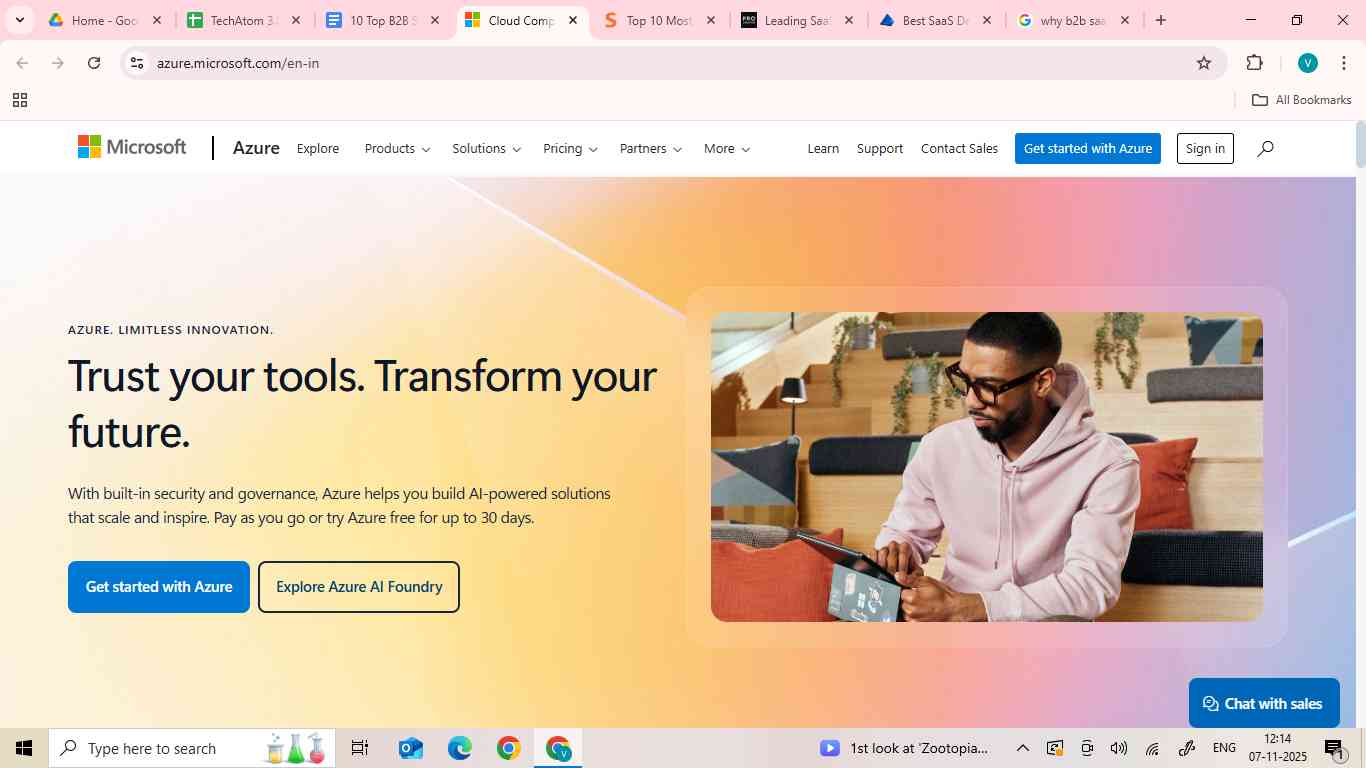
If we’re talking about the best B2B SaaS companies, Microsoft Azure can’t be left behind. The cloud computing service from Microsoft has seen massive revenue growth year-on-year, with the latest reports indicating that Microsoft Azure’s revenue increased by 33% in 2025 alone.
This shows how essential the service has become for multiple businesses, offering excellent app development and service management capabilities. Typically, Azure provides virtualization of its datacenters to ensure that companies’ computing needs are easily met. So, whether you’re storing data, developing apps, or managing information, Azure will be your top choice!
4. SAP
- Revenue: €34.18 billion (2024)
- Department: Enterprise Resource Planning Software
- Founders: Dietmar Hopp, Hans-Werner Hector, Hasso Plattner, Klaus Tschira, Claus Wellenreuther
- Founded: 1972
Another well-established B2B SaaS company on this list, SAP, is one of the most profitable ventures available today. It caters to large businesses through Enterprise Resource Planning (ERP) software, which helps enterprises maximize their output while ensuring profitability, scalability, and efficiency.
Based in Walldorf, Germany, SAP now has a global presence, with offices in India, Brazil, Japan, Canada, and the US.
5. ServiceNow
- Revenue: $10.984 billion (2024)
- Department: IT Service Management
- Founders: Fred Luddy
- Founded: 2003
For automated business workflows, very few companies rival ServiceNow, a B2B SaaS company based in Santa Clara, California, USA. It mostly handles technological information processes, such as reporting and resolving issues with your organization’s systems, and how you can solve them.
To make things easier for businesses, ServiceNow provides multiple modules based on your requirements. This could be governance, disaster management, risk management, and more. Plus, each of these modules is interconnected to ensure that your processes are handled seamlessly.
ServiceNow recently acquired Moveworks, an AI-based company that works on workplace request resolution through automation. This is an important marker for its shift towards a more AI-inclusive mode of operation.
6. Oracle
- Revenue: $14.1 billion (2025)
- Department: Enterprise Software, Cloud Services
- Founders: Larry Ellison, Bob Milner, Ed Oates
- Founded: 1977
Oracle is a major name in the B2B SaaS industry; an established player and provider of cloud services, as well as enterprise software. Based in Santa Clara, California, USA, Oracle’s database software is a huge contributor to its revenue.
Its software suite includes a combination of software, such as Enterprise Resource Planning, Customer Relationship Management, and Enterprise Performance Management. It acquired NetSuite in 2016, a project management SaaS, which is now rebranded as Oracle NetSuite.
7. Slack
- Revenue: $1.7 billion (2023)
- Department: Collaboration
- Founders: Stewart Butterfield, Eric Costello, Cal Henderson, Serguei Mourachov
- Founded: 2013
Compared to the other B2B SaaS companies on this list, Slack is relatively new, being founded in 2013. What’s interesting to note here is that the product itself was created as an instant messenger for a video game development company, after which the creators decided to monetize on the collaboration aspect.
The product is used as a team communication and collaboration platform, allowing users to hop on audio and video calls, send messages, and take notes. It’s a staple software for many multinational organizations like IBM, Uber, and Shopify.
Slack’s parent company, Slack Technologies, was acquired by Salesforce in 2020.
8. Atlassion
- Revenue: $4.359 billion (2024)
- Department: Project Management
- Founders: Mike Cannon-Brookes, Scott Farquhar
- Founded: 2002
Atlassian is a staple name in the project management SaaS category, thanks to products like Jira, Confluence, and Trello. It was founded in 2002 when one of the founders, Mike Cannon-Brookes, sent a class-wide email to join hands and create a tech startup. Surprisingly, only Scott Farquhar replied yes. And the rest, as they say, is history!
The company also has a very wide reach with its products, serving 300,000 customers who are spread across 200 countries around the world. What set Atlassian apart in the early days was that they didn’t try to sell a product through traditional salespeople. Instead, they opted for a self-service option, and the model brought them great success.
Overall, Atlassian aims to change the project management landscape for business organizations, and it’s succeeding at the task with immaculate ease!
9. Factorial
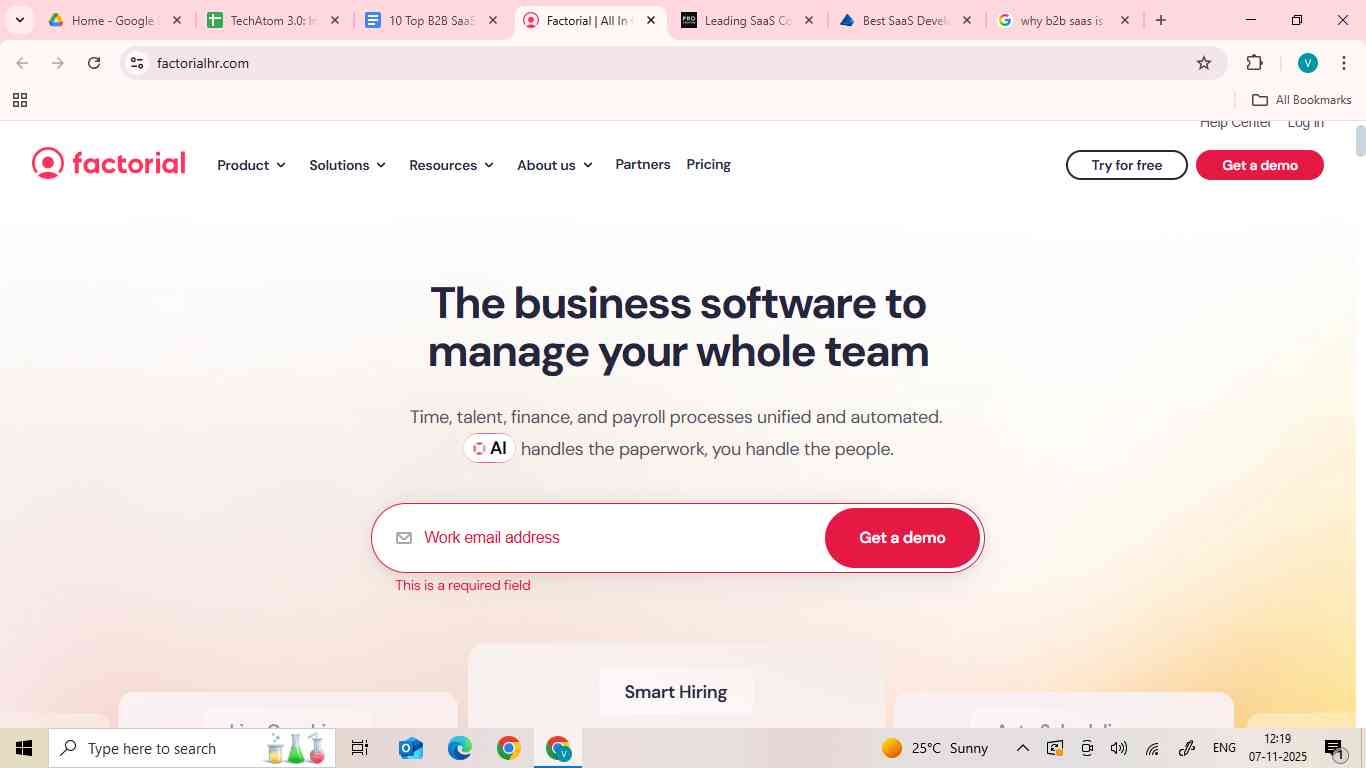
- Revenue: $445.7 million
- Department: HR Software
- Founders: Jordi Romero, Bernat Farrero, Pau Ramon Revilla
- Founded: 2016
Introducing the first B2B SaaS organization on our list, Factorial provides HR software to organizations for streamlining administrative and HR tasks. It’s excellent for automating operations like payroll, finance, and talent.
Factorial’s rise to fame actually happened during the COVID-19 pandemic. During this time, Factorial was made free for use. This attracted great interest from companies that weren’t cloud service-savvy, and through word-of-mouth marketing, Factorial garnered popularity. Since then, it’s received extensive funding and is now regarded as a unicorn!
10. HubSpot
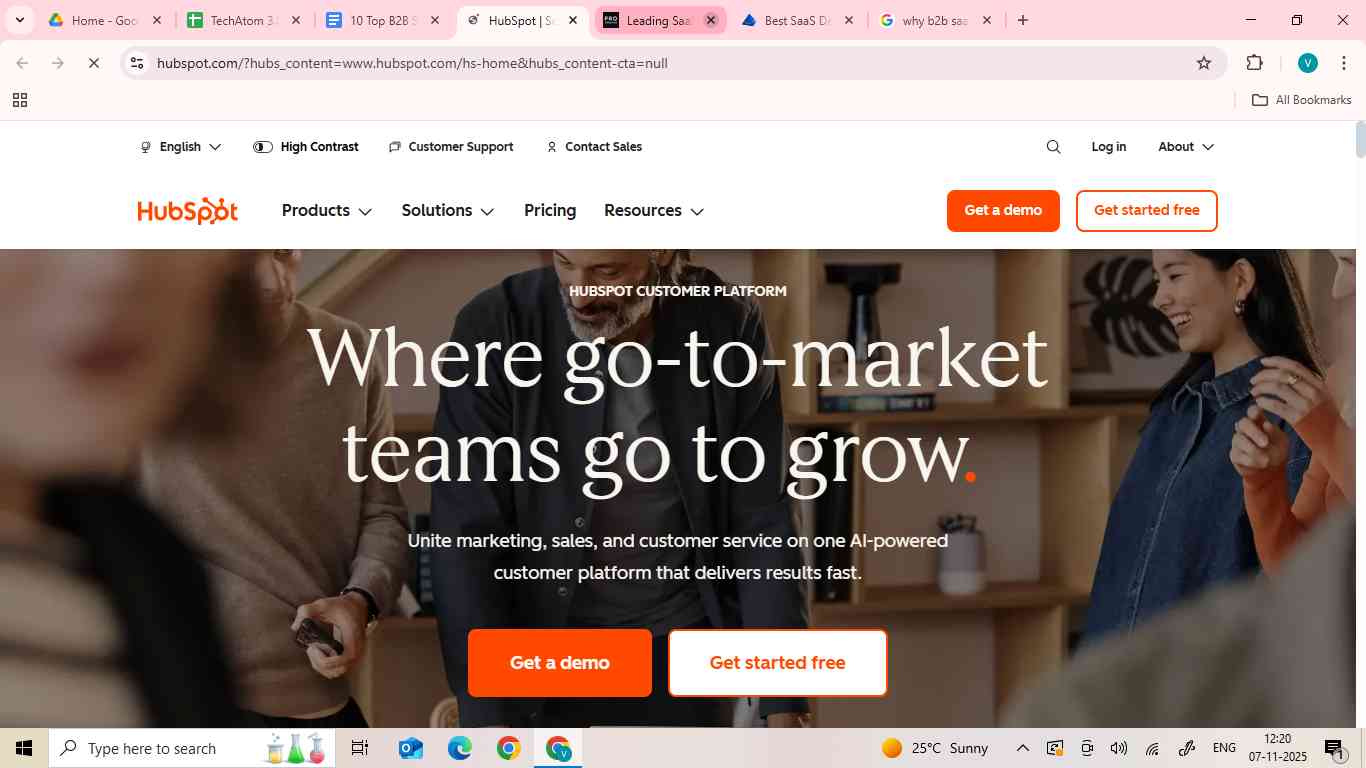
- Revenue: $2.63 billion (2024)
- Department: Marketing
- Founders: Brian Halligan, Dharmesh Shah
- Founded: 2006
If you’re looking for a marketing B2B SaaS company on this list, HubSpot is the first name that comes to mind. The company primarily creates software products for inbound marketing and sales. These products are excellent if you want lead generation, content management, and social media management.
While HubSpot already integrates plenty of automated, AI-powered workflows, it recently acquired Frame AI. The goal behind this was to automate data collection through official emails, conversations, and meetings, and provide real-time insights for data-driven approaches.
How to Choose the Right B2B SaaS Company?
Developing SaaS solutions takes time, money, and effort. So, you must choose the right B2B SaaS company must worth the investment and effort.
The following 5 capabilities you must look for while choosing a B2B SaaS partner:
1. Strategic Product Thinking
It is important to look for a SaaS partner who understands product-market fit, user flows, and value delivery.
Most of the companies can deliver the required work, but the best ones will ask for assumptions, suggest better flows, and challenge you on priorities. They will not only work for you but will also act as your thought partners. They help other businesses succeed by bringing in product intuition, lean startup understanding, and real-world experience.
2. Scalability
You’re not building a product, but a platform. The platform will require support for horizontal scaling, an approach to multi-tenancy, and patterns for expansion. The best SaaS partner must make future scale part of the present design.
3. Cross-Functional Execution
Today, SaaS is not only about frontend and backend code. But they involve DevOps, compliance, data pipelines, observability, and user experience.
SO, you must choose a SaaS partner that can:
- Handle cloud infrastructure provisioning
- Embed security in your Dev lifecycle
- Work closely with your design or marketing team
4. Multi-Tenancy & SaaS Native Platforms
Multi-tenancy is a foundational aspect of SaaS. The SaaS development team must understand its implications.
A fluent SaaS Native partner will help you build for long-term viability.
5. Ongoing Partnership
The evolutions in SaaS trends change the customer’s expectations and needs. This makes SaaS development important after the launch of the site.
Before choosing a partner, check if they offer:
- SLAs for bug fixes and downtime
- Performance monitoring, release management, and continuous updates
- Roadmap planning and feature prioritization
Conclusion
B2B SaaS companies are—and there’s no other way to say it—minting money. That’s because the right product can understand businesses’ problems and provide valuable resources to fix those issues. From Salesforce to Adobe to HubSpot, these companies were visionary in predicting and understanding pain points to provide a solution.
Plus, their solutions proved to be scalable and easy to use. Organizations don’t need to spend extra on their tech stack to integrate these services. Instead, these solutions help them become more efficient!
If you’re a fledgling B2B SaaS company, what do you think is the most important aspect to consider when creating a product? More importantly, do you think you can make it to this list?