Search engine optimization, or SEO, helps small businesses improve their visibility when potential customers search for products, services, or local businesses online. A strong SEO strategy can bring targeted organic traffic, build trust, generate qualified leads, and help smaller businesses compete with larger brands without relying entirely on paid advertising.
Local search is especially important for businesses that serve specific areas. Industry research commonly reports that around 46% of Google searches have local intent, while many small businesses still do not invest consistently in SEO. Among businesses that do invest, more than 70% report positive results in some industry surveys. This creates a significant opportunity for small businesses that build a consistent and customer focused search strategy.
What Is SEO for Small Businesses?
SEO for small businesses is the process of improving a company's website, content, technical setup, and online presence so search engines can better understand its business and show it for relevant searches. It includes keyword research, content optimization, technical SEO, internal linking, backlinks, local SEO, review management, and performance tracking. Unlike large brands that may target broad national keywords, small businesses can often gain traction by focusing on specific products, services, customer needs, and locations. For example, a bakery in Dehradun may have a better opportunity targeting "birthday cake shop in Dehradun" than trying to rank immediately for the broad term "bakery."
Why SEO Is Important for Small Businesses
SEO helps small businesses reach people who are already searching for what they offer. It can increase online visibility, bring organic traffic without paying for every click, strengthen credibility, generate targeted leads, and improve the overall website experience. Local SEO can be particularly valuable because Google has reported that 76% of people who search for something nearby on a smartphone visit a related business within 24 hours. Appearing prominently in local results can therefore help businesses connect with customers when they have a strong purchase or visit intent.
Key benefits of SEO include:
- More visibility: Helps your website and business profile appear for relevant searches.
- Organic traffic: Brings visitors without requiring payment for every click.
- Better trust: Strong search visibility, useful content, and genuine reviews can increase credibility.
- Targeted leads: Connects your business with people searching for specific products or services.
- Better website experience: SEO can identify issues involving speed, mobile usability, navigation, and technical performance.
Essential SEO Steps for Small Businesses
1. Find the Right Keywords
Start with keywords that closely match what your customers actually search for. Use customer conversations, Google Search Console, competitor research, and keyword research tools to identify relevant terms. Focus on search intent rather than search volume alone, and consider long tail and location-specific keywords because they can attract more qualified visitors. For example, a local accounting firm may have a better opportunity targeting "small business accountant in Lucknow" than competing immediately for the broad term "accountant."
2. Create Dedicated Service and Product Pages
Important services and products should have their own useful pages rather than placing everything on one general page. Each page should clearly explain what the product or service offers, who it is for, its main benefits or features, and how customers can take the next step. Dedicated pages also give search engines clearer information about the subjects your business serves, making it easier to match individual pages with relevant searches.
3. Optimize Website Content
Create helpful content that answers the questions your customers ask before making a purchase or contacting your business. Use your primary keyword naturally in important areas such as the title, main heading, introduction, and relevant sections, while including related terms where they genuinely improve the content. Avoid keyword stuffing because search-optimized content should still sound natural and provide clear value to readers.
4. Build Internal Links
Internal links connect related pages on your website and help visitors find additional information. They also help search engines understand the relationship between different pages. For example, a page about a particular service could link to a related guide, FAQ, product page, or contact page using descriptive anchor text.
5. Earn Relevant Backlinks
Backlinks are links from other websites to your website, and relevant, trustworthy links can strengthen your site's authority. Small businesses can earn backlinks through local organizations, industry publications, partnerships, suppliers, community activities, useful resources, and original content. Focus on relevance and quality instead of buying large numbers of low quality links, which can create SEO risks.
Local SEO for Small Business
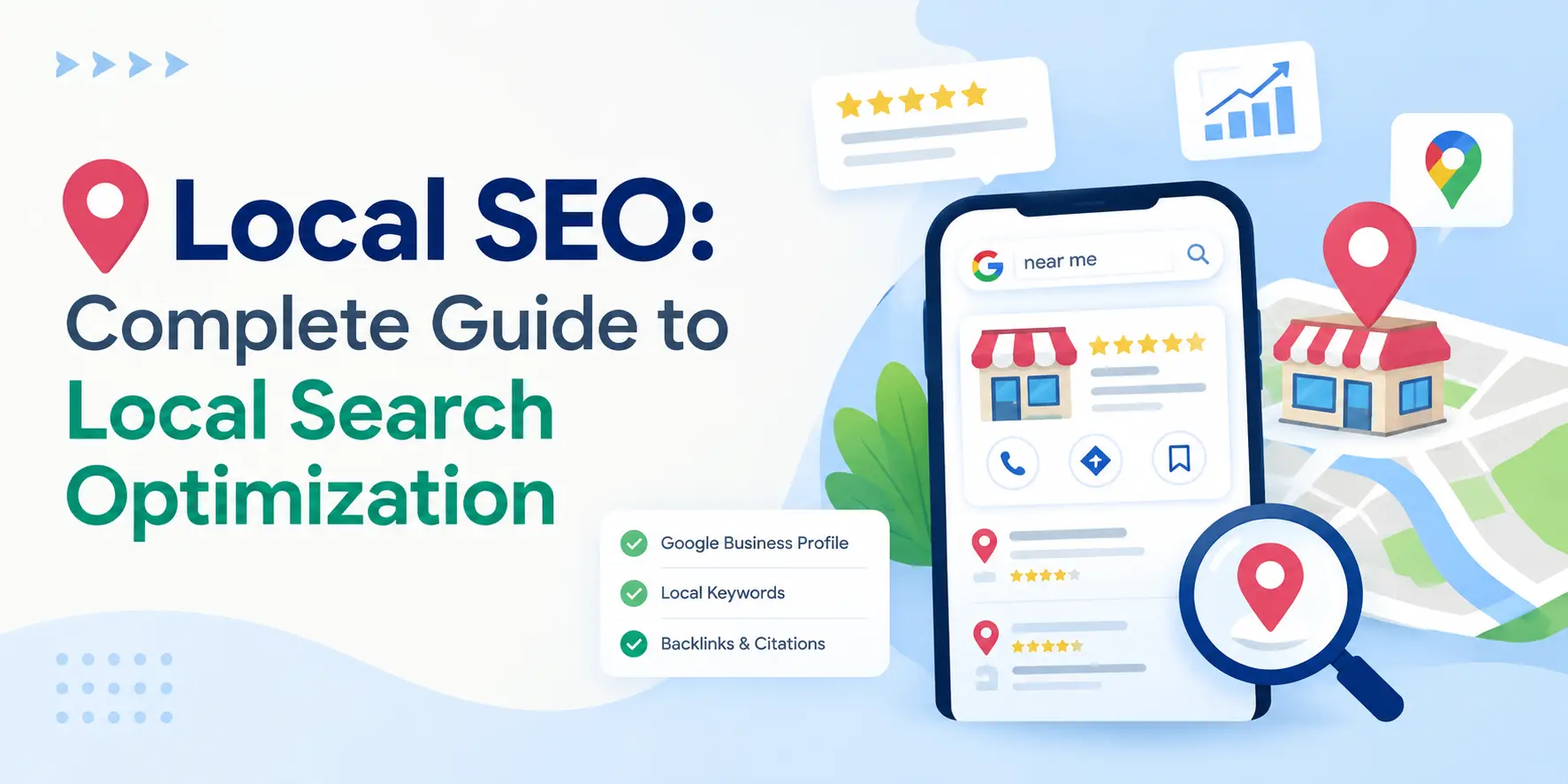
Local SEO focuses on improving visibility for searches connected to a particular geographic area. It is especially useful for restaurants, retailers, professional services, home service providers, healthcare businesses, and other companies that serve local customers. Since a large share of searches have local intent, businesses that maintain accurate local information and provide useful location-based content can improve their chances of appearing when nearby customers are searching.
1. Claim and Optimize Your Google Business Profile
Claim and complete your Google Business Profile so customers can find accurate information about your business in Google Search and Maps. Add your correct business name, address, phone number, hours, category, website, photos, and other relevant details. Keep the information updated and follow Google's guidelines rather than adding unnecessary keywords to your business name. A well-maintained profile can support your local visibility and make it easier for customers to contact or visit your business.
2. Optimize for Local Search
Use location information naturally on relevant pages instead of repeating the same city or neighborhood keyword throughout your content. Your website, Google Business Profile, and important business directories should provide consistent information. Location specific keywords should be used where they make sense, particularly on service pages, contact pages, and genuinely useful local content.
3. Build Local Citations
Local citations are online mentions of your business, often including its name, address, and phone number. Create and maintain listings on relevant directories, industry websites, local organizations, and trustworthy platforms. Accuracy is more important than the number of directories you use, so focus on authoritative and relevant sources rather than submitting your business to hundreds of low-quality sites.
4. Collect and Manage Customer Reviews
Encourage genuine customers to leave honest reviews after using your products or services, and respond professionally to both positive and negative feedback. Do not purchase fake reviews or pressure customers to provide a specific rating. Reviews can influence how potential customers perceive your business, and current consumer research continues to show that online reviews play an important role in local purchasing decisions.
5. Create Location Specific Content
Create location specific pages or articles when they provide genuine value to customers in those areas. Useful local content could include service availability, local customer questions, directions, area specific examples, or information about problems commonly faced by customers in that location. Avoid creating many nearly identical pages simply by changing the city name because this adds little value for users.
Small Business Website SEO
1. Improve Website Speed
Fast pages make it easier for visitors to use your website, particularly on mobile devices and slower connections. Compress large images, reduce unnecessary scripts, use efficient hosting, and monitor Core Web Vitals. Do not rely on a fixed claim that every website taking more than three seconds loses a specific percentage of visitors because actual behavior varies by device, connection, page type, and user intent.
2. Make Your Website Mobile Friendly
Your website should work properly across smartphones, tablets, and desktop devices. Use responsive design, readable text, clear navigation, appropriately sized buttons, and simple forms. Mobile usability is especially important for local businesses because many customers search for nearby services while using their phones.
3. Optimize Titles, Headings, and Meta Descriptions
Write clear and descriptive titles that accurately represent each page. Use headings to organize information logically and create meta descriptions that summarize the page and encourage relevant users to click. Keywords can be included naturally, but repeating the same phrase unnecessarily does not improve the quality of the page.
4. Fix Technical SEO Issues
Technical SEO ensures that search engines can access, understand, and index important pages on your website. Regularly check for problems such as broken links, incorrect redirects, indexing issues, duplicate pages, mobile usability problems, security issues, and accidentally blocked pages. Review your robots.txt and noindex settings carefully because incorrect configurations can prevent valuable pages from appearing in search results. Relevant structured data can also help search engines understand certain content, although adding schema does not guarantee enhanced search results.
How to Build an Effective SEO Strategy for Small Business
A successful SEO strategy should focus on activities that have a clear connection to customer needs and business goals. Rather than trying to optimize everything at once, start with your website fundamentals, important search terms, local presence, useful content, and measurable outcomes.
1. Optimize Local Listings
Start with your Google Business Profile and make sure your business information is complete and accurate. Then review important directories and industry listings to identify incorrect or outdated information. Consistent business details make it easier for customers and search engines to understand your business.
2. Conduct Keyword Research
Build a keyword list around your products, services, locations, customer problems, and common questions. Consider search intent, competition, relevance, and potential business value rather than choosing keywords solely because they have high search volume. Long tail keywords can be particularly useful for small businesses because they often describe a specific need.
3. Improve On Page Elements
Review your page titles, headings, URLs, content, images, internal links, and calls to action. Every important page should have a clear purpose and provide enough useful information to satisfy the searcher's intent. Keep content readable and avoid inserting keywords where they do not naturally fit.
4. Build Local Authority
Build authority through genuine relationships with local organizations, relevant industry websites, suppliers, community groups, and professional networks. Useful partnerships and high quality content can create legitimate opportunities for mentions and backlinks. The goal should be to build real credibility rather than simply collect links.
5. Track SEO Performance
Use Google Search Console and Google Analytics 4 to understand how people find and interact with your website. Search Console can show queries, clicks, impressions, indexing information, and search performance, while Analytics can help you understand what visitors do after arriving on your site.
Important metrics to monitor include:
- Organic clicks and impressions
- Visibility for important search terms
- Organic leads and sales
- Form submissions and phone calls
- Local actions
- Organic conversion rate
- Performance of important landing pages
Do not judge SEO only by rankings. A ranking improvement is most valuable when it contributes to qualified traffic, enquiries, customers, or revenue.
SEO Services for Small Business: When Do You Need Them?
Professional SEO support can help establish the right website structure, keyword targeting, technical setup, and local presence from the beginning. This gives your website a stronger foundation and helps search engines understand your business from the start.
1. Missing Local Customers
If competitors appear in local search results while your business does not, an SEO audit can identify gaps in your Google Business Profile, website, content, and local optimization. Fixing these areas can improve your chances of reaching customers searching for nearby products or services.
2. Competitors Are Winning Search Traffic
When competitors consistently rank above your business, SEO support can help identify gaps in content, keywords, backlinks, technical SEO, and local visibility. A focused strategy can help your business compete for relevant searches where larger competitors may be less dominant.
3. Organic Traffic Has Stopped Growing
A decline or plateau in organic traffic may be caused by technical issues, outdated content, changing search demand, algorithm updates, or stronger competitors. An SEO professional can help identify the cause and prioritize improvements that can restore growth.
4. Advertising Costs Are Too High
If your business relies heavily on paid advertising, SEO can provide an additional source of organic traffic. Building search visibility can help reduce dependence on continuously paying for every website visitor while creating a more sustainable acquisition channel.
Common Small Business SEO Mistakes to Avoid
Small businesses can lose search visibility by overlooking basic SEO and local search practices. Avoid these common mistakes to maintain a strong search presence and provide a better experience for potential customers.
- Ignoring Google Business Profile: Keep your profile complete and updated to improve local visibility. Add accurate business details, hours, categories, and relevant photos.
- Inconsistent business information: Keep your name, address, and phone number consistent across important listings. Consistent information helps customers and search engines identify your business correctly.
- Neglecting reviews: Encourage genuine reviews and respond professionally to customer feedback. Regularly managing reviews can strengthen trust and your local reputation.
- Poor mobile performance: Make sure your website loads quickly and works well on smartphones. A mobile friendly website makes it easier for visitors to find information and contact your business.
- Keyword stuffing: Use keywords naturally instead of repeating them excessively. Write primarily for customers and include keywords where they genuinely fit.
- Ignoring technical SEO: Fix broken links, indexing issues, redirects, and accidentally blocked pages. Regular technical checks help search engines access and understand your important pages.
- Creating thin location pages: Make location content genuinely useful and unique instead of changing only the city name. Include information that is relevant to customers in each area you serve.
- Buying poor quality backlinks: Focus on earning relevant, trustworthy links rather than collecting links in large quantities. Partnerships, useful resources, and industry mentions can create more valuable backlinks.
Small Business SEO Tips for Better Results
SEO works best when it is treated as an ongoing process rather than a one time project. Focus first on the activities that are most relevant to your customers and business goals.
- Use customer language: Research the words and questions your customers actually use. This helps you create content that matches their search intent and feels relevant to their needs.
- Target specific searches: Long tail and location specific keywords can attract highly relevant visitors. These searches often reflect clearer customer intent and can be easier to target than broad terms.
- Create useful pages: Give important services and products dedicated pages with meaningful information. Each page should clearly explain what you offer and help visitors understand why your business is a good choice.
- Keep local information accurate: Maintain consistent business details across your website and important listings. Accurate information makes it easier for customers to find, contact, and trust your business.
- Prioritize mobile users: Make pages easy to load, read, navigate, and use on smartphones. A smooth mobile experience can also reduce frustration and encourage visitors to stay longer.
- Earn genuine reviews: Encourage real customers to provide honest feedback. Consistent positive reviews can strengthen your local reputation and give potential customers more confidence.
- Publish useful content: Answer questions that help potential customers make informed decisions. Helpful content can attract relevant search traffic while demonstrating your knowledge and expertise.
- Build relevant authority: Focus on legitimate mentions, relationships, and backlinks. Links from relevant and trustworthy websites can strengthen your site's credibility over time.
- Measure meaningful results: Track traffic, leads, conversions, and other business outcomes. Looking beyond rankings helps you understand whether your SEO efforts are actually supporting business growth.
- Stay consistent: Regular improvements are generally more valuable than making many changes once and then stopping. Review your performance regularly and update your strategy as customer needs and search behavior change.
Conclusion
SEO for small business is more than ranking for a few keywords. It combines useful content, a technically sound website, local visibility, accurate business information, genuine customer reviews, relevant backlinks, and consistent performance tracking. For businesses serving specific areas, local SEO can be particularly valuable because customers often use search engines to find nearby products and services.
The best approach is to start with the fundamentals. Understand what your customers search for, create useful pages around those needs, optimize your Google Business Profile, improve your website experience, maintain accurate local information, earn trustworthy mentions, and measure the results. With consistent effort, SEO can become a sustainable source of visibility, qualified traffic, and long term business growth.
Keep Improving Your SEO Strategy
SEO changes as search behavior, algorithms, and digital marketing practices evolve. TechAtom provides practical insights, guides, and strategies to help businesses improve SEO, strengthen their online presence, and keep up with important digital marketing trends. Visit TechAtom to find more actionable ideas you can apply to your own business.
Frequently Asked Questions
1. How long does SEO take to work for a small business?
SEO takes time, and there is no fixed timeline. Some technical and local improvements may show results sooner, while competitive keywords can take several months. Results depend on competition, website quality, content, authority, and consistency.
2. How much does SEO cost for a small business?
SEO costs vary based on competition, website size, goals, and whether you handle it yourself or hire an agency. Basic SEO can be done with free tools, while professional services usually involve monthly or project based fees.
3. Can a small business do SEO without hiring an agency?
Yes. Small businesses can handle keyword research, content creation, Google Business Profile optimization, internal linking, and basic technical SEO themselves. Professional help is useful when competition or technical requirements become more complex.
4. How can a small business compete with larger companies on Google?
Focus on specific products, services, locations, and long tail keywords instead of competing for broad terms. Strong local SEO, useful content, genuine reviews, and relevant backlinks can also help smaller businesses compete effectively.
5. What is the difference between local SEO and small business SEO?
Small business SEO covers overall search optimization, including content, technical SEO, keywords, and backlinks. Local SEO specifically focuses on improving visibility for searches related to a particular location, such as "plumber near me" or "restaurant in Delhi."
People are also reading