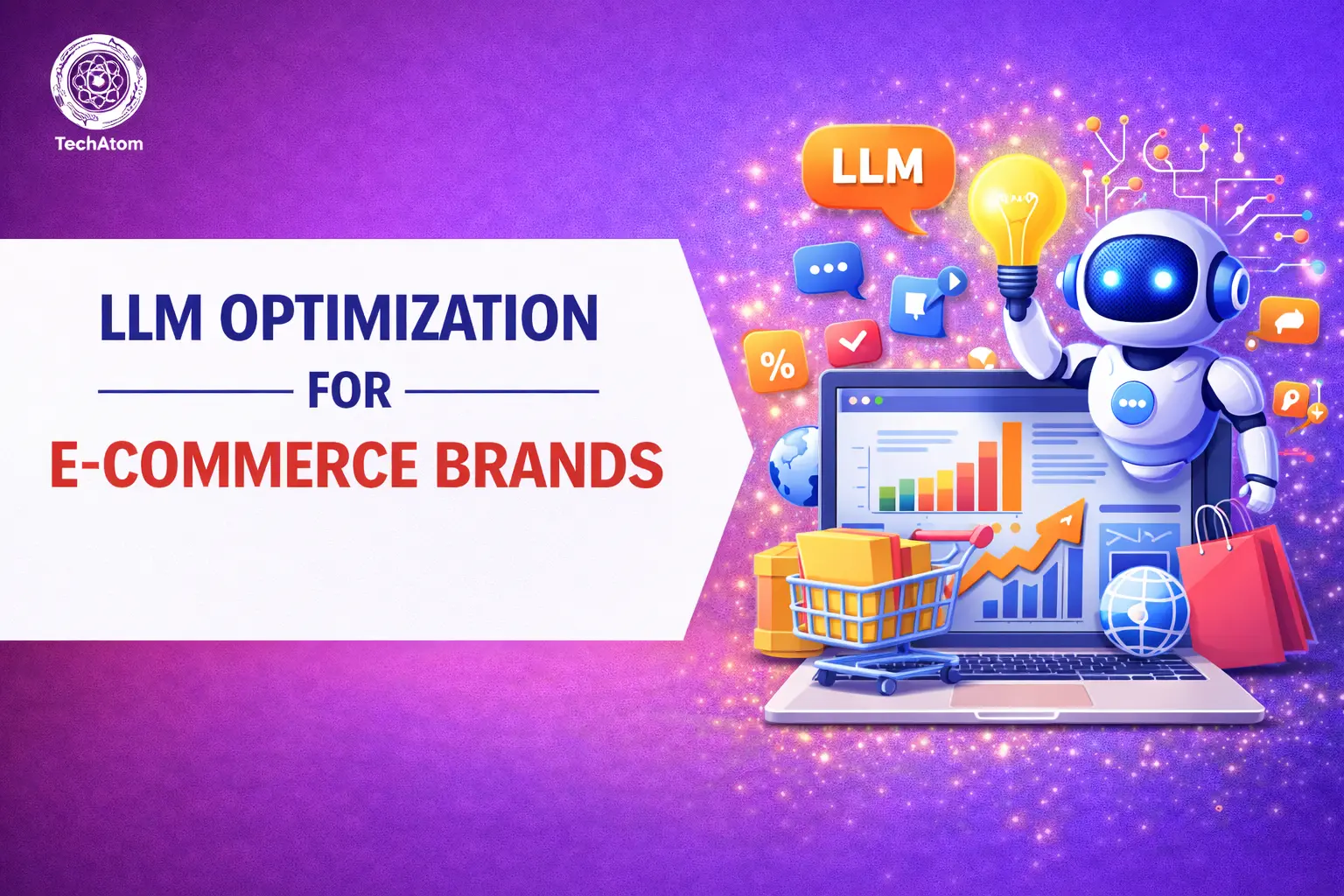

In today’s fast-changing digital world, e-commerce is no longer just about having a good website or running ads. Customers now expect personalized experiences, quick answers, and smart recommendations. This is where LLMs (Large Language Models) come in. From chatbots to product descriptions, LLMs are changing how online stores connect with customers.
But simply using AI is not enough. To truly benefit from it, brands need to understand how to optimize LLMs properly. Studies show that businesses using AI-powered personalization can increase their conversion rates by up to 20–30%, which makes LLM optimization even more important for e-commerce brands. This guide will help you understand what LLM optimization is, why it matters, and how you can use it effectively for your e-commerce business.
Understanding LLMs and Their Role in E-commerce
Large Language Models are advanced AI systems that can understand and generate human-like text. They are trained on massive amounts of data, which allows them to answer questions, create content, and even guide customers during their buying journey.
In e-commerce, LLMs are used in many ways:
- Customer support chatbots that answer queries instantly
- Product descriptions that are clear and engaging
- Personalized recommendations based on user behavior
- Email and marketing content creation
- Voice and search assistants
Instead of making customers search for information, LLMs bring the answers directly to them. This improves user experience and saves time.
The Importance of Ecommerce AI Optimization
Using AI tools without proper optimization can lead to poor results. Sometimes the responses may be inaccurate, too generic, or not aligned with your brand voice. That’s why optimization is important.
Ecommerce AI optimization helps in:
- Improving accuracy of responses
- Making content more relevant to users
- Increasing conversion rates
- Enhancing customer satisfaction
- Maintaining a consistent brand tone
When done right, LLM optimization can turn a simple online store into a smart shopping experience that feels personal and helpful.
LLM Optimization Strategies for E-commerce Brands
To get the best results from LLMs, you need a clear strategy. Below are some of the most effective ways to optimize LLMs for your e-commerce business.
- Use High-Quality Data: The performance of any LLM depends on the data it learns from. Make sure your product information, FAQs, and customer data are accurate and updated.
- Train with Brand Voice: Your AI should sound like your brand. Whether your tone is friendly, professional, or playful, train the model to match it.
- Focus on Search Intent: Understand what your customers are actually looking for. Optimize content based on real search queries, not just keywords.
- Improve Product Descriptions: Instead of basic descriptions, use LLMs to create detailed, engaging, and benefit-focused content that helps customers decide faster.
- Personalization: Use customer behavior and preferences to give personalized recommendations. This increases chances of purchase.
- Optimize for Conversational Commerce: More people are using chat-based shopping. Make sure your LLM can handle natural conversations and guide users smoothly.
- Continuous Testing and Improvement: AI is not a one-time setup. Regularly check responses and improve them based on feedback and performance.
- Data Security and Privacy: While using customer data for personalization, it is important to keep that data secure and follow privacy guidelines. Customers trust brands that protect their information.
Key Optimization Areas
|
Area |
What to Focus On |
Benefit |
|
Product Content |
Clear, detailed descriptions |
Better conversions |
|
Customer Support |
Fast and accurate replies |
Improved satisfaction |
|
Personalization |
User behavior-based suggestions |
Higher sales |
|
SEO and Search |
Intent-based content |
More organic traffic |
|
Brand Voice |
Consistent tone |
Strong brand identity |
Real Use Cases of LLMs in E-commerce
LLMs are already being used by many e-commerce brands in practical ways. For example, a chatbot can help a customer find the right product within seconds instead of browsing multiple pages. AI can also generate SEO-friendly product descriptions that attract more visitors and improve rankings.
Some brands use LLMs to send personalized email recommendations based on previous purchases, while others use them to handle common customer queries like returns, refunds, and delivery updates. These use cases show how LLMs can save time and improve the overall customer experience.
Common Mistakes to Avoid in LLM Optimization
While working with LLMs, many brands make some common mistakes that reduce effectiveness. Avoiding these can save time and improve results.
- Using outdated or incorrect data
- Ignoring brand tone and consistency
- Over-automating without human review
- Not updating the model regularly
- Focusing only on keywords instead of user intent
- Providing too generic responses
One of the biggest mistakes is thinking that AI will handle everything perfectly on its own. Human supervision is still very important.
How to Get Started with LLM Optimization
If you are new to LLM optimization, you don’t need to do everything at once. Start small and grow step by step.
- Identify where you want to use AI (chatbot, content, recommendations)
- Organize your product and customer data
- Choose the right tools or platforms
- Start with small use cases and test results
- Improve continuously based on customer feedback
This simple approach helps you avoid confusion and build a strong foundation.
Popular Tools for LLM Optimization in E-commerce
There are many tools available that can help you implement and optimize LLMs in your store. Some tools focus on customer support, while others help with content creation or analytics.
- AI chat tools for customer support
- Content generation tools for product descriptions
- Analytics tools to track performance
- CRM tools for personalization
Choosing the right combination of tools depends on your business needs and goals.
Why Every E-commerce Brand Should Prioritize LLM Optimization
E-commerce is becoming more competitive every day. Customers have many options, and they expect quick and personalized experiences. Brands that use optimized LLMs have a clear advantage.
Here’s why it should be a priority:
- It improves customer experience and trust
- It saves time by automating repetitive tasks
- It increases sales through better recommendations
- It helps in scaling customer support
- It keeps your brand competitive in the market
In simple words, LLM optimization is not just a trend. It is becoming a necessary part of modern e-commerce strategy.
Conclusion
LLMs are transforming the way e-commerce businesses operate. They are making online shopping more interactive, faster, and more personalized. But the real value comes from how well you optimize and manage them. By focusing on quality data, user intent, personalization, and continuous improvement, you can turn AI into a powerful tool for growth. At the same time, maintaining data security and understanding customer needs will help you build long-term trust.
In the end, it’s not just about using AI, it’s about using it in the right way to create better experiences for your customers and better results for your business.
Want to unlock the full potential of AI for your business?
At Techatom, we help brands combine LLM strategies with powerful SEO services to drive real traffic, higher rankings, and measurable growth. Whether you need AI-driven content, technical SEO, or full-scale optimization, our experts are here to help you scale smarter.
Frequently Asked Questions
1. What is LLM optimization in e-commerce?
LLM optimization in e-commerce means improving how AI tools like chatbots and content generators work so they give accurate, relevant, and helpful responses to customers, while also matching your brand tone.
2. How do LLMs help increase sales in an online store?
LLMs help increase sales by providing personalized product recommendations, answering customer questions instantly, and creating better product descriptions that make it easier for customers to decide.
3. Is LLM optimization suitable for small e-commerce businesses?
Yes, even small businesses can use LLM optimization. You can start with simple tools like chatbots or AI content generators and gradually expand as your business grows.
4. What are the biggest challenges in LLM optimization?
Some common challenges include using outdated data, maintaining a consistent brand voice, ensuring response accuracy, and balancing automation with human support.
5. How often should LLMs be updated or improved?
LLMs should be reviewed and improved regularly. Updating data, testing responses, and using customer feedback helps keep the system accurate and useful over time.
People are also reading: