
In digital marketing and SEO, two terms you’ll hear very often are keyword research and audience research. Many beginners think they are the same thing, but in reality, they serve completely different purposes. If you understand how they work together, your content can become much more effective and impactful.
Instead of just writing for search engines, you start writing for real people while still making sure your content can reach the right audience. This balance is what separates average content from high-performing content.
By combining both strategies, you improve your chances of ranking higher and ensure your content genuinely resonates with your readers. Understanding your audience first allows you to craft messages that solve real problems, which ultimately builds trust and long-term engagement.
What is Audience Research?
Audience research is all about understanding the people you want to reach. It focuses on their needs, problems, interests, and behavior rather than just what they type into Google. The goal is to know your audience so well that your content feels like it was written just for them.
When you understand your audience deeply, you can create content that connects on a personal level. This not only increases engagement but also builds trust over time.
Key Elements of Audience Research:
- Demographics such as age, gender, and location
- Interests, hobbies, and preferences
- Pain points and daily challenges
- Online behavior and content consumption habits
- Buying decisions and motivations
Example: If your audience is people suffering from back pain, audience research helps you understand that they may have desk jobs, long sitting hours, and a need for quick and practical solutions. You also learn that they prefer simple advice rather than complex medical explanations.
This kind of insight allows you to create content that feels helpful, relatable, and easy to follow.
What is Keyword Research?
Keyword research is the process of finding the words and phrases people use when searching online. It helps you understand what topics are popular and what kind of queries people are typing into search engines.
This type of research is important because it connects your content with search demand. Without it, even great content might never reach the right audience.
Key Elements of Keyword Research:
- Search volume which shows how often a keyword is searched
- Competition level or difficulty
- Search intent such as informational or buying intent
- Related keywords and variations
Example: For a topic like back pain, keyword research may show searches like best chair for back pain, how to relieve lower back pain fast, or lumbar support cushion benefits. These keywords give you direction on what topics to cover.
It also helps you understand how people phrase their problems, which is very useful when writing content in a natural tone.
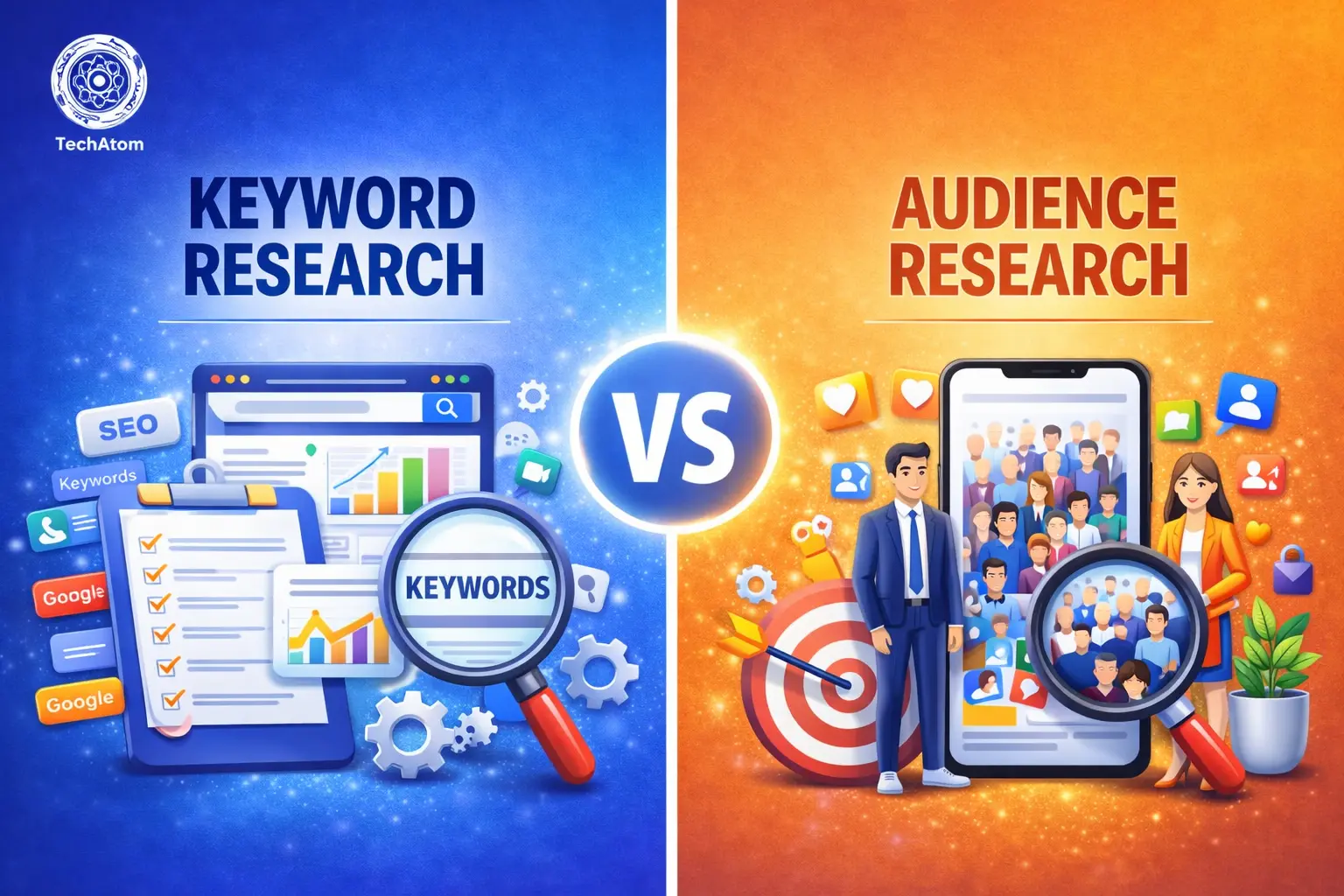
Audience Research vs Keyword Research
Both types of research are important, but they focus on different things. One is about people, and the other is about search behavior. Understanding this difference helps you avoid common mistakes, like writing only for search engines or for personal opinions.
Here is a simple comparison to make things clearer:
|
Aspect |
Audience Research |
Keyword Research |
|
Focus |
People and their needs |
Search terms and queries |
|
Goal |
Understand problems and behavior |
Improve visibility on search engines |
|
Data Type |
Emotional and behavioral insights |
Numbers and search data |
|
Tools Used |
Surveys, social media, analytics |
SEO tools like keyword planners |
|
Outcome |
Better content ideas |
Better search ranking |
In simple terms, audience research tells you why people need something, while keyword research tells you what they type to find it. When you combine both, your content becomes both meaningful and searchable.
Benefits of Audience Research and Keywords Research
Using audience research and keyword research together gives you a strong advantage. Instead of guessing what to write, you create content based on real data and real needs.
This approach not only improves your rankings but also makes your content more useful and engaging for readers.
Benefits of Audience Research:
- Helps you create content that truly solves problems
- Builds trust and connection with your audience
- Increases engagement, like time on page and shares
- Improves conversion rates because content feels relevant
Benefits of Keyword Research:
- Helps your content appear in search results
- Brings consistent organic traffic
- Guides you toward high-demand topics
- Improves content structure and optimization
Combined Benefits:
When you use both together, your content performs much better. It reaches the right people and also keeps them engaged once they land on your page. This balance is what makes content successful in the long run, not just temporarily.
Quick Comparison of Benefits:
|
Area |
Audience Research |
Keyword Research |
|
Content Quality |
Highly relevant and personalized |
Optimized for search engines |
|
Traffic |
Attracts the right audience |
Increases overall visibility |
|
Engagement |
Higher engagement and trust |
Better click-through rates |
|
Conversion |
A stronger emotional connection leads to action |
Targets high-intent searches |
|
Long-Term Value |
Builds loyal audience |
Drives consistent organic growth |
This table shows how both approaches complement each other rather than replace one another.
Common Mistakes When Using Keyword and Audience Research
Even experienced marketers make mistakes when using these strategies. Avoiding them can save you time and improve your results. Some common mistakes include focusing only on high-volume keywords, ignoring audience intent, stuffing keywords unnaturally, not updating your research regularly, and assuming you know your audience without data.
Being aware of these mistakes allows you to approach both audience and keyword research more strategically, creating content that ranks and resonates.
Tools for Keyword Research and Audience Research
Knowing which tools to use can make the research process much faster and more effective. Here’s a simple guide:
- Google Keyword Planner
- Ubersuggest
- Ahrefs
- SEMrush
Audience Research Tools:
- Google Analytics
- Social media insights
- Surveys and polls
- Reddit and Quora discussions
Using the right tools ensures your data is accurate and actionable, helping you create content that hits both SEO and audience goals.
Integrating Keywords into Audience-Centric Strategies
The best strategy is not choosing one over the other but combining both in a smart way. You start by understanding your audience and then use keywords to support that understanding.
This method ensures your content feels natural while still being optimized for search engines.
Simple Steps to Follow:
- Start with audience research: Understand their problems, questions, and needs before thinking about keywords. This gives you a clear direction for your content.
- Find matching keywords: Look for keywords that directly relate to those problems. Focus on intent rather than just high search volume.
- Create helpful content: Write content that genuinely solves problems. Keep the language simple, clear, and human.
- Add keywords naturally: Use keywords in headings and content without forcing them. The flow should feel smooth and natural.
- Focus on readability: Make your content easy to read with proper structure, spacing, and clarity. Good user experience always matters.
Example: Instead of only targeting a keyword like "knee pain relief", you can write something more specific like "best sleeping positions for knee pain relief". This makes your content more useful and more likely to rank.
This approach works because it connects real needs with real search behavior.
Which is More Important: Audience Research or Keyword Research?
This is a common question, especially for beginners. The truth is that both are important, but audience research should always come first.
If you skip audience research, your content may rank but fail to connect with readers. On the other hand, if you skip keyword research, your content may never be found by the right audience.
The Best Approach:
Think of audience research as the foundation of your content. It gives meaning and direction to what you create. Keyword research then helps amplify that content so more people can find it.
When you follow this approach, your content becomes both valuable and visible. This is the key to long-term success in SEO.
Conclusion
Keyword research and audience research are not in competition with each other. They are two parts of the same strategy. One helps you understand your audience, and the other helps your audience find you. When you combine both, you create content that is easy to discover and genuinely helpful. This leads to better engagement, stronger trust, and improved SEO performance.
If you want to grow consistently, focus on people first and then optimize for search. That simple shift can make a huge difference in your results.
Frequently Asked Questions
1. What is the main difference between keyword research and audience research?
Keyword research focuses on the words people type into search engines, while audience research focuses on understanding the needs, behavior, and preferences of your target audience.
2. Which should I prioritize: audience research or keyword research?
You should start with audience research to understand your readers’ needs, then use keyword research to make your content discoverable. Both are essential, but audience insight comes first.
3. Can I do keyword research without audience research?
Yes, but it’s not as effective. Without knowing your audience, your content may rank but fail to engage or convert readers.
4. What are some common mistakes when doing keyword and audience research?
Common mistakes include focusing only on high-volume keywords, ignoring user intent, stuffing keywords unnaturally, and assuming you know your audience without proper data.
5. Which tools are best for keyword and audience research?
For keyword research: Google Keyword Planner, Ahrefs, SEMrush, Ubersuggest.
For audience research: Google Analytics, social media insights, surveys, Reddit, and Quora discussions.
People are also reading: