
SEO in 2026 is evolving as search engines introduce AI-powered features and users change how they find information online. Traditional search results remain important, but businesses must also consider AI-generated summaries, conversational queries, and the growing importance of useful, trustworthy content.
These changes affect how websites attract visitors and measure success. A high ranking does not always translate into the same number of clicks, while useful content can support brand visibility across different search experiences.
However, the fundamentals of SEO have not disappeared. Keyword research, search intent, technical performance, internal linking, and content quality remain essential. The key is to combine these practices with a clear understanding of modern search behavior.
This guide covers the major SEO trends in 2026, recent research, and practical strategies businesses can use to improve search visibility.
1. AI Search Is Changing Organic Traffic
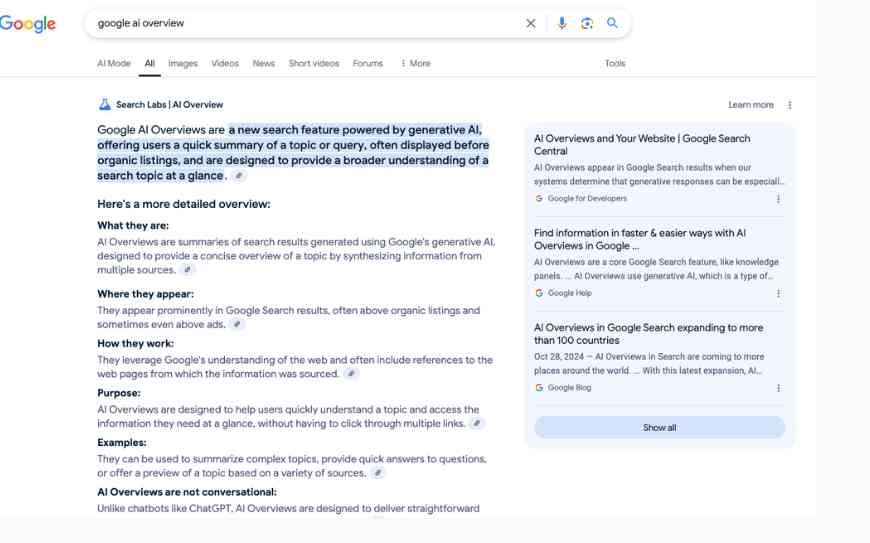
AI Overviews and other AI-powered search experiences can answer questions directly on the results page. Users may receive summaries and source links without visiting several websites to find the information they need.
Research published by Ahrefs in February 2026 highlights the potential effect on organic traffic. Its analysis of 300,000 keywords found that the presence of an AI overview was associated with a 58% lower average click-through rate for the top-ranking organic result in its December 2025 dataset. This is a study-specific finding, not a prediction for every website or keyword.
Source: Ahrefs' AI Overview CTR study.
Pew Research Center also examined real browsing activity from 900 US adults in March 2025. Its analysis found that users clicked a traditional search result in 8% of visits when an AI summary appeared, compared with 15% when no AI summary appeared. Links within the summaries themselves were clicked in just 1% of visits with a summary.
Source: Pew Research Center's study of Google AI summaries.
Together, these findings show why businesses should monitor clicks and impressions rather than assuming that rankings alone tell the whole story.
To adapt, businesses should:
- Answer important customer questions clearly and accurately.
- Publish original research, practical examples, and useful comparisons.
- Keep important webpages accessible to search engines.
- Build relevant internal links between related resources.
- Monitor organic clicks, impressions, conversions, and available AI-related referrals.
For more practical guidance, read TechAtom's article on optimizing content for AI search.
2. Search Intent Matters More Than Keyword Repetition
Keyword research remains an important SEO activity, but selecting a relevant keyword is only the beginning. Content also needs to match the reason behind the search.
Consider these examples:
- "What is technical SEO?" The user wants a clear explanation.
- "Technical SEO audit checklist" The user likely wants actionable steps.
- "Technical SEO services" The user may be comparing providers.
Although these queries concern the same subject, they require different content and calls to action.
Businesses can improve search intent alignment by:
- Identifying whether users want information, comparisons, a particular website, or a product or service.
- Reviewing the types of pages that appear for the target query.
- Choosing a format that meets the user's needs, such as a guide, comparison, tutorial, or service page.
- Answering the main question early and providing relevant supporting details.
- Removing keyword repetition and sections that do not serve the reader.
The objective is not to repeat the primary keyword a fixed number of times. It is to create the most useful page for the intended audience.
3. Helpful and Original Content Remains Essential
Publishing more articles does not automatically improve search performance. Content that repeats existing information without adding useful insights may struggle to stand out.
Google's people-first content guidance encourages publishers to create helpful, reliable content for people rather than pages designed primarily to manipulate search rankings.
Businesses should prioritize:
- Original insights: Include research, analysis, examples, or relevant first-hand experience.
- Accuracy: Verify facts, statistics, technical explanations, and claims.
- Practical value: Give readers instructions or recommendations they can apply.
- Clear structure: Use descriptive headings, readable paragraphs, and relevant visuals.
- Appropriate depth: Cover the topic thoroughly without unnecessary repetition.
AI tools can assist with research, outlining, and editing, but the finished content still requires fact-checking and editorial judgment. AI-generated content is not automatically harmful; its usefulness, accuracy, originality, and purpose matter.
For example, a basic article about website speed might list common optimization techniques. A stronger guide explains how to identify oversized images, diagnose slow server responses, and prioritize fixes based on their impact.
That practical detail gives readers a reason to choose the article over a generic summary.
4. E-E-A-T and Trust Support Content Quality
Experience, Expertise, Authoritativeness, and Trustworthiness are commonly known as E-E-A-T. These concepts help publishers evaluate whether content demonstrates relevant experience, knowledge, and credibility.
E-E-A-T is not a single Google ranking score, and demonstrating it does not guarantee higher rankings. However, accurate information and trustworthy presentation are especially important for subjects that can affect health, finances, safety, or other significant decisions.
Businesses can strengthen content credibility by:
- Providing accurate author biographies and relevant qualifications.
- Citing reliable sources for important claims.
- Demonstrating first-hand experience where appropriate.
- Explaining testing or review methods.
- Keeping product and service information accurate.
- Updating outdated information and correcting errors.
For example, a software review becomes more useful when it explains how the product was tested, identifies its limitations, and distinguishes hands-on findings from vendor-provided information.
Read TechAtom's guide to E-E-A-T in SEO for a deeper explanation of its role in content quality.
5. Technical SEO Still Matters in 2026

Even useful content can struggle to gain visibility if search engines cannot access, crawl, or index it correctly. Technical SEO helps maintain the website infrastructure needed for search discovery.
Important areas to review include:
- Crawlability and indexing: Ensure important pages can be accessed and indexed where appropriate.
- Website architecture: Organize content into logical categories and make key pages easy to reach.
- Page speed: Identify performance issues that affect loading and usability.
- Mobile usability: Make sure pages work across different screen sizes.
- Canonical tags and redirects: Manage duplicate URLs and direct visitors to the intended pages.
- XML sitemaps and robots.txt: Keep discovery instructions accurate and avoid blocking important content.
- Structured data: Use relevant markup that accurately represents visible page content.
Google's Core Web Vitals provide measurable benchmarks for user experience.
|
Metric |
Good threshold |
|
Largest Contentful Paint (LCP) |
2.5 seconds or less |
|
Interaction to Next Paint (INP) |
Less than 200 milliseconds |
|
Cumulative Layout Shift (CLS) |
Less than 0.1 |
These thresholds assess loading performance, responsiveness, and visual stability. Meeting them does not guarantee higher rankings, but they help website owners evaluate the user experience.
Source: Google's Core Web Vitals documentation.
Use Google Search Console to monitor indexing and search performance. Technical audits can then help identify and prioritize issues affecting important pages.
For a practical checklist, see TechAtom's guide to technical SEO.
6. AEO and GEO Are Expanding the SEO Conversation
Answer Engine Optimization (AEO) and Generative Engine Optimization (GEO) are terms used to describe efforts to improve content visibility in answer-based and generative AI experiences.
AEO generally focuses on providing useful answers to questions, while GEO focuses on how content or brands may appear in generative AI responses. The terminology varies, and both approaches overlap with established SEO practices.
Businesses can prepare by:
- Writing clear explanations of important topics.
- Using descriptive headings and logical content structures.
- Supporting factual claims with reliable sources.
- Publishing original research and practical examples.
- Maintaining accurate brand and product information.
- Ensuring important webpages remain technically accessible.
There is no universal formula that guarantees a citation in an AI-generated answer. Google also states that special schema markup is not required for inclusion in AI Overviews or AI Mode.
Instead of treating AEO and GEO as replacements for SEO, businesses should integrate relevant practices into their existing search strategies.
For a closer comparison, read TechAtom's guide to GEO vs. AIO vs. SEO.
7. Internal Linking Helps Users Discover Relevant Content
Internal links connect pages within the same website. They help visitors find related information and give search engines additional paths to discover webpages and understand how topics relate to one another.
A strong internal linking strategy should focus on relevance, context, and navigation rather than link quantity.
Follow these practices:
- Link to relevant supporting articles from within the main content.
- Use descriptive anchor text that explains what the linked page covers.
- Connect broad topic pages with detailed supporting resources.
- Make important pages accessible through logical navigation.
- Review broken links and remove links that no longer serve a useful purpose.
For example, an article about SEO trends can link to a technical SEO guide when discussing crawling and indexing. Its section on content credibility can link to an E-E-A-T resource for readers who want more detail.
Each link should help readers continue their research or understand a related topic. Avoid adding unrelated links simply to increase the number of internal links on a page.
8. SEO Measurement Goes Beyond Rankings
Rankings remain useful, but they do not tell the complete story of SEO performance. A page can attract visitors without generating leads or sales, while a page with fewer visits may attract more qualified prospects.
Businesses should track metrics based on their objectives.
|
Metric |
What it measures |
|
Organic clicks |
Visits generated from search results |
|
Impressions |
How often pages appear in search |
|
Click-through rate |
How often impressions lead to clicks |
|
Landing-page traffic |
Which pages attract visitors |
|
Conversions |
Leads, purchases, sign-ups, or other desired actions |
|
Indexing status |
Whether important pages are eligible to appear in search |
|
AI-related referrals |
Visits attributed to AI platforms where identifiable |
Google Search Console helps monitor clicks, impressions, queries, and page-level performance. Website analytics tools connect visits with engagement and conversions.
AI-related reporting can provide additional insight, but attribution may be incomplete. Someone might discover a brand through an AI response and return later through direct traffic or another channel.
Businesses should therefore evaluate SEO using a combination of visibility, relevant traffic, and business outcomes rather than rankings alone.
9. Content Refreshing Is Part of an Effective SEO Strategy
Content can become less useful when facts change, links break, products evolve, or user needs shift. Regular reviews help businesses maintain accuracy and relevance.
However, changing a publication date without improving the content does not make a page more valuable.
During a content audit:
- Identify pages with declining clicks, impressions, or conversions.
- Check whether information is outdated, incomplete, or inaccurate.
- Review whether the content still matches search intent.
- Update facts, examples, screenshots, and links where necessary.
- Consolidate overlapping pages when doing so improves the user experience.
- Assess traffic, backlinks, and existing value before removing or redirecting a page.
Prioritize pages that support important business goals. Meaningful improvements to existing content can be more useful than publishing new articles simply to increase output.
10. How to Build an SEO Strategy in 2026
Businesses do not need to adopt every new SEO trend at once. A practical strategy starts with the website's current performance, audience needs, and commercial priorities.
Step 1: Audit Your Website
Review indexing, crawlability, page speed, mobile usability, site structure, and internal links. Prioritize issues that affect important pages or prevent search engines from accessing content.
Step 2: Research Keywords and Search Intent
Identify relevant queries and understand what users expect to find. Map keywords to suitable pages to reduce overlap and give each page a clear purpose.
Step 3: Improve High-Priority Content
Update valuable pages with accurate information, useful examples, relevant sources, and clearer explanations. Remove unnecessary repetition and add original insights where possible.
Step 4: Strengthen Internal Links and Credibility
Connect related pages, use descriptive anchor text, cite reliable sources, and provide relevant author or business information.
Step 5: Prepare for AI Search
Apply established SEO best practices, keep important content accessible, and monitor AI-related visibility where reliable data is available. Avoid techniques that promise guaranteed citations or rankings.
Step 6: Measure Results and Refine
Review organic clicks, impressions, conversions, and technical health. Compare performance over time and use the findings to determine which improvements deserve further attention.
The strongest SEO strategy is not the one that follows every trend. It is the one that consistently improves how users discover, understand, and benefit from a website's content.
Conclusion
SEO in 2026 combines established optimization practices with changing search experiences. Research suggests that AI summaries can affect organic click behavior, making it increasingly important to evaluate performance beyond rankings alone.
Businesses should continue investing in keyword research, helpful content, technical SEO, internal linking, and credibility while adapting to AI-powered search. By focusing on audience needs and measuring meaningful outcomes, they can build a more sustainable approach to organic visibility.
Frequently Asked Questions
1. How does SEO look in 2026?
SEO combines traditional practices such as keyword research, technical optimization, and content creation with growing attention to AI-powered search. The goal remains helping the right audience find useful, reliable information.
2. Is SEO still relevant in 2026?
Yes. Search engines still need to discover, understand, and evaluate webpages, making established SEO practices important. AI-powered search experiences also use existing search and quality systems.
3. What are the biggest SEO trends in 2026?
Major areas include AI-powered search, search intent, helpful content, technical SEO, and performance measurement. Businesses should prioritize the trends most relevant to their audience and goals.
4. Does AI-generated content hurt SEO?
AI-generated content is not automatically harmful. Its accuracy, originality, usefulness, and compliance with search spam policies matter more than whether AI was used to produce it.
5. How can businesses improve SEO in 2026?
Businesses should audit technical issues, research search intent, improve valuable content, strengthen internal links, and track organic performance. They should also monitor AI-related visibility where reliable data is available.
6. Does SEO still matter for AI search?
Yes. Google's AI search features use core search and quality systems, so established SEO fundamentals remain relevant. However, following best practices does not guarantee inclusion in AI-generated results.
7. Is special schema markup required for AI search?
No special schema markup is required for Google AI Overviews or AI Mode. Relevant structured data can still support eligible search features when implemented accurately.
8. Which SEO metrics should I track in 2026?
Track organic clicks, impressions, click-through rate, conversions, and indexing health. AI-related referrals can provide additional insight when analytics tools can identify them reliably.
People are also reading: