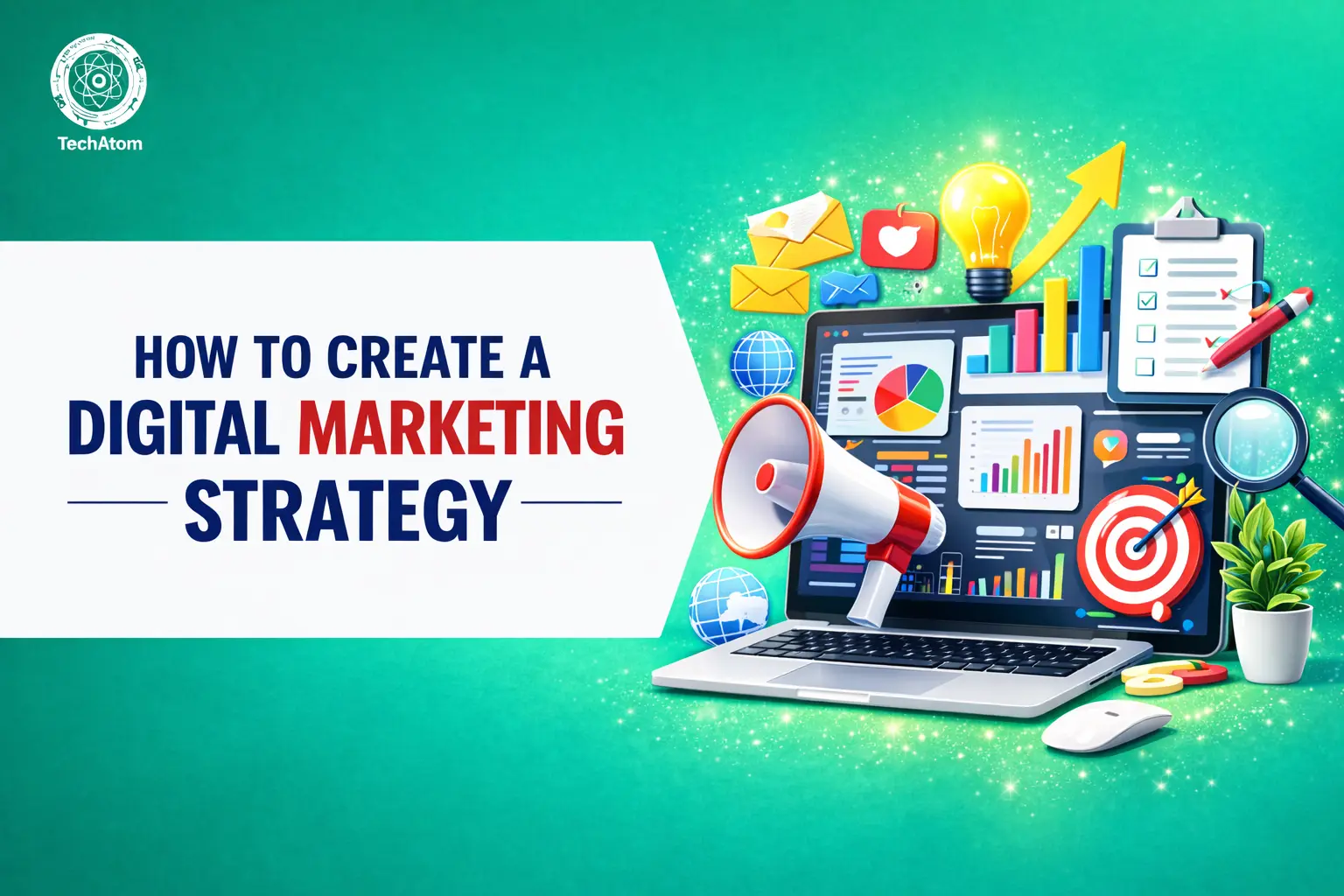
In today’s digital world, having an online presence is important for any business, but having a clear plan is even more important. Many businesses go online without a clear direction, which often leads to wasted time, money, and poor results.
A well-planned strategy allows you to connect with the right audience, use the right platforms, and grow your business in a structured way. In this guide, you will learn everything you need to build a strong and effective digital marketing strategy step by step.
What is a Digital Marketing Strategy?
A digital marketing strategy is a complete plan that explains how a business will use online platforms to achieve its goals. These platforms include search engines, social media, email, websites, and more. It is not just about posting content or running ads, but also about making smart decisions based on your goals and audience.
This strategy helps you stay organized and focused. Instead of trying random methods, you follow a clear path that supports your business growth. It includes understanding your audience, selecting the right platforms, creating useful content, and tracking your results.
In simple terms, it is a roadmap that guides your online efforts and helps you grow in a planned and effective way.
Why Digital Marketing Strategies Are Important?
A digital marketing strategy is important because it helps you use your time and budget wisely. When you have a clear plan, you know what you are doing and why you are doing it. This makes your efforts more effective and result-oriented.
It also ensures consistency in your brand message. When your communication is clear and consistent across all platforms, it builds trust among your audience. Over time, this trust turns into loyalty and better customer relationships.
Another benefit is staying competitive. By understanding trends and customer behavior, you can improve your approach and make better decisions for your business.
10 Types of Digital Marketing Strategies to Grow Your Business
1. Search Engine Optimization
Search engine optimization helps your website rank higher on search engines so people can easily find your business. It focuses on using the right keywords, improving website performance, and creating helpful content. This strategy brings long-term and organic traffic.
Types:
- On-page SEO which focuses on content, keywords, and headings
- Off-page SEO which includes backlinks and external signals
- Technical SEO which improves website speed, structure, and indexing
Example: A small local bakery created blog posts like “Best Birthday Cakes in Dehradun” and optimized them with local keywords. Within a few months, their website started appearing on search engines, bringing more customers without spending on ads.
Why it’s important: It brings long-term traffic and builds credibility without paid ads
2. Content Marketing
Content marketing is about creating useful and informative content that solves problems for your audience. This builds trust and keeps people engaged with your brand. Good content also improves your visibility online.
Types:
- Blog content such as articles and guides
- Visual content like infographics
- Interactive content such as quizzes or tools
- Downloadable content like ebooks or PDFs
Example: A website created a detailed blog guide answering common customer questions. Over time, it started ranking on search engines and brought consistent organic traffic.
Why it’s important: It builds trust and keeps your audience engaged with your brand
3. Social Media Marketing
Social media marketing helps you connect with your audience on platforms they use daily. By sharing posts and updates, you can build relationships, increase awareness, and promote your products or services.
Types:
- Organic social media which includes regular posts and engagement
- Paid social media which includes ads and promotions
- Community management which focuses on replying and engaging with followers
Example: A clothing brand started posting short reels regularly on Instagram showing styling tips. One of their reels went viral, which increased their followers and brought a sudden boost in website traffic and sales.
Why it’s important: It increases visibility and builds strong relationships with users
4. Email Marketing
Email marketing allows you to communicate directly with your audience. You can send updates, offers, and helpful content to keep them engaged. It is a powerful way to build long-term relationships.
Types:
- Newsletter emails for regular updates
- Promotional emails for offers and discounts
- Transactional emails like order confirmations
- Drip campaigns which send automated emails over time
Example: An online store sent personalized discount emails to customers who had added products to their cart but didn’t complete the purchase. This simple strategy helped them recover lost sales and improve conversions.
Why it’s important: It helps build long-term relationships and improves customer retention
5. Pay Per-Click Advertising
This method helps you get quick traffic by running paid ads. You only pay when someone clicks on your ad, making it a cost-effective way to reach potential customers quickly.
Types:
- Search ads that appear on search engines
- Display ads shown on websites
- Social media ads on platforms like Instagram and Facebook
- Remarketing ads that target previous visitors
Example: A coaching institute ran Google Ads targeting keywords like “best online coaching classes.” Within a few days, they started receiving inquiries from interested students, helping them generate quick leads.
Why it’s important: It gives quick results and helps target the right audience instantly
6. Affiliate Marketing
Affiliate marketing involves working with partners who promote your products. They earn a commission for every sale they generate, helping you reach a wider audience.
Types:
- Influencer affiliates
- Blog or website affiliates
- Coupon and deal websites
- Review-based affiliates
Example: A blogger promoting your product using a special referral link
Why it’s important: It helps you reach new audiences with low risk and cost
7. Influencer Marketing
Influencer marketing uses popular individuals to promote your brand. Their audience trusts them, which helps you gain visibility and credibility faster.
Types:
- Mega influencers with large audiences
- Micro influencers with niche followers
- Nano influencers with small but highly engaged audiences
Example: A content creator reviewing your product
Why it’s important: It builds trust quickly and increases brand awareness
8. Video Marketing
Video marketing is a powerful way to share your message. Videos are engaging and easy to understand, making them a great way to connect with your audience.
Types:
- Educational videos
- Product demo videos
- Short-form videos like reels
- Live videos or webinars
Example: Creating a tutorial or product demo video
Why it’s important: Videos are engaging and easy to understand
9. Mobile Marketing
Mobile marketing focuses on reaching users on their smartphones. Since most people use mobile devices daily, this strategy ensures your content is always accessible.
Types:
- SMS marketing
- App-based marketing
- Push notifications
- Mobile-friendly websites
Example: Sending promotional SMS or app notifications
Why it’s important: It helps you reach users anytime since most people use mobile devices
10. Conversion Rate Optimization
This strategy focuses on improving your website so that more visitors take action. Small improvements in design and user experience can increase your results significantly.
Types:
- Landing page optimization
- A/B testing
- User experience improvement
- Call-to-action optimization
Example: An eCommerce website tested two versions of their product page: one with a simple “Buy Now” button and another with “Limited Offer- Buy Now.” The second version increased their sales because it created urgency.
Why it’s important: It helps you get better results without increasing traffic
How to Create Effective Digital Marketing Strategy in 8 Steps
- Set Clear Goals: Start by deciding what you want to achieve. Clear goals help you stay focused and measure your success.
- Understand Your Target Audience: Learn about your audience, their needs, and their behavior. This allows you to create content that connects with them.
- Analyze Your Competitors: Study what others are doing in your industry. This helps you improve your strategy and find new opportunities.
- Choose the Right Platforms: Focus on platforms where your audience is most active. This increases your chances of success.
- Create Valuable Content: Content is the foundation of digital marketing. Make sure it is helpful, simple, and engaging.
- Plan Your Budget: Decide how much you want to spend and use your budget wisely across different channels.
- Implement Your Strategy: Put your plan into action and stay consistent with your efforts.
- Track and Improve: Regularly check your results and make changes to improve your performance.
Key Metrics to Measure Success
To understand whether your digital marketing strategy is actually working, you need to track the right metrics. These metrics help you see what is performing well and where you need to improve. Instead of guessing, you can make decisions based on real data.
Here are the most important metrics you should focus on:
- Website Traffic: This shows how many people are visiting your website. It helps you understand whether your marketing efforts are bringing users to your site. You can also track where your traffic is coming from, such as search engines, social media, or ads.
- Conversion Rate: Conversion rate tells you how many visitors are taking action on your website. This action could be making a purchase, signing up, or filling out a form. A high conversion rate means your website and strategy are working effectively.
- Click-Through Rate (CTR): This measures how many people click on your link after seeing it. It is commonly used for ads, emails, and search results. A higher CTR means your content or headline is attractive and relevant to users.
- Engagement Rate: Engagement rate shows how users interact with your content. This includes likes, shares, comments, and time spent on your page. High engagement means your content is interesting and valuable to your audience.
- Bounce Rate: Bounce rate shows the percentage of visitors who leave your website without taking any action. A high bounce rate may indicate that your content is not relevant, your website is slow, or the user experience needs improvement.
By regularly tracking these metrics, you can clearly understand what is working and what needs improvement. This helps you make better decisions, improve your strategy, and get better results over time.
Common Mistakes to Avoid in Digital Marketing Strategy
Many businesses struggle with digital marketing not because the methods don’t work, but because of simple mistakes in planning and execution. Understanding these mistakes can save time, money, and effort while improving your results.
- Not Setting Clear Goals: Without clear goals, your strategy lacks direction. You may create content or run campaigns, but you won’t know if they are successful or not. Clear goals help you stay focused and measure progress.
- Ignoring the Target Audience: If you don’t understand your audience, your content may not connect with them. Knowing their needs, interests, and problems helps you create content that feels relevant and useful.
- Focusing on Only One Platform: Relying on a single platform can limit your reach. Different platforms attract different audiences, so using multiple channels helps you expand your visibility and opportunities.
- Not Tracking Performance: If you are not tracking results, you are simply guessing. Monitoring performance helps you understand what is working and what needs improvement so you can adjust your strategy.
- Creating Content Without Planning: Posting content without a clear plan often leads to inconsistency and low engagement. A structured content plan ensures that your efforts are meaningful and aligned with your goals.
Avoiding these common mistakes can help you build a more focused, effective, and result-driven digital marketing strategy.
How to Choose the Right Digital Marketing Strategy
Choosing the right digital marketing strategy depends on understanding your business and aligning it with the right approach. A strategy that works for one business may not work for another, so it’s important to make decisions based on your specific situation.
- Your Business Type: Different businesses require different strategies. For example, an eCommerce business may focus more on ads and conversions, while a service-based business may focus on content and trust-building.
- Your Target Audience: Understanding where your audience spends time and how they behave online helps you choose the right platforms and methods. This ensures your efforts reach the right people.
- Your Budget: Your budget plays an important role in deciding whether to focus on organic methods, paid ads, or a mix of both. A well-planned budget helps you get better returns without overspending.
- Your Goals: Your strategy should match your goals. If your goal is brand awareness, you may focus on social media and content. If your goal is sales, you may focus more on ads and conversion optimization.
By understanding these factors, you can choose a strategy that fits your business needs and delivers better results over time.
Digital Marketing Strategy vs. Digital Marketing Techniques
Understanding the difference between strategy and techniques is important for building an effective digital marketing plan.
|
Aspect |
Digital Marketing Strategy |
Digital Marketing Techniques |
|
Meaning |
A complete plan to achieve goals |
Individual actions used to execute the plan |
|
Focus |
Long-term direction |
Short-term activities |
|
Example |
Building brand awareness |
Running ads or posting content |
|
Purpose |
Guides overall marketing efforts |
Supports the strategy |
A strategy gives you direction, while techniques are the actions you take. Both are important, but without a strategy, your efforts may not give the best results.
How Modern Technology Has Transformed Digital Strategies in 2025
In 2025, technology has changed how businesses approach digital marketing. Businesses can now understand customer behavior better through data, which helps in making smarter decisions. This leads to more effective and targeted campaigns.
Automation has made many tasks easier, such as managing emails, running ads, and responding to customers. This saves time and allows businesses to focus more on planning and creativity.
Another major change is personalization. Businesses can now deliver content based on individual preferences, making the experience more relevant and engaging. Overall, digital marketing has become more efficient and focused on customer needs.
Conclusion
Creating a digital marketing strategy becomes easier when you follow a clear process. It keeps your efforts organized and focused while helping you reach the right audience. With the right plan, you can achieve your business goals more effectively.
Consistency and improvement are the keys to success. Digital marketing is not a one-time effort, but a continuous process. By learning, testing, and improving your strategy, you can achieve long-term growth and success.
Frequently Asked Questions
1. What is a digital marketing strategy in simple words?
A digital marketing strategy is a step-by-step plan that helps a business promote its products or services online using platforms like search engines, social media, email, and websites to achieve specific goals.
2. Why is a digital marketing strategy important for businesses?
It helps businesses stay focused, use their budget wisely, reach the right audience, and achieve better results instead of wasting time on random marketing efforts.
3. What are the main components of a digital marketing strategy?
The main components include goal setting, audience research, competitor analysis, content creation, platform selection, budgeting, execution, and performance tracking.
4. How long does it take to see results from a digital marketing strategy?
It depends on the method you use. SEO and content marketing may take a few months, while paid ads can give faster results within days or weeks.
5. What is the difference between digital marketing strategy and tactics?
A strategy is the overall plan to achieve your goals, while tactics are the specific actions like posting content, running ads, or sending emails to execute that plan.
People are also reading: