
Managing social media and digital marketing manually can take a lot of your time and overwhelm you. Marketers struggle in posting, engaging, and analyzing performance. Customers today expect personalized, timely, and engaging interactions across multiple platforms. This makes social media automation important. It allows brands to maintain a consistent online presence without wasting their time on repetitive work.
The right social media automation software can help businesses:
- Schedule content
- Automate engagement
- Track analytics
- Create custom workflows
Leveraging digital marketing automation tools can help:
- Save time
- Improve strategy
- Improve outcomes
The digital marketing landscape has evolved tremendously with:
- CRM,
- Email marketing
- Social media automation tools
- AI marketing tools in 2025
Let’s explore the best tools to automate your social media marketing and maximize your efficiency.
What is Digital Marketing Automation?
Have you ever felt overwhelmed by endless tasks of sending emails, scheduling posts, following up leads, and tracking analytics? Then, digital marketing automation platforms are for you.
Digital marketing automation is about using technology and marketing automation software to automate repetitive marketing activities, like:
- Sending follow-up emails
- Scheduling social media posts
- Segmenting leads
- Tracking customer behaviors
With automation tools, you don’t have to manage every campaign manually. Also, you don’t have to juggle between a dozen tools. Automation enables the creation of intelligent marketing workflows. It brings everything under one roof:
- CRM & email automation
- Social media automation tools
- Analytics
- AI marketing tools
Key Benefits of Marketing Automation Software
There are many benefits of marketing automation software. Here are some key benefits:
1. Time & Cost Efficiency
Repetitive tasks can take your hours every week. Automation software helps automate those repetitive tasks, like:
- Scheduling posts
- Sending emails
- Updating contact listers
- Follow-ups
- Data entry
Marketing workflow automation frees up your team's time. This provides them with more time to focus more on strategy and creativity.
2. Lead Nurturing Automation
Not every lead will convert into sales. Automation helps move prospects smoothly down the sales funnel with personalized journeys.
3. Improved personalization
Today, customers expect customized experiences. AI marketing tools in 2025 help brands customize campaigns to deliver hyper-personalized content at scale.
4. Better Data-Driven Decisions
Automated reporting and analytics provide clear insights about the strategies. This makes optimization easier.
5. Scalability
The right marketing automation software grows with your needs, whether you’re a small startup or an enterprise with millions of leads.
Common Features in Digital Marketing Automation Platforms
Most of the best automation tools for marketing offer a suite of features that help streamline campaigns and thereby improve ROI. Some of the most common are:
1. CRM & Email Marketing Automation
While syncing the customer data, it helps automate:
- Email sequences
- Newsletters
- Drip campaigns
2. Social Media Automation Tools
These tools help:
- Schedule & manage posts
- Track engagement
- Analyze performance
3. Lead Nurturing Automation
It creates workflows that send targeted messages according to the behavior of customers.
4. Multi-Channel Marketing Automation
This feature helps coordinate campaigns across:
- Emails
- SMS
- Push notifications
- Ads
5. AI Marketing Tools
AI Marketing tools in 2025 help provide:
- Predictive analytics
- Smart segmentation
- Generative content creation
6. Analytics & Reporting
Automation tools provide real-time insights into:
- Campaign performance
- ROI
- Customer behavior
Why Businesses Need Marketing Automation in 2025
If one thing is clear about digital marketing, it never stands still, as every year:
- Algorithms change
- Customer expectations rise
- Competition gets tougher
In 2025, businesses can’t rely on manual campaigns or universal strategies. To stay ahead of the curve, they need digital marketing automation platforms that combine:
- CRM & email marketing automation
- Social media automation tools
- AI-driven personalization
- Multi-channel campaigns
The following points will make you understand why marketing automation is no longer an option, but an essential for growth.
1. Time Efficiency & Cost Savings
Marketers are involved in a ton of repetitive tasks, like:
- Sending follow-up emails
- Segmenting leads
- Posting on social media
- Generating reports
If all the work is done manually, it will waste your precious hours and will require larger teams. Automation in marketing saves the time and money of the businesses by automating these repetitive tasks.
2. Personalization and Improved Customer Journeys
Today, customers expect more than generic emails. They want to experience emails tailored just for them. The rise of AI marketing tools in 2025 has made personalization go from being a “nice touch” to an absolute necessity.
Automation creates lead-nurturing automation workflows. This helps businesses adjust messages according to customer behaviors.
3. Data-Driven Decision Making
Data is the superpower of marketing in 2025. Marketing automation software provides detailed analytics to the businesses. These analytics help businesses understand what’s working and what isn’t.
Digital marketing automation platforms turn raw data into actionable insights by using:
- Built-in analytics
- AI-powered insights
These analytics and insights will help businesses make data-backed decisions.
4. Scalability for Small to Enterprise-Level Businesses
One of the biggest strengths of multi-channel marketing automation is scalability. From startups to large enterprises, the right tools grow with them.
Affordable tools like CRM and email marketing automation benefit small businesses. While for a complex sales cycle, enterprises can leverage advanced features like:
- Predictive analysis
- Segmentation
- B2B marketing automation software
5. Competitive Edge in Digital Marketing
You must be lagging behind your competitors if you’re not using automation. Automation helps ensure that your brand is present across every customer touchpoint, like:
- SMS
- Social media
- Ads
With the embracing of the best automation tools for marketing, businesses can gain a competitive advantage through:
- Faster responses
- Smarter targeting
- More personalized campaigns
Criteria for Choosing the Best Marketing Automation Software
There are so many digital marketing automation platforms available in 2025. SO, it might feel overwhelming to choose the right one. There is no universal solution. The best platform depends on your business:
- Size
- Goals
- Budget
The following key factors must be kept in mind before investing in the best marketing automation software:
1. Ease of Use and Learning Curve
A powerful tool is of no use if your team doesn't know how to use it. You must look for tools that have an intuitive interface and a gentle learning curve.
You must keep in mind that the marketing automation tool should simplify your life, not complicate it.
2. Integration with Other Platforms
An automation platform must not exist in a silo. But the best tool must integrate seamlessly with your:
- CRM
- E-commerce store
- Payment gateways
- Social media accounts
- Analytics tools
The smooth integration makes your lead nurturing automation work better across the customer journey.
3. Features (AI, Analytics, Segmentation, Multi-Channel)
You must prioritize your needs as your features are not created equal. In 2025, here are the must-haves:
- AI Marketing tools:
- Predictive analysis
- SMart segmentation
- Automated content suggestions
- Analytics & reporting: Data-driven decisions will be made using real-time dashboards.
- Advanced Segmentation: Targeting is done based on:
- Behavior
- Demographics
- Purchase history
- Multi-Channel Marketing Automation: It helps manage all in one place, like:
- SMS
- Social media
- Push notifications
- Ads
4. Pricing and Scalability
Automation platforms come in free starter plans to expensive enterprise solutions. The key is to find a tool that fits in your budget and can grow your business.
Also, you must think of the long-term, as you can’t switch easily when your business grows.
5. Customer Support and Community
Even the best software can have issues. So, strong customer support and an active user community are important. You must look for:
- 24/7 chat support
- Onboarding tutorials & documentation
- Forums or groups to learn from other users
A responsive team makes your automation tools run smoothly without disrupting campaigns.
10 Best Digital Marketing Automation Tools in 2025
Here’s the heart of the post. Let’s explore the top marketing workflow automation tools in 2025.
1. HubSpot Marketing Hub
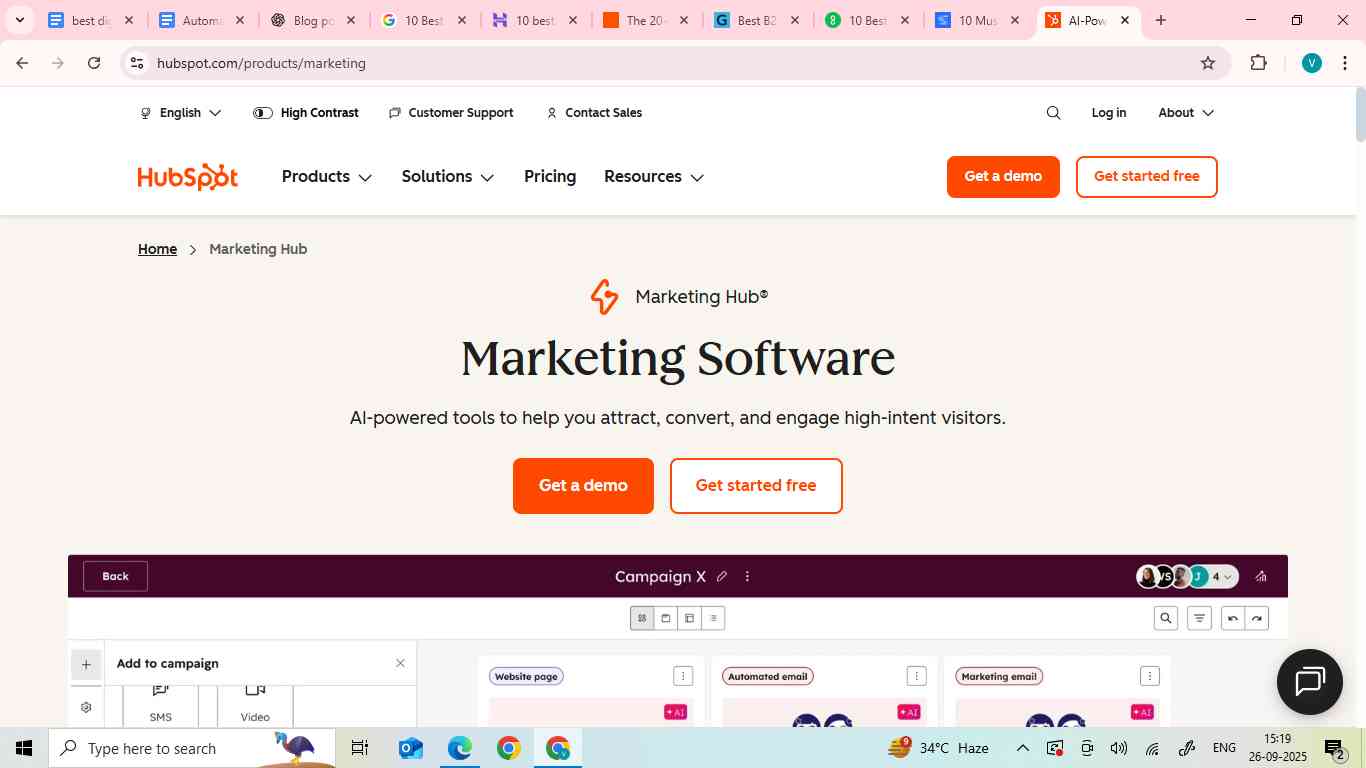
HubSpot is one of the most popular CRM and email marketing automation platforms. It is a versatile digital marketing automation tool. It offers an all-in-one solution for:
- Inbound marketing
- CRM
- Customer service
It has an intuitive interface that allows businesses to streamline:
- Email marketing
- Social media campaigns
- Lead nurturing
It is designed to help businesses to gain customers with ease. HubSpot’s scalability makes it an ideal choice for small and large enterprises.
Key Features:
- Comprehensive CRM + Marketing Hub integration
- Automated email & social media management
- AI-powered analytics
- Multi-channel marketing automation
- In-depth analytics & reporting tools
- Content marketing & SEO optimization features
Pros:
- Beginnerfriendly
- User-friendly
- Rich in features
- All-in-one solution
- Strong integration ecosystem
- Seamless integration with CRM, CMS, customer support, & other solutions
Cons:
- Very expensive
- May require a separate Hub for the automations
Pricing:
|
Free Tools |
Marketing Hub Starter |
Starter Customer Platform |
Marketing Hub Professional |
Marketing Hub Enterprise |
|
₹0/mo |
₹752/mo/seat |
₹752/mo/seat |
₹66,697/mo |
₹300,000/mo |
|
Free for up to 2 years |
Includes 3 core seats |
Includes 5 core seats |
2. Marketo Engage (Adobe)
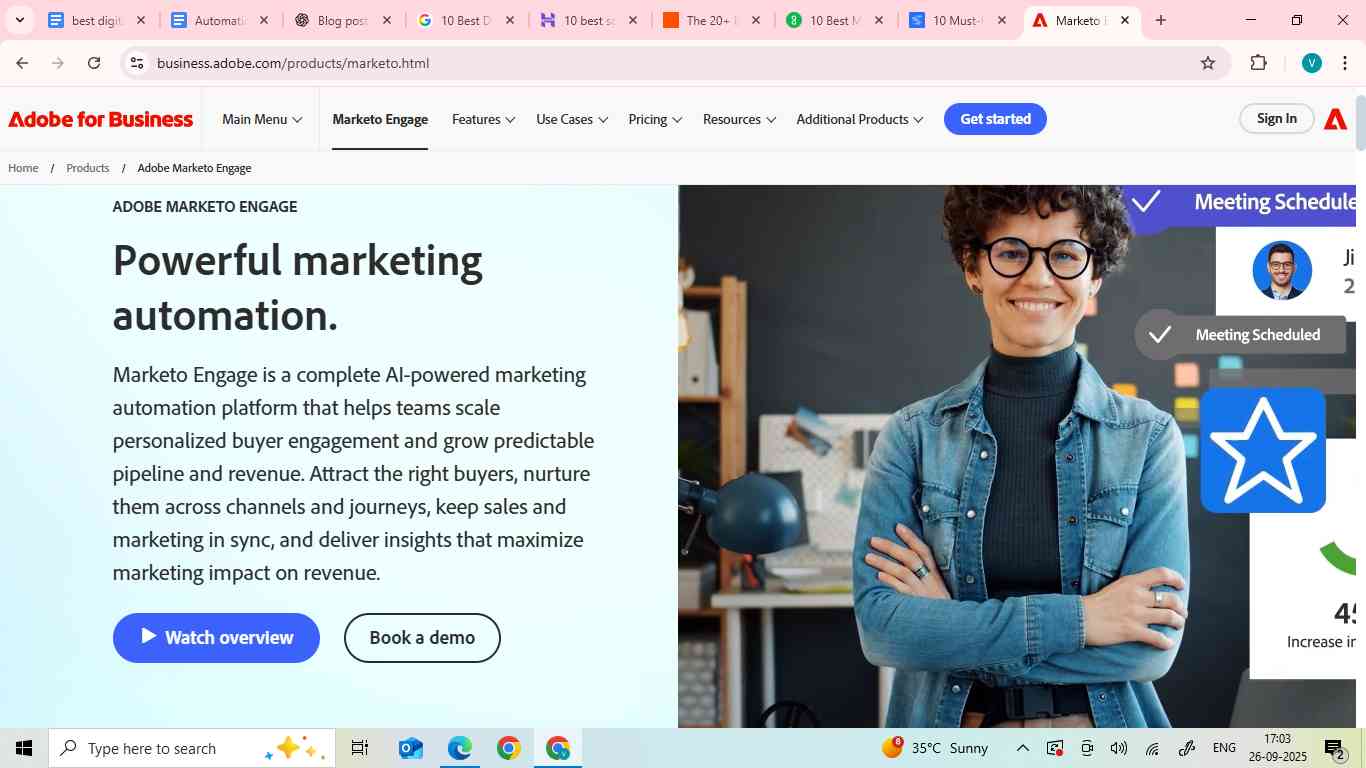
Adobe acquired Marketo in 2018. it is a premium digital marketing automation platform. It caters mainly to large enterprises. It is a powerhouse in B2B marketing automation software. It offers a comprehensive suite of tools that help marketers attract, nurture, and convert leads effectively. It provides advanced tools for:
- Lead management
- Account-based marketing
- Detailed reporting
Key Features:
- Account-based marketing capabilities
- AI-powered lead nurturing
- Advanced segmentation
- Multi-channel campaigns
- Seamless integration with CRM systems
Pros:
- Excellent for a complex B2B funnel
- Enterprise-grade features
Cons:
- Steep learning curve
- Higher cost
Pricing: Custom pricing on request.
3. ActiveCampaign

ActiveCampaign is amongst the best automated marketing software solutions. It offers tools for:
- Email marketing
- Customer experience automation
- CRM
It is a versatile automation tools that empowers businesses to:
- Create targeted marketing campaigns
- Automate repetitive tasks
- Engage with audience across multiple channels
It offers robust email marketing capabilities that allows users to create and send highly personalized email campaigns. This tool helps users create engaging mails by providing a:
- User-friendly drag-and-drop builder
- Customizable templates
- Dynamic content options
It has sophisticated automation workflows and personalization options. These options make it a favorite choice among businesses aiming to build meaningful customer relationships. It is best suited for SMEs that need email automation plus CRM integration.
Key Features:
- Customer journey mapping
- Advanced email marketing & segmentation tools
- CRM capabilities
- Detailed analytics for campaign performance tracking
- Customer experience automation
Pros:
- Great balance of price and features
- Strong personalization
- Huge library of multilingual workflow automations
- AI functionality for:
- Email content generation
- Predictive email sending
- Automation building
Cons:
- May be overskill for beginners
- Limited predictive AI sending to the two highest tiers
Pricing:
|
Enterprise |
Pro |
Plus |
Starter |
|
$145/mo, billed annually |
$79/mo, billed annually |
$49/mo, billed annually |
$15/mo, billed annually |
|
Run email marketing at scale with enterprise-level support. |
Unlock enhanced email orchestration. |
Go further with automation & powerful customer insights. |
Get started with personalized email marketing campaigns. |
4. Mailchimp
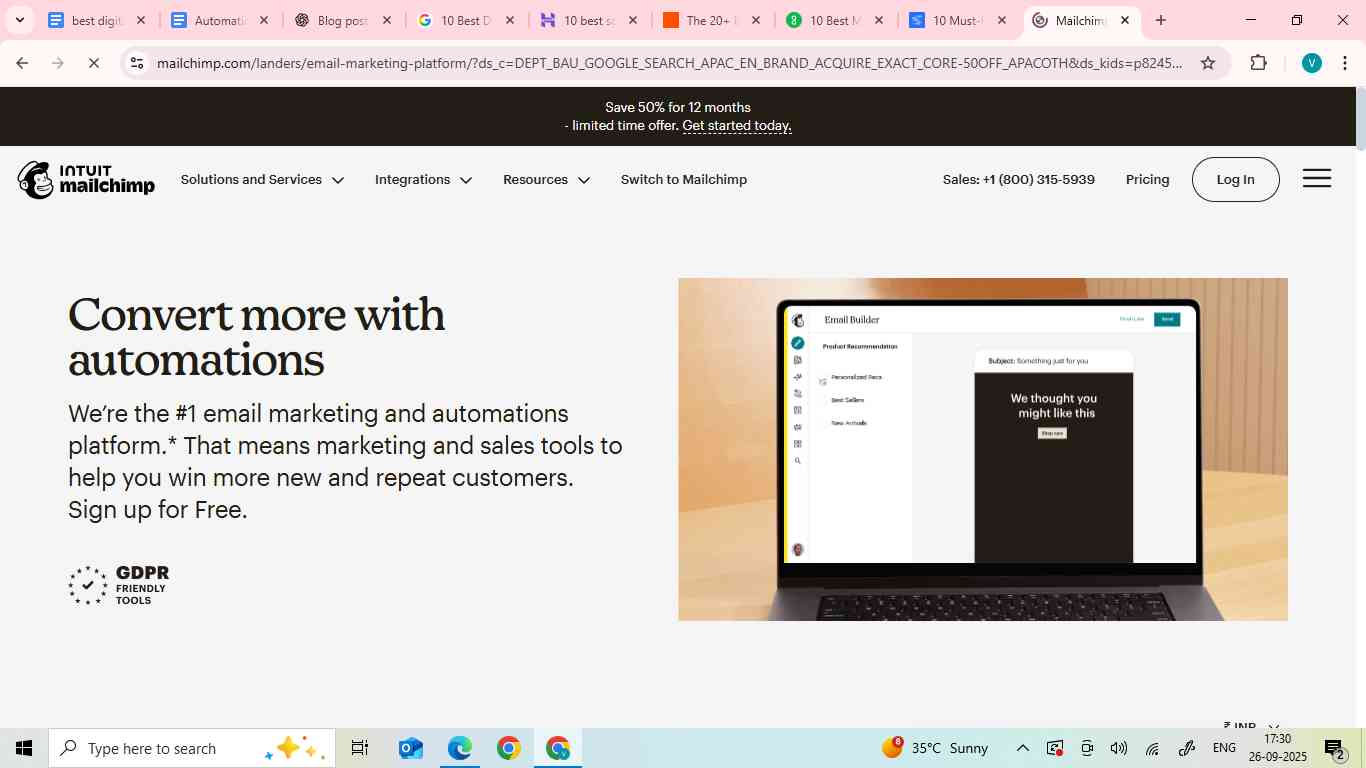
Mailchimp is a widely used digital marketing automation software. It excels in email marketing automation. It is a go-to email marketing automation platform. It provides tools for creating:
- Personalized campaigns
- Advanced audience segmentation
It is an all-in-one tool for all your marketing needs as it offers other marketing tools for:
- Social media
- eCommerce
- Lead forms
- Landing pages
- Websites
It is ideal for small to medium-sized businesses that want to scale their marketing efforts.
Free plan of this app includes a:
- Landing page builder
- Customer journey mapping
- List segmentation
- Email templates
- Branding tools
Key Features:
- Advanced email marketing automation tools
- Basic social media automation tools
- Personalization & segmentation capabilities
- Pre-designed templates for faster campaign creation
- Detailed campaign analytics
- Performance tracking
- User-friendly interface
Pros:
- Very beginner-friendly
- Affordable
- All-in-one marketing automation
- Reasonable costs, when scaling
- Easy-to-use advanced features
Cons:
- Limited advanced features
Pricing:
|
Premium |
Standard |
Essentials |
Free |
|
₹11,500/mo for first 12 months |
₹575/mo for first 12 months |
₹385/mo for first 12 months |
₹0/month |
5. Pardot (Salesforce)
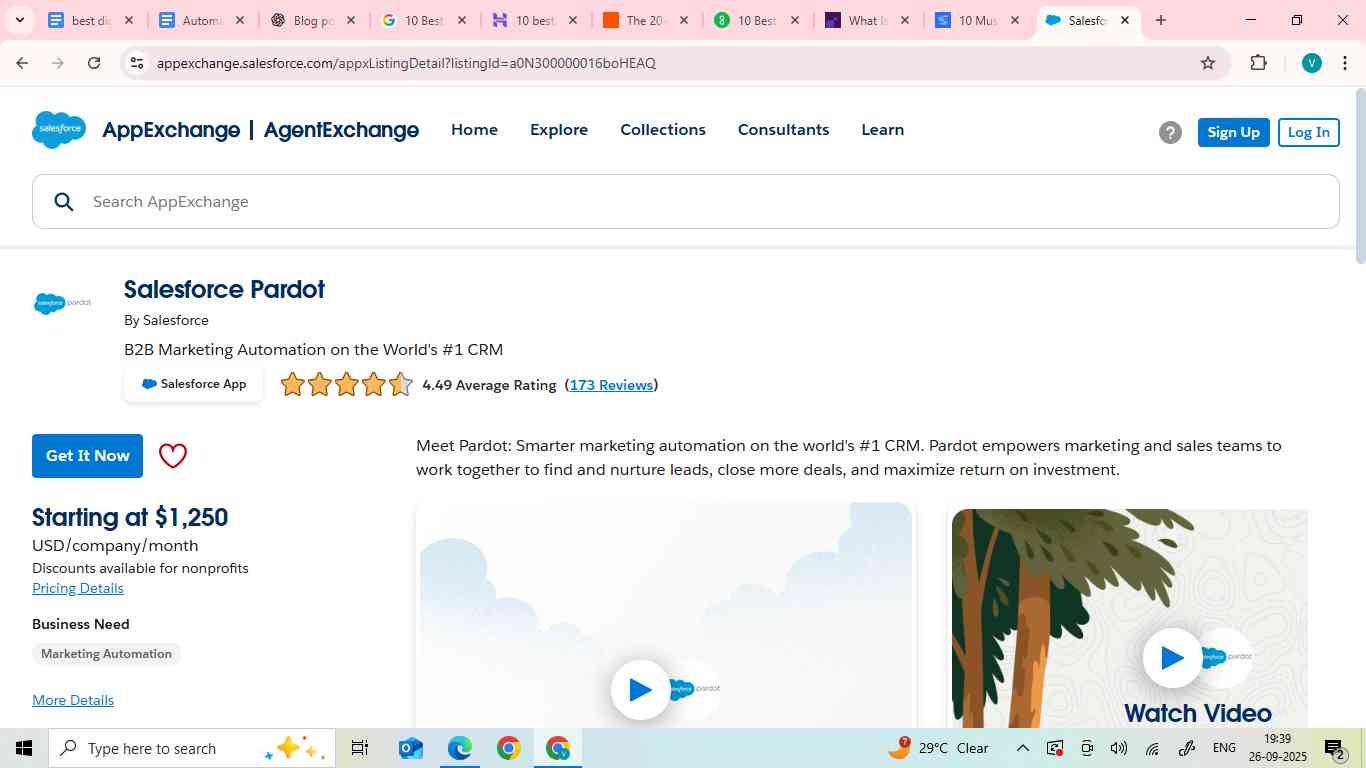
Pardot is a part of the Salesforce ecosystem. It is a powerful B2B marketing automation tool that is designed to pipeline growth and revenue. It helps businesses offer personalized marketing campaigns to:
- Generate leads
- Nurture prospects
- Drive revenue
With features like lead scoring and nurturing, Pardot empowers marketers:
- Identify high-quality leads
- Engage with personalized content
- Accelerate through sales funnel
Pardot integrates seamlessly with Salesforce CRM. This allows businesses to sync lead and contact data between the two platforms and gain a holistic view of their customers. These interactions make the collaboration more effective between the sales and marketing team.
Key Features:
- Advanced lead nurturing automation
- ROI reporting & attribution
- Salesforce CRM integration
Pros:
- Enterprise-level analytics
- Ideal for complex B2B journeys
Cons:
- Expensive
- Requires technical setup
Pricing: Starts at $1,250/month.
|
Growth |
Plus |
Advanced |
|
$1250+/month |
$2,500+/month |
$4,000+/month |
6. GetResponse
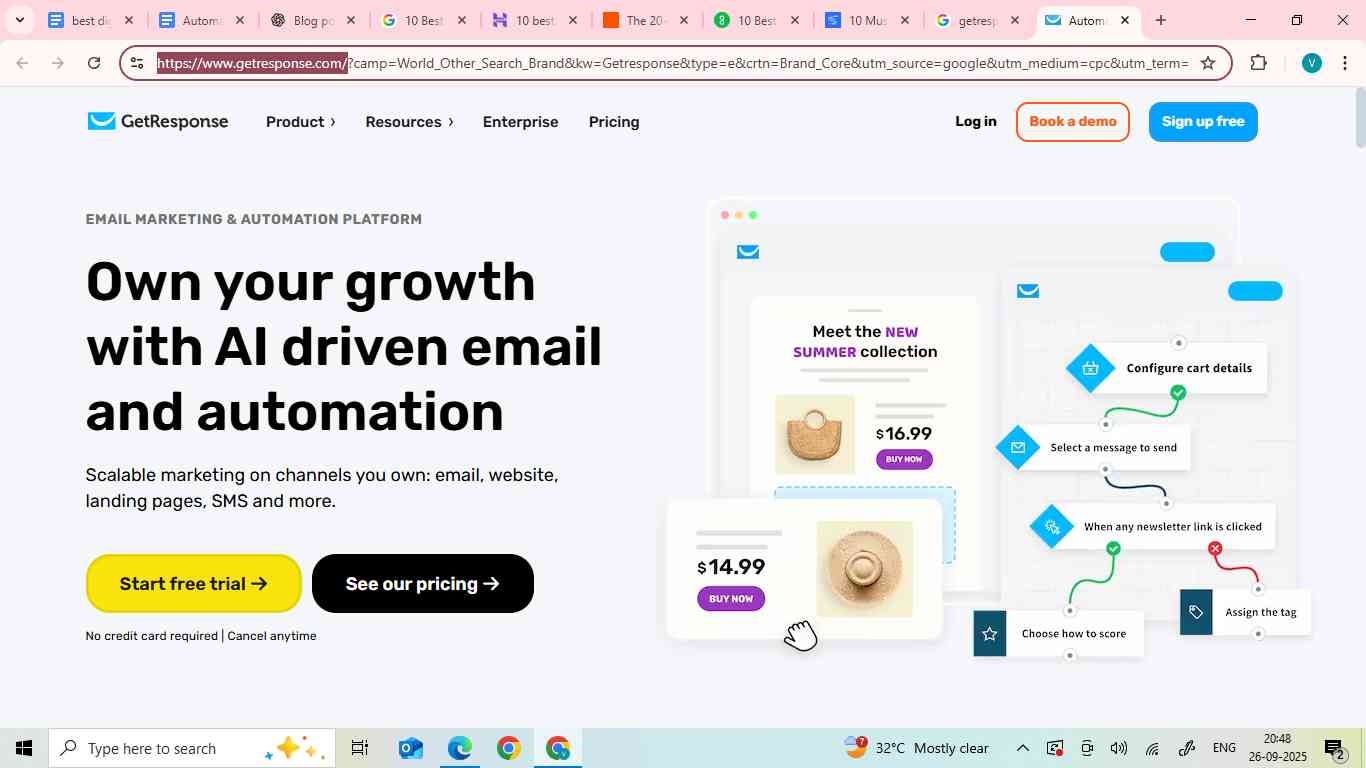
GetResponse is an all-in-one online marketing platform. It is designed to help businesses of all sizes:
- Grow audience
- Engage with customers
- Drive sales
This platform is primarily known for its email marketing tools. But today, it has expanded to offer a comprehensive suite of features to create and manage online campaigns. It has unique features like webinar hosting.
Key Features:
- Email automation + webinar hosting
- Conversion funnels
- AI-driven personalization
- Landing pages
- E-commerce integrations
Pros:
- Affordable all-in-one tool
- Strong webinar support
Cons:
- Less advanced for enterprises
Pricing:
|
Starter |
Marketer |
Creator |
Enterprise |
|
Grow with AI-powered email marketing & unlimited monthly sends |
For marketers & ecommerce businesses to promote & sell across channels |
Everything you need to create, market, & monetize your knowledge |
Maximize revenue with tailored solutions & premium support |
|
₹1382/mo |
₹4298/mo |
₹5020/mo |
Custom |
7. Omnisend
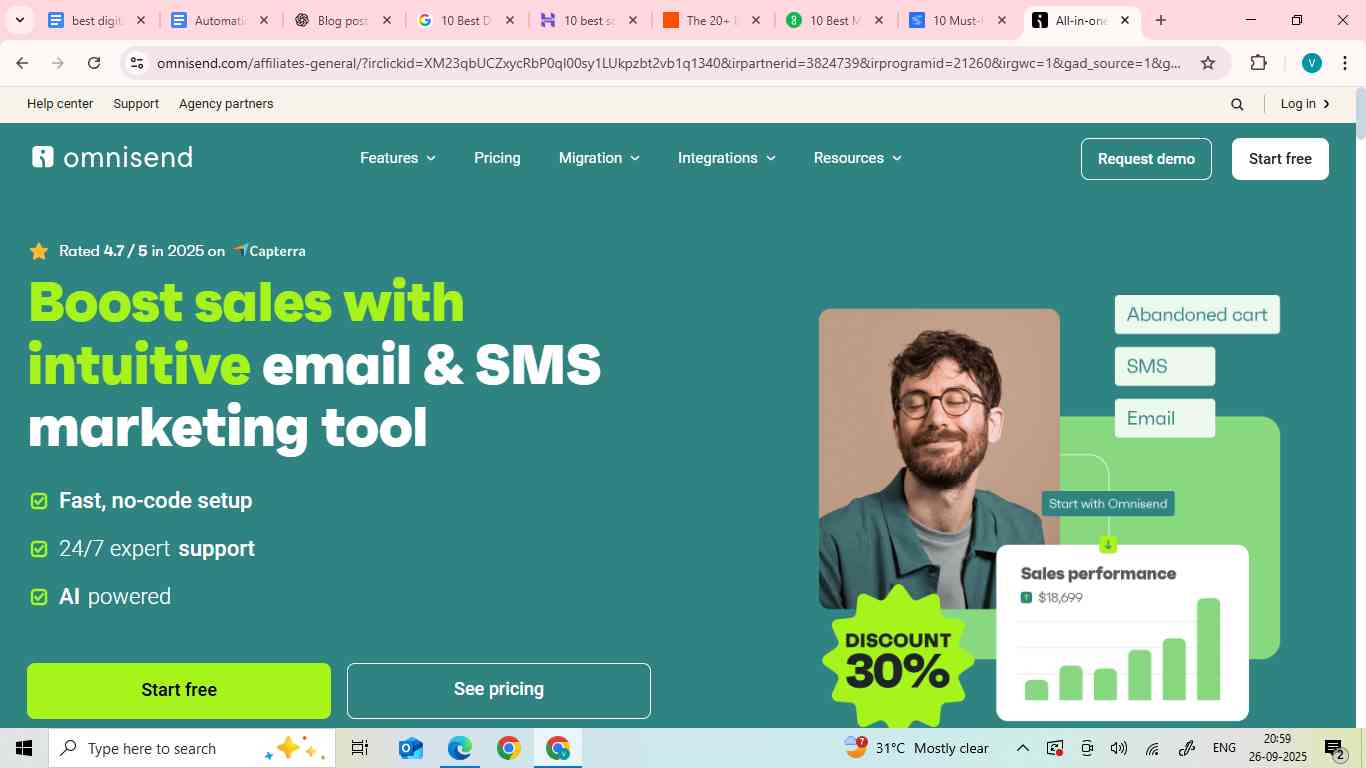
Omnisend is an eCommerce-focused best automated marketing software. It helps simplify email and SMS campaign management. It allows businesses to:
- Deliver personalized messages
- Improve customer retention
- Drive sales
Omnisend has an easy integration with e-commerce platforms. This makes it a must-have for online stores. It is ideal for eCommerce brands that are looking for multi-channel marketing automation.
Key Features:
- Automation of email & SMS campaigns
- E-commerce integrations (Shopify, WooCommerce)
- Segmentation and analytics
- Personalized product recommendations
- Cart abandonment & re-engagement tools
Pros:
- Great for online stores
- Easy to set up
- Strong integrations
- Excellent support
- Multi-channel marketing
- Affordable pricing
Cons:
- Not ideal for enterprises
- Limited app library
- Less multilingual support
- High SMS costs
Pricing: Free plan available.
|
Custom Pricing |
Pro |
Standard |
|
Best for businesses with custom needs, a large amount of contacts or email volumes |
Best for high-volume senders aimed at adding extra power with SMS |
Best for growing and medium-sized businesses focused on email marketing |
|
Customized |
$41.40/mo |
$11.20/mo |
8. Zoho Marketing Automation
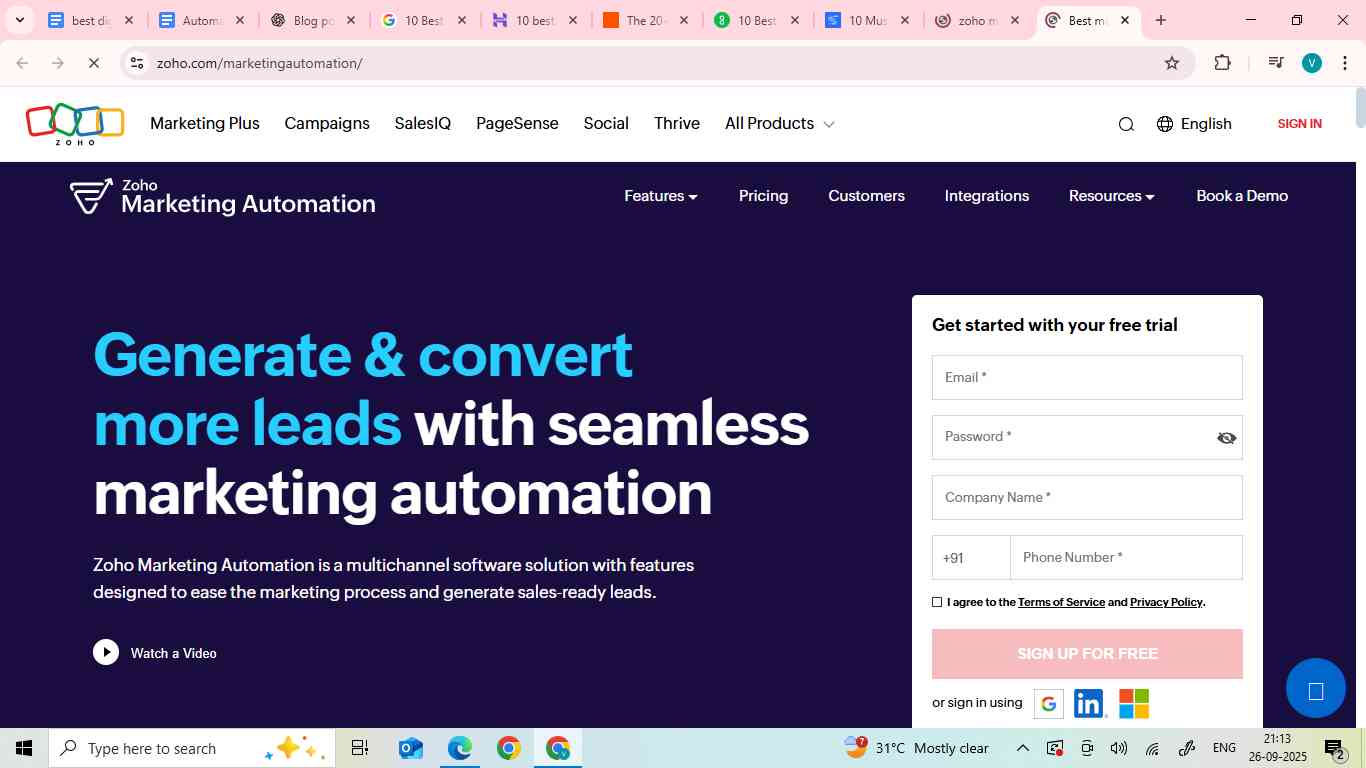
Zoho Marketing Automation is a multi-channel marketing automation software. It helps users successfully manage marketing activities across different channels. It helps marketers to:
- Attract audience
- Engage with the audience
- Convert audience into customers
Using Zoho Marketing Automation, users can build customized marketing solutions that best suit their industry requirements. It can be used by users from various industries, such as:
- Finance
- Retail
- Consumer electronics
- Information technology
- Healthcare Manufacturing
Zoho Marketing Automation is Zoho’s newer multichannel automation tool. It helps businesses:
- Generate leads
- Nurture with workflows
- Track customer behavior
- Run campaigns across diverse channels
Overview:
A budget-friendly option for SMEs.
Key Features:
- Multi-channel campaigns
- Analytics and reporting
- Lead scoring & nurturing
- Budget-friendly for SMEs
- Marketing planner
- Website tracking
- Centralized dashboard
- Zoho CRM integration
Pros:
- Affordable
- Easy integration with other Zoho apps
Cons:
- Less robust than enterprise tools
Pricing:
|
Standard |
Professional |
Enterprise |
|
₹855/mo, billed annually |
₹1,305/mo, billed annually |
₹2,655/mo, billed annually |
|
For businesses who are just starting to implement marketing. |
For growing businesses that need to plan, collaborate, & hyper-personalize every marketing experience. |
For advanced businesses that require customization & advanced metrics to track every customer touchpoint. |
9. Sendinblue (Brevo)
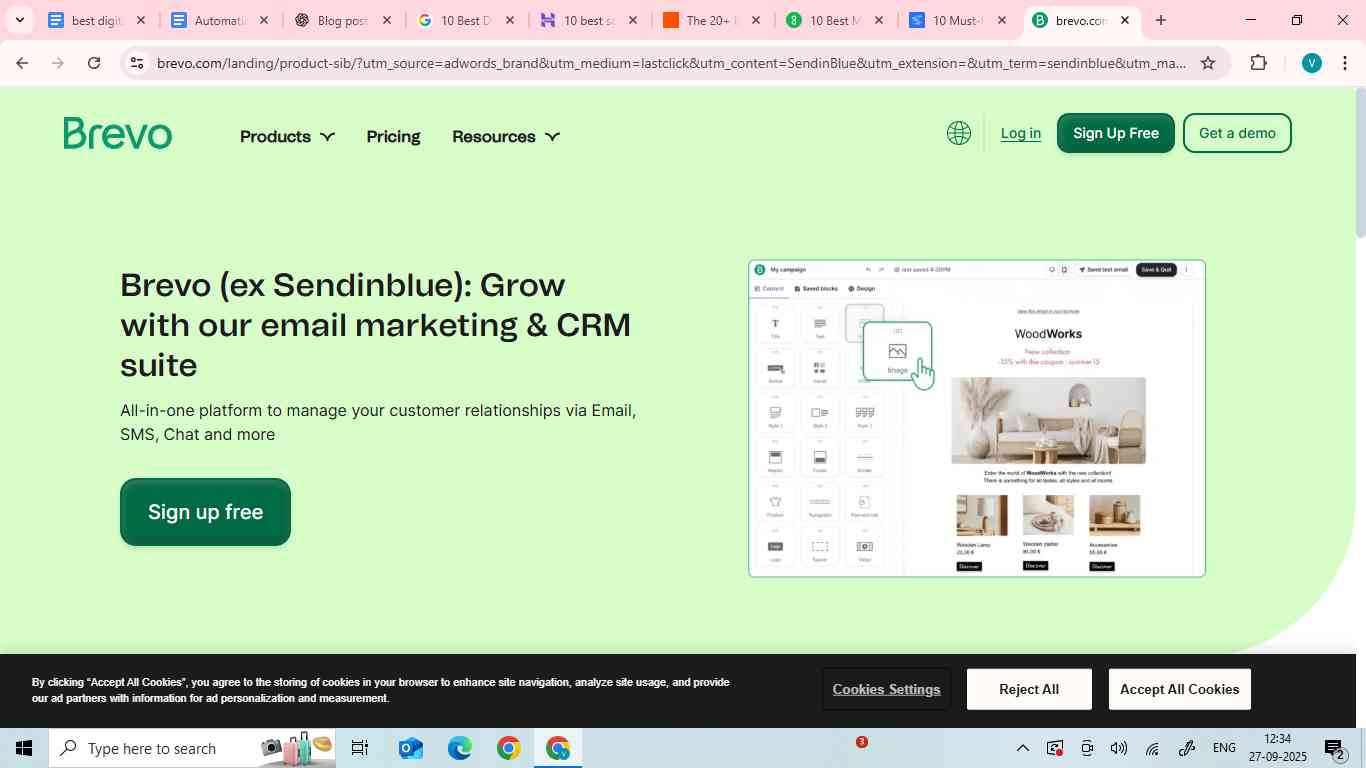
Sendinblue is now known as Brevo. It is a comprehensive digital marketing automation software that automates email marketing and SMS campaigns. It’s perfect for businesses that want to streamline communication and deliver personalized experiences without breaking the bank. It is an all-in-one platform with email, SMS, and chat automation.
Key Features:
- Marketing workflows
- Multi-channel
- CRM
- Email & SMS campaign automation tools
- Contact management
- Audience segmentation
- Customizable templates
- Detailed performance analytics
- Heatmap tracking
Pros:
- Affordable for startups
- Strong SMS & chat capabilities
Cons:
- Limited advanced AI features
Pricing:
|
Free |
Starter |
Business |
Enterprise |
|
₹0/mo |
₹562/mo |
₹1,210/mo |
Custom |
|
Discover Brevo |
Ideal for growing businesses |
Built for managers & ecommerce pros |
Tailored solutions to fit your needs |
10. Keap (Infusionsoft)
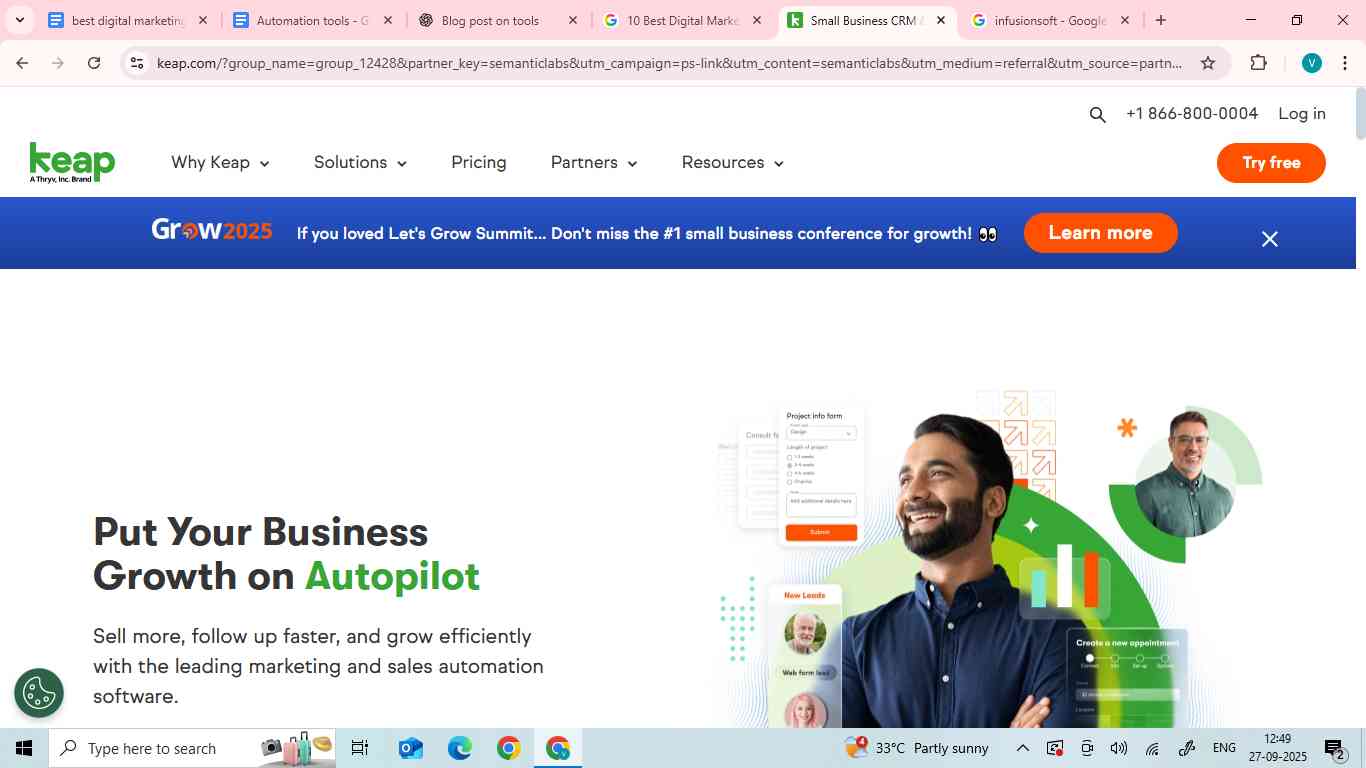
Infusinsoft was an all-in-one sales and marketing automation software for small businesses. It was rebranded as Keap in 2019. This platform was once formerly known as Infusionsoft. It is not specifically referred to as Keep Max Classic.
Today, Keap offers a variety of products with features that were originally a part of the Infusion platform.
It is a CRM, marketing automation, and sales automation platform for small to medium businesses. It helps:
- Manage contacts
- Send automated email & SMS
- Handle appointments, invoicing, & leads
Keap helps streamline business workflows so you can focus on growth.
Key Features:
- CRM integration
- Email and SMS campaigns
- Contact & lead management
- Landing pages & forms
- Sales & pipeline management
- Reporting & analytics
Pros:
- Excellent for small business growth
- All-in-one tool for SMBs
- Very powerful automations
- Built-in payments/invoicing
- Strong sales + marketing alignment
Cons:
- Not ideal for enterprises
- High cost for small businesses
- Steep learning curve
- Hidden/extra costs
Pricing: Starts at $249/month.
Comparison Table of Top 10 Tools
|
Tool |
Best For |
Features |
Pricing |
|
HubSpot |
All-in-one CRM + Marketing |
CRM, email, multi-channel, analytics |
From $45/mo |
|
Marketo Engage |
Enterprise B2B |
AI, lead nurturing, segmentation |
Custom |
|
ActiveCampaign |
SMEs & CRM users |
Email + CRM, journey mapping |
From $29/mo |
|
Mailchimp |
Small businesses |
Email campaigns, templates, & social media |
From $13/mo |
|
Pardot |
Enterprise B2B |
ROI reporting, Salesforce CRM |
From $1,250/mo |
|
GetResponse |
Webinars + emails |
Funnels, webinars, & AI-personalization |
From $19/mo |
|
Omnisend |
E-commerce brands |
SMS + email + push |
From $16/mo |
|
Zoho |
SMEs on budget |
Multi-channel, analytics, lead scoring |
From $15/mo |
|
Brevo |
Startups & SMEs |
Email + SMS + chat automation |
From $25/mo |
|
Keap |
Small businesses |
CRM, lead nurturing, workflows |
From $159/mo |
Future of Digital Marketing Automation
The future of digital marketing automation is shaping up to be:
- Smarter
- More personalized
- Deeply customer-centric
In 2025, AI marketing tools are transforming the way brands are connecting with their audience. Today, businesses don’t rely only on pre-set workflows. But the automation platforms will use predictive analytics for anticipating the customer behavior and delivering the right message at the right time.
One major shift in marketing will be the rise of multi-channel marketing automation. Businesses won’t just send emails; they’ll engage customers through:
- SMS
- WatsApp
- Social media
- Voice assistants
This helps create a seamless and consistent experience across every touchpoint. This level of integration will also extend to sales and service teams, with CRM and email marketing automation working together to:
- Nurture leads
- Close deals faster
- Strengthen long-term relationships
Also, the privacy-first strategies will shape the way data will be collected and used. With strict regulations and growing customer awareness, future automation tools will emphasize:
- Transparency
- Ethical tracking
- First-party data
At last, the future is about moving from campaign management to intelligent marketing workflow automation. Businesses will not tell the software what to do, but they’ll rely on automation platforms for optimization, prediction, and execution of the strategies on their behalf. Companies that will adopt these innovations initially will gain efficiency and also build stronger, more authentic connections.
Conclusion
In 2025, marketing is no longer about broadcasting. But it’s about engagement that is:
- Personalized
- Automated
- Data-driven
By leveraging the best automation tools for marketing, businesses can:
- Improve efficiency
- Build stronger customer relationships
- Scale faster
There’s a solution tailored for you for every size of business looking for:
- Small business for affordable social media automation tools
- E-commerce store focusing on multi-channel marketing automation
- Enterprise in need of B2B marketing automation software
Now it’s time for you to explore these digital marketing automation platforms, test them, and see which one is the best one for your business to thrive in 2025 and beyond.
FAQs
1. What features should I look for in a digital marketing automation platform?
The best marketing automation software should include:
- Email campaigns
- CRM integration
- Lead nurturing automation
- Analytics
- Segmentation
- Multi-channel support
2. Is HubSpot better than Mailchimp for automation?
It depends on your business needs. HubSpot is more advanced, offering deep:
- CRM and email marketing automation
- Sales alignment
- B2B workflows
On the other hand, Mailchimp is a beginner-friendly, affordable software for small businesses that need email and basic social media automation tools.
3. Are marketing automation tools worth the investment for startups?
Yes, the right digital marketing automation tools can save a startup’s time and help scale faster.
4. How do AI-powered tools change marketing automation?
AI marketing tools 2025 are revolutionising automation by:
- Predicting customer behavior
- Optimizing send times
- Creating personalized campaigns
- Generating content