
What if ranking #1 on Google no longer guarantees traffic? With AI changing search, it’s no longer just about keywords, it’s about trust.
Search is evolving fast, and AI is the biggest reason behind this shift. Earlier, ranking on search engines was mostly about keywords, backlinks, and technical SEO. Now, AI-powered systems and LLMs are changing how results are shown and how users interact with them. People expect direct answers instead of browsing multiple links.
In this new environment, the debate between branded and organic search has become more important. Businesses are now trying to decide where to focus their efforts for better results. The truth is, both play different roles in AI-powered search. Understanding how they work together is the key to long-term growth.
How AI and LLMs Are Changing Search Behavior
AI has made search more conversational and intent-based than ever before. Users now type full questions instead of short keywords, expecting clear and accurate answers. This shift means search engines are focusing more on understanding context rather than matching exact words. Content needs to be helpful, structured, and easy to understand.
Another major change is that users are clicking less and consuming more information directly on the search page. AI-generated summaries often answer questions without needing users to visit a website. This reduces organic traffic even for high-ranking pages. As a result, visibility inside AI answers has become more important than rankings alone.
Key Changes in Search Behavior
- Search queries are now longer and more conversational
- Users expect instant, direct answers
- Fewer clicks on traditional search results
- AI prioritizes trusted and well-known sources
- Content must focus on clarity and usefulness
AI Search vs Traditional Search: Key Differences
Traditional search and AI-powered search work in very different ways. Earlier, users had to click through multiple links to find answers. Now, AI provides direct responses by combining information from different sources. This changes how visibility and traffic work for websites.
AI search focuses more on context, intent, and trust rather than just keywords. It also reduces the number of clicks users make, which impacts organic traffic. Understanding this difference is important for building a strong SEO strategy.
|
Factor |
Traditional Search |
AI Search |
|
Results |
List of links |
Direct answers |
|
Click Behavior |
High Clicks |
Fewer clicks |
|
Ranking Focus |
Keywords |
Context & trust |
|
User Intent |
Basic |
Conversational |
Branded vs Organic Search in the AI Context
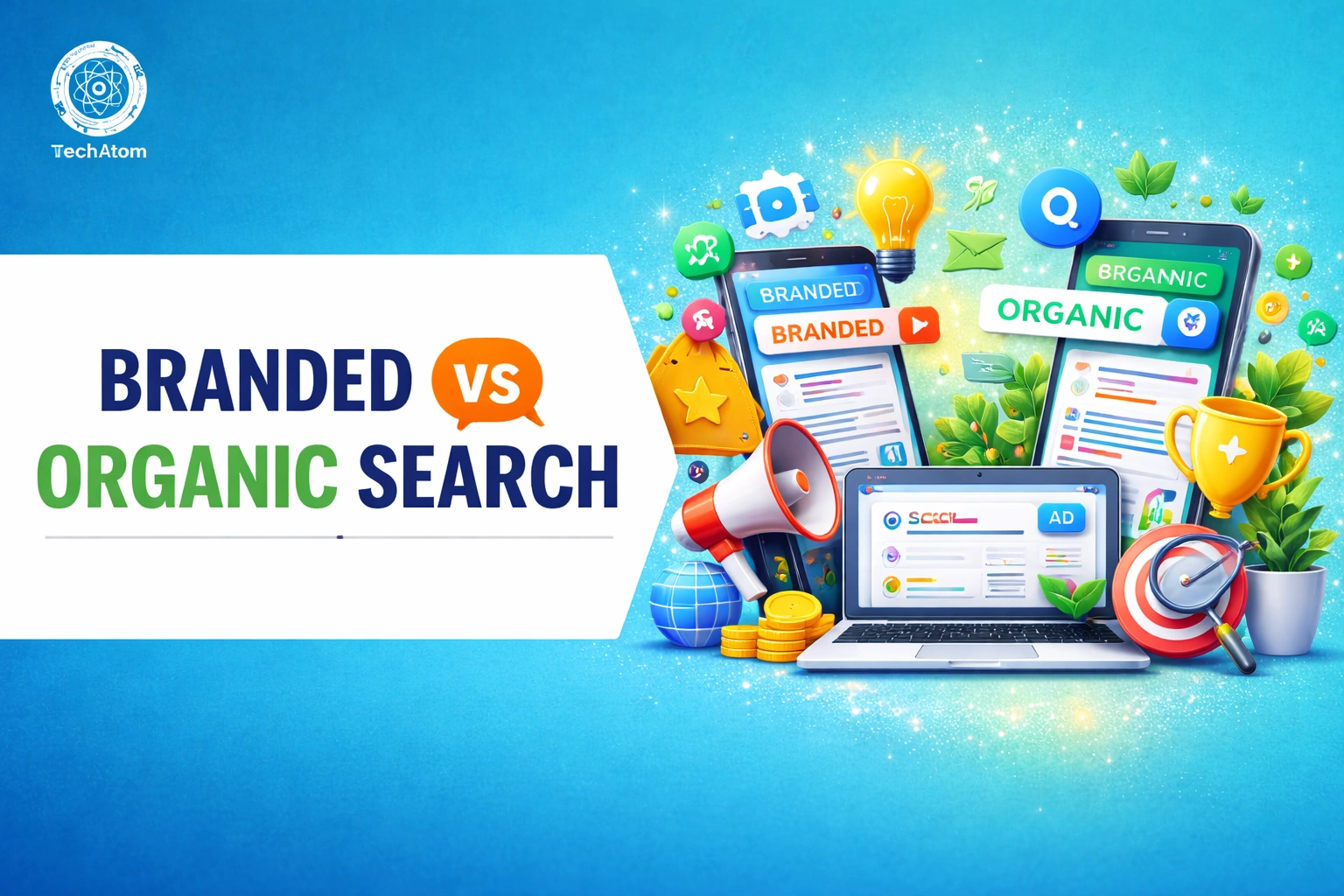
Branded search refers to queries where users search for your business by name. These users already know you, which means they have strong intent and higher chances of converting. Organic search, on the other hand, helps new users discover your content through general keywords. Both are important but serve different purposes.
In AI-powered search, branded search is gaining more importance because AI systems trust recognized names. Organic search is still useful for discovery, but competition is higher and visibility is less predictable. Simply ranking for keywords is no longer enough. You need both trust and relevance to succeed.
Branded vs Organic Search Comparison
|
Factor |
Branded Search |
Organic Search |
|
User Intent |
High |
Medium |
|
Trust Level |
Very Strong |
Depends on content |
|
AI Visibility |
Preferred |
Competitive |
|
Conversion Rate |
High |
Moderate |
|
Purpose |
Trust & sales |
Discovery & traffic |
When to Focus on Each
Focus on Branded Search when:
- You want higher conversions
- You are building long-term authority
- You want repeat customers
Focus on Organic Search when:
- You want new traffic
- You are targeting new audiences
- You are growing visibility
Measuring the ROI of Branded vs Organic Visibility
Measuring ROI in AI-powered search is no longer just about traffic and rankings. You need to understand how users interact with your brand and content. Branded search often leads to better engagement and higher conversions. Organic search helps bring new users into your funnel.
To get a clear picture, you need to track different metrics for both. This helps you understand what is working and where to improve. A balanced approach gives better long-term results than focusing on one side only.
Key Metrics to Track
Branded Search Metrics:
- Direct traffic (users searching your name)
- Brand mentions across platforms
- Conversion rate and sales
- Customer retention and repeat visits
Organic Search Metrics:
- Keyword rankings
- Organic traffic growth
- Click-through rate (CTR)
- Engagement (time on page, bounce rate)
ROI Summary Table
|
Metric Type |
Branded Search |
Organic Search |
|
Traffic Quality |
High |
Medium |
|
Conversion Rate |
High |
Moderate |
|
Growth Speed |
Slow but Strong |
Faster but unstable |
|
Long-Term Value |
Very High |
High |
Role of E-E-A-T in AI Search (Experience, Expertise, Authority, Trust)
In AI-powered search, trust is one of the most important ranking factors. Search engines and AI systems prefer content that shows real experience and strong expertise. This is where E-E-A-T becomes important, as it helps define how reliable and valuable your content is.
If your content lacks credibility, it is less likely to be selected by AI systems. Building trust through consistent, high-quality content improves your chances of visibility. This also helps in building long-term brand authority.
E-E-A-T Explained
- Experience: Real-world knowledge or usage
- Expertise: Skill and understanding of the topic
- Authority: Recognition in your niche
- Trust: Accuracy and reliability of content
How to Optimize for AI-Powered Search (Practical Guide)
Optimizing for AI search requires a shift from traditional SEO methods. Instead of focusing only on keywords, you need to create content that directly answers user questions. Clear structure, simple language, and helpful information are now more important than ever.
You should also focus on building authority and trust across different platforms. AI systems look at overall brand presence, not just your website. A strong and consistent strategy improves your chances of being featured in AI-generated answers.
Optimization Tips
- Write content in a question-and-answer format
- Use simple and clear language
- Add proper headings and structure
- Focus on one niche to build authority
- Increase brand mentions across platforms
Content Formats That Perform Well in AI Search
Not all types of content perform equally in AI-powered search. Some formats are easier for AI to understand and present in answers. Creating content in these formats increases your chances of visibility and engagement.
Content that is structured, clear, and informative tends to perform better. It should directly solve user problems and provide quick value. This improves both user experience and AI selection.
Best Performing Content Types
- FAQ-based content
- How-to guides
- List-based articles
- Comparison posts
- Short and clear explanations
How to Build Brand Authority for Better AI Visibility
Building brand authority is essential for improving visibility in AI search. AI systems prefer brands that are recognized and trusted across different platforms. This means you need to go beyond your website and create a strong online presence.
Consistency plays a key role in building trust and recognition. The more your brand is mentioned and discussed, the stronger your authority becomes. This increases your chances of being included in AI-generated responses.
Ways to Build Brand Authority
- Get mentioned on blogs, forums, and social media
- Maintain a consistent brand voice
- Collect reviews and testimonials
- Collaborate with other creators
Common Mistakes in AI-Driven SEO Strategies
Many businesses still follow outdated SEO strategies that don’t work well in AI search. One major mistake is focusing only on keywords and ignoring brand building. Without a strong brand presence, it becomes difficult to gain trust from both users and AI systems.
Another common issue is creating content that is written only for ranking, not for helping users. AI prefers content that is clear, structured, and useful. If your content does not answer real questions, it may not be selected by AI. This reduces your visibility even if you rank well.
Common SEO Mistakes to Avoid
- Ignoring brand authority and recognition
- Writing keyword-heavy but low-value content
- Not answering real user questions
- Lack of niche or topical authority
- No presence outside your website
Better Approach
- Focus on helpful and clear content
- Build authority in one niche
- Improve brand mentions across platforms
- Optimize content for real user intent
Real Example: Branded vs Organic in Action
Understanding the difference becomes easier with a real example. When a user searches for “best SEO tools,” they are exploring options, which is an organic search. In this case, different websites compete to appear in the results.
However, when a user searches for a specific tool like “Ahrefs vs SEMrush,” branded influence becomes stronger. The user already knows the brands and is comparing them. This shows how organic search drives discovery, while branded search drives decision-making.
The Future of Search: Brand Equity Meets AI Intelligence
The future of search is about combining brand strength with smart SEO strategies. AI systems are becoming better at identifying trusted sources and delivering accurate answers. This means businesses need to build both visibility and credibility at the same time. Relying on only one strategy is no longer effective.
Brand equity will play a bigger role in how AI selects content. Businesses that are recognized across multiple platforms will have an advantage. At the same time, high-quality content will remain essential for discovery. This balance is what will define success in the coming years.
What Will Matter in the Future
- Strong and recognizable brand identity
- High-quality, structured content
- Presence across multiple platforms
- Consistent and helpful information
- Trust signals like reviews and mentions
Conclusion
In the AI-powered search world, both branded and organic search are important but serve different roles. Organic search helps you reach new audiences and grow visibility. Branded search builds trust and increases conversions. Ignoring either one can limit your success.
The best strategy is to balance both approaches effectively. Focus on creating valuable content while also building a strong brand. This combination helps you get discovered and trusted at the same time. It also increases your chances of appearing in AI-generated answers.
Frequently Asked Questions
1. What is the difference between branded and organic search?
Branded search happens when users search for a specific brand name, while organic search brings traffic through general keywords. Branded search shows higher trust, while organic search helps in discovery.
2. Is organic search still important in AI-powered search?
Yes, organic search is still important because it helps new users find your content. However, in AI search, it works best when combined with strong brand authority and trust signals.
3. Why is branded search becoming more important with AI?
AI systems prefer trusted and well-known sources when generating answers. If your brand is recognized and mentioned often, it increases your chances of appearing in AI-generated results.
4. How can I improve my visibility in AI search results?
You can improve visibility by creating helpful content, answering user questions clearly, and building your brand across different platforms. Consistency and trust are key factors in AI search.
5. Which is better for SEO: branded search or organic search?
Both are important for SEO success. Organic search helps you reach new audiences, while branded search improves trust and conversions. A balanced strategy gives the best results.
People are also reading: