
If you want to dive deep into SEO, you have to rely on data. Whether it’s keyword positions, search volumes, or keyword difficulty, each and every metric needs to be ranked to unlock both short-term and long-term SEO strategies.
This is why you need to implement a keyword tracking tool into your workflow. These are software programs that can give you the data and insight on keywords that are relevant to your brand’s niche. Plus, with 16.4 billion searches on Google every day, not knowing which keywords to target or track is like walking blind into a storm!
In this post, we’ll talk about the best keyword tracking tools that you can use to monitor your content rankings!
What is Keyword Tracking?
Keyword tracking is a process of monitoring the exact keywords and phrases that your target audience uses in online searches. It helps indicate where your website ranks on search engines for specific keywords.
Keyword tracking helps you enhance your SEO strategies significantly. It helps ensure that your content effectively meets the needs of your customers.
It is an important part of SEO as it helps:
Measure SEO success:
Measure how your keywords or SEO Understand how your keywords or SEO efforts are paying off.
Identify trends:
Identify new keywords to target based on your current rankings.
Competitor analysis:
See the ranking of your keywords against competitors.
Along with the ranking of your keywords, keyword research uses the data to:
- Measure success
- Identify new opportunities
- Analyze competitors
This comprehensive approach improve website ranking in search results by refining SEO strategy.
Why are Keyword Tracking Tools Important for Your Website?
Keyword tracking tools offer plenty of benefits. We’ve mentioned some of these benefits below:
- Real-time Monitoring: Undoubtedly, the biggest advantage of keyword tracking tools is the ability to monitor your pages for certain keywords on a daily or hourly basis. This helps you check which parts of your content strategy are working and what needs improvement.
- Competitor Analysis: It’s important to know what your competitors are ranking for. This helps you identify gaps in your own content and work on angles that your competition hasn’t utilized yet. Keyword tracking tools help you track your competitors’ rankings and compare them with your own.
- A/B Testing: A huge part of SEO depends on experimentation. So, you can target two or more similar keywords with different content and monitor which content is working well. For those that aren’t working, you can optimize the content or add essential backlinks.
- Measuring ROI: In every business, ROI is of paramount importance. No matter what type of content you invest time, effort, and money into, your success will depend on the returns. With keyword tracking tools, you can also check traffic, leads, and conversions to monitor your ROI.
- Algorithm Changes: Google updates the search engine algorithms frequently. These changes can lead to improvements or drops in keywords that you’re targeting. Using tools such as Google Analytics, you can monitor these changes and swiftly implement solutions to prevent any unexpected surprises.
-
- Mobile vs. Desktop Tracking: Keyword trackers can provide different results on mobile and desktop. SO, the tool you choose must track for both mobile and desktop.
- Local SEO Support: If your business targets the local audience, you must choose a tool that offers local keyword tracking.
- Price: You must consider both free and paid tools that suit your budget.
If you’re running a business or agency, keyword tracking tools also provide you with data-driven insight to validate business decisions. You can also log wins and losses, making it easier to report to clients with current info!
10 Best Keyword Tracking Tools
Now that you know about the importance of keyword tracking tools, let’s take a look at the top options, shall we?
Free Keyword Tracking Tools
There aren’t too many free keyword tracking tools that are also reliable. Google provides a reliable solution:
1. Google Analytics 4
Google Analytics 4 is Google’s premier keyword tracking tool that’s designed to give a comprehensive overview of your website’s performance. It provides you with real-time event-based data, instead of data based on just sessions.
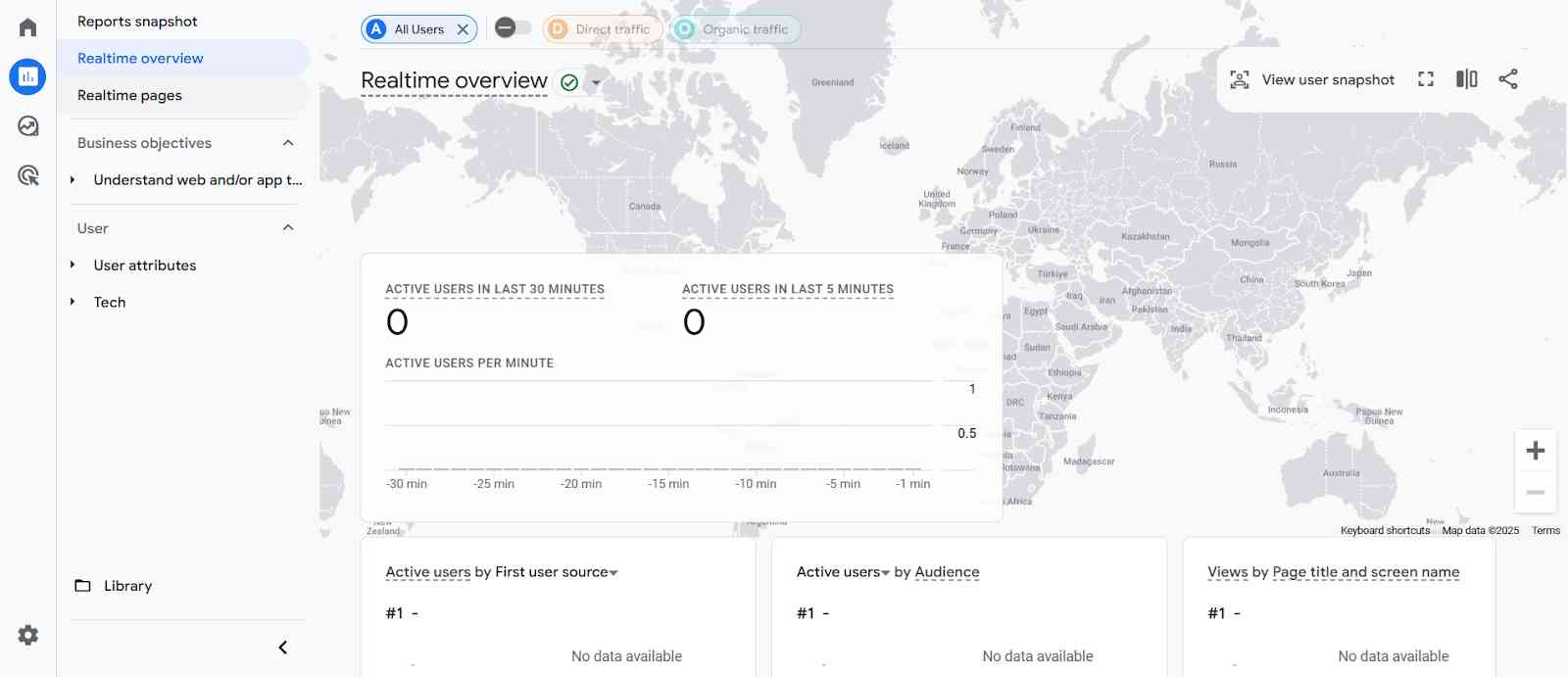
It also focuses on user privacy, ensuring that your website complies with GDPR and CCPA regulations.
Other features include:
- Tracking users on different platforms and devices
- Using predictive analytics and AI to prepare content for future events
- Monitoring the whole customer lifecycle, from engagement to retention after conversion
- Creating custom funnel reports
2. Google Search Console
Google Search Console is another free tool from Google to track your keywords, website performance, and monitor traffic. It’s perfect for marketers, businesses, and SEO professionals, especially if you’re in the early stage of your SEO journey. GSC provides easier and more intuitive controls than its more advanced counterpart.
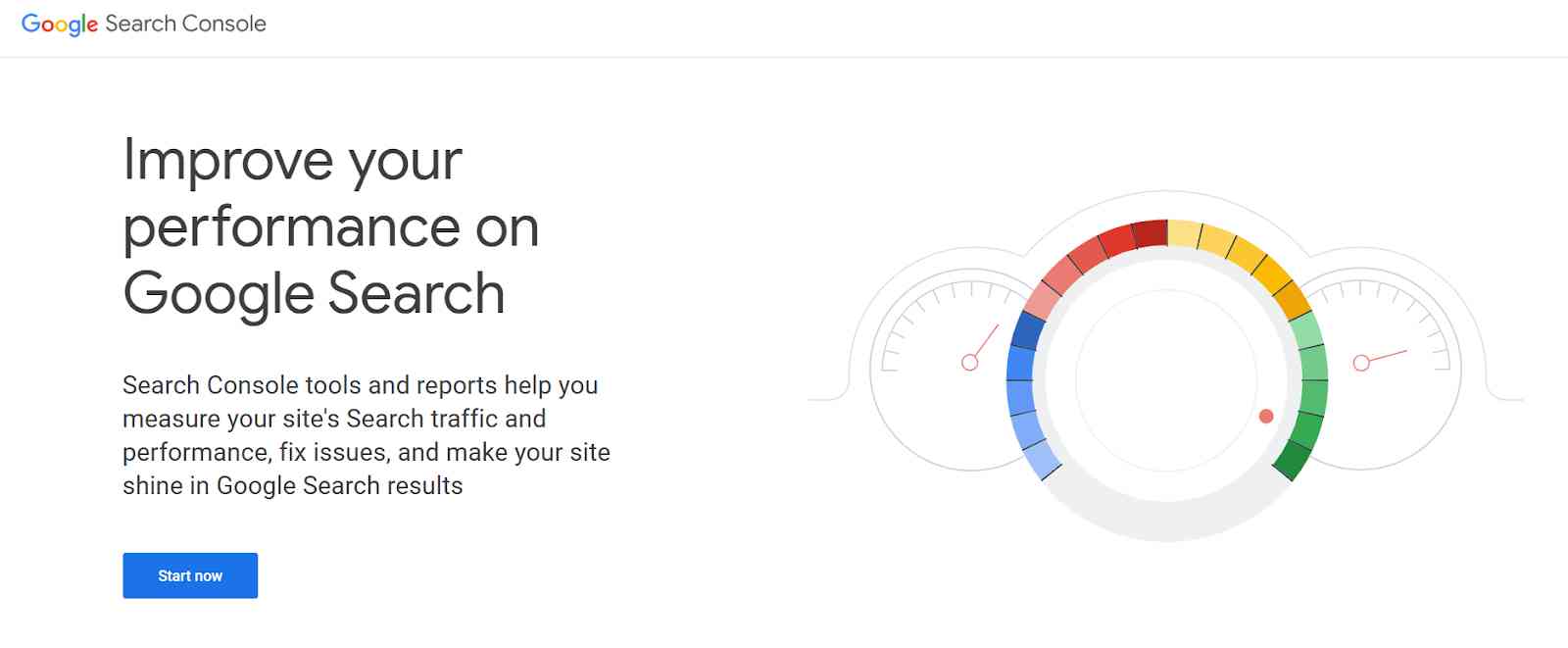
Let’s check out its features:
- Track click-through rates, rankings, and website impressions
- Check mobile performance, crawling issues, and indexing
- Get real-time alerts for any website security issues or Google penalties
- Monitor keywords that bring traffic to your site
Paid Keyword Tracking Tools
While free tools work great most of the time, they don’t offer the same level of flexibility that you get with paid tools. Here, we’ve listed some of the best paid keyword tracking tools you can use.
3. Ahrefs
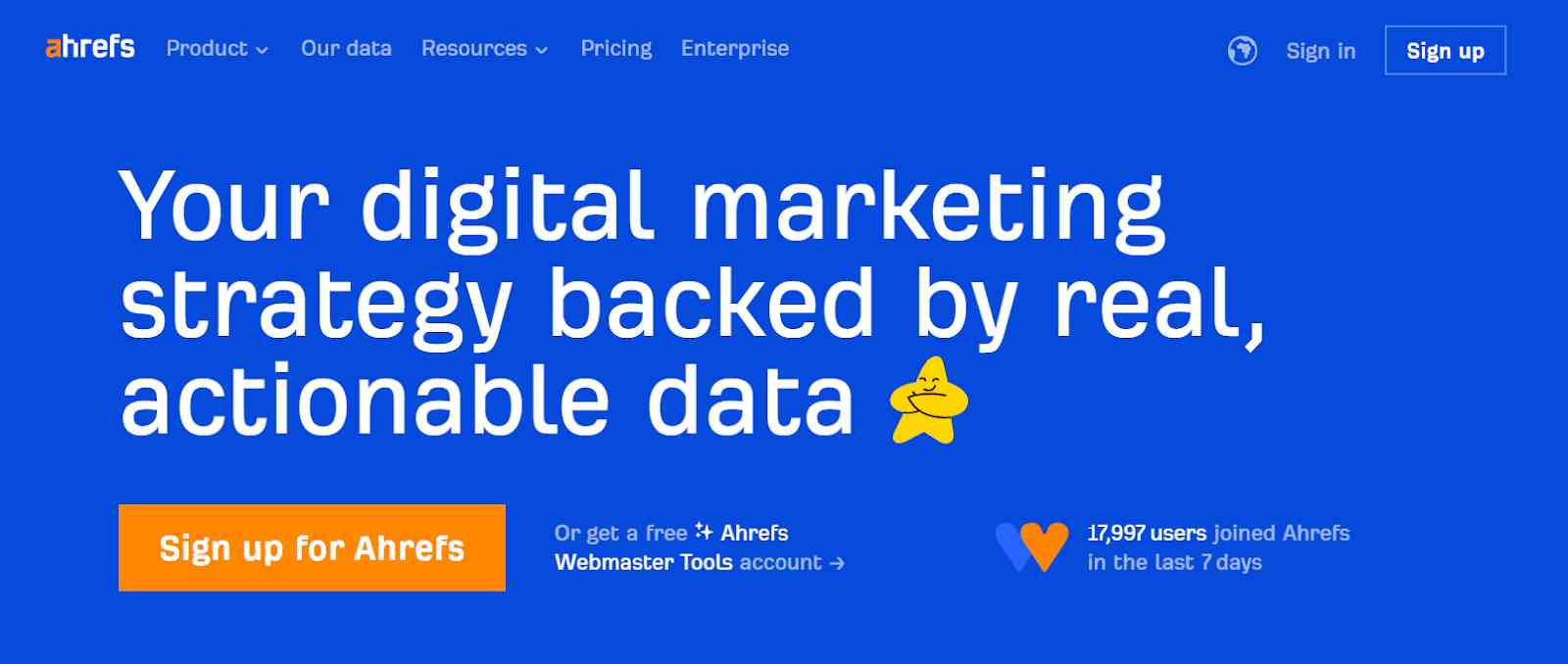
If you’ve been in the content industry for a while, there’s no doubt that you’ve heard about Ahrefs. It’s for good reason too; Ahrefs is one of the most efficient and widely used SEO tools today. It provides an extensive backlink index, along with features for traffic and keyword tracking.
The tool is excellent for content strategy, allowing you to identify content gaps that your competitor hasn’t addressed.
Here are its features:
- Site Explorer to study competitor websites for keyword rankings, traffic, and more
- Site Audit to optimize your own website’s SEO elements for better visibility
- Keywords Explorer to search for keywords that align with user search intent
- AI Content Helper and Grader to improve your content based on content gaps
- Rank Tracker to monitor your website’s keyword rankings
Pricing: Starts at $129/month.
4. Semrush
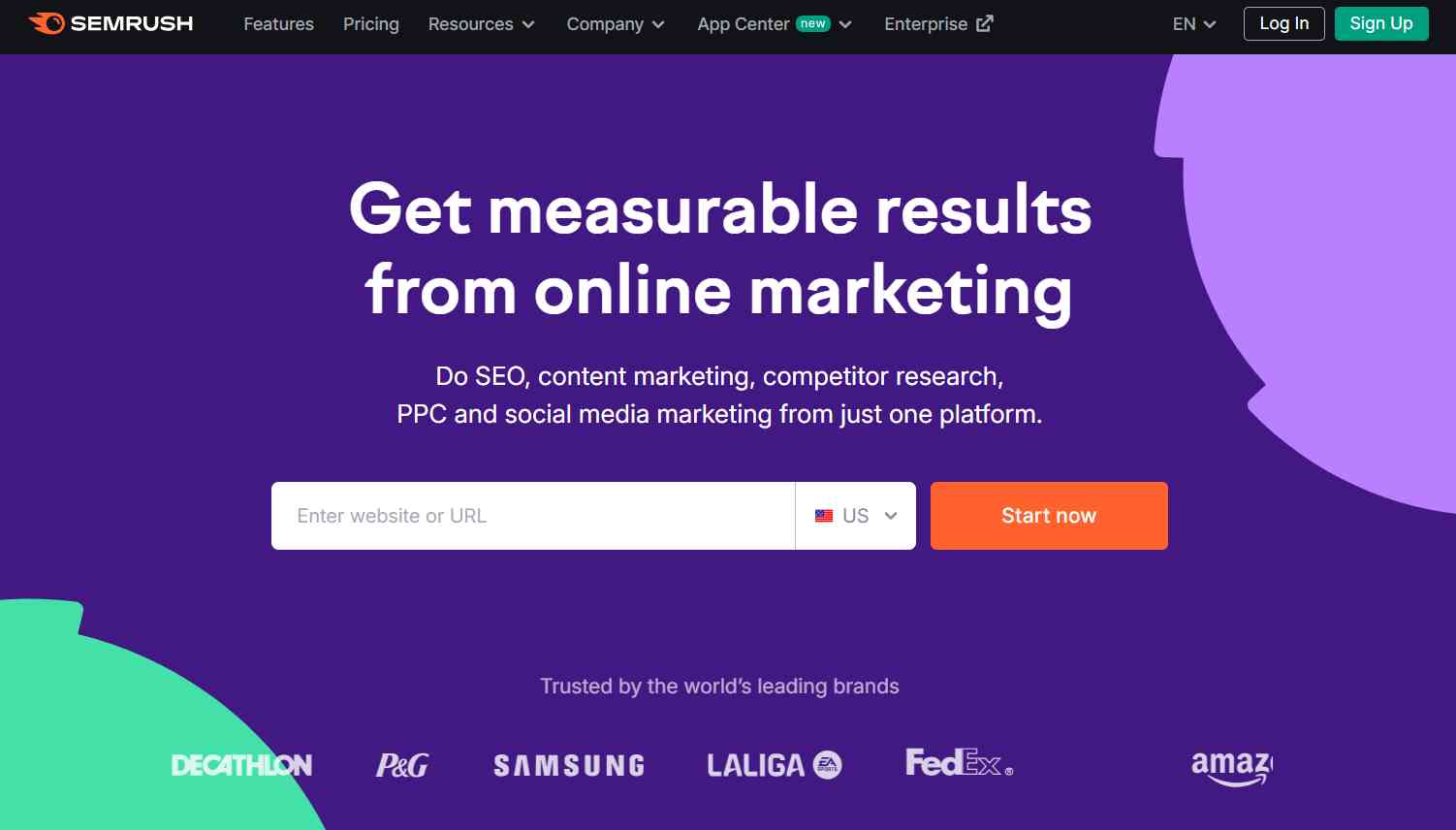
A feisty competitor of Google Analytics and Ahrefs, Semrush is another keyword monitoring tool that you can use. Apart from the usual thoroughfare of keyword tracking and traffic monitoring, Semrush also offers tools for market research, PPC, and social media engagement.
Let’s take a look at Semrush’s features:
- Supports multi-channel marketing strategies for holistic growth
- Analyzes a domain’s top pages, traffic, keyword rankings, and backlinks
- Checks your competitor’s content and ad strategies
- Optimizes paid campaigns running on Google and Bing
Pricing: Starts at $117.33/month.
5. Nightwatch
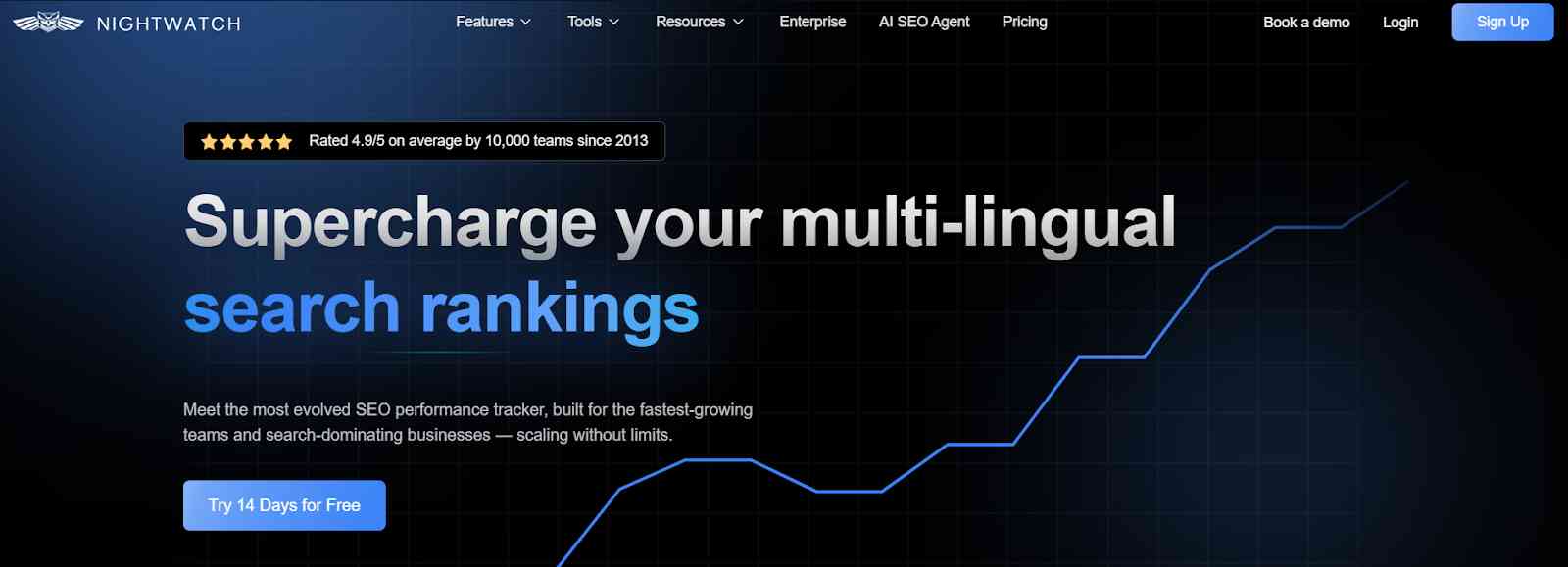
Nightwatch is an excellent choice if you rely on mobile or local SEO. It provides customizable keyword tracking options, and features a sleek interface to boot!
If we’re being completely honest, Nightwatch has quickly become one of our go-to tools, especially thanks to its AI-assisted workflow integrations!
Here are its features:
- Advanced keyword rank tracking features offering granular control for mobile and local SEO
- Proprietary AI SEO agent, NightOwl, for automating keyword research, rank tracking, and more
- Intuitive visual dashboards for data highlights
- Integrates with Google Search Console and Google Analytics 4 for a complete overview of your website’s SEO
Pricing: Starts at $32/month for 250 keywords.
6. SE Ranking
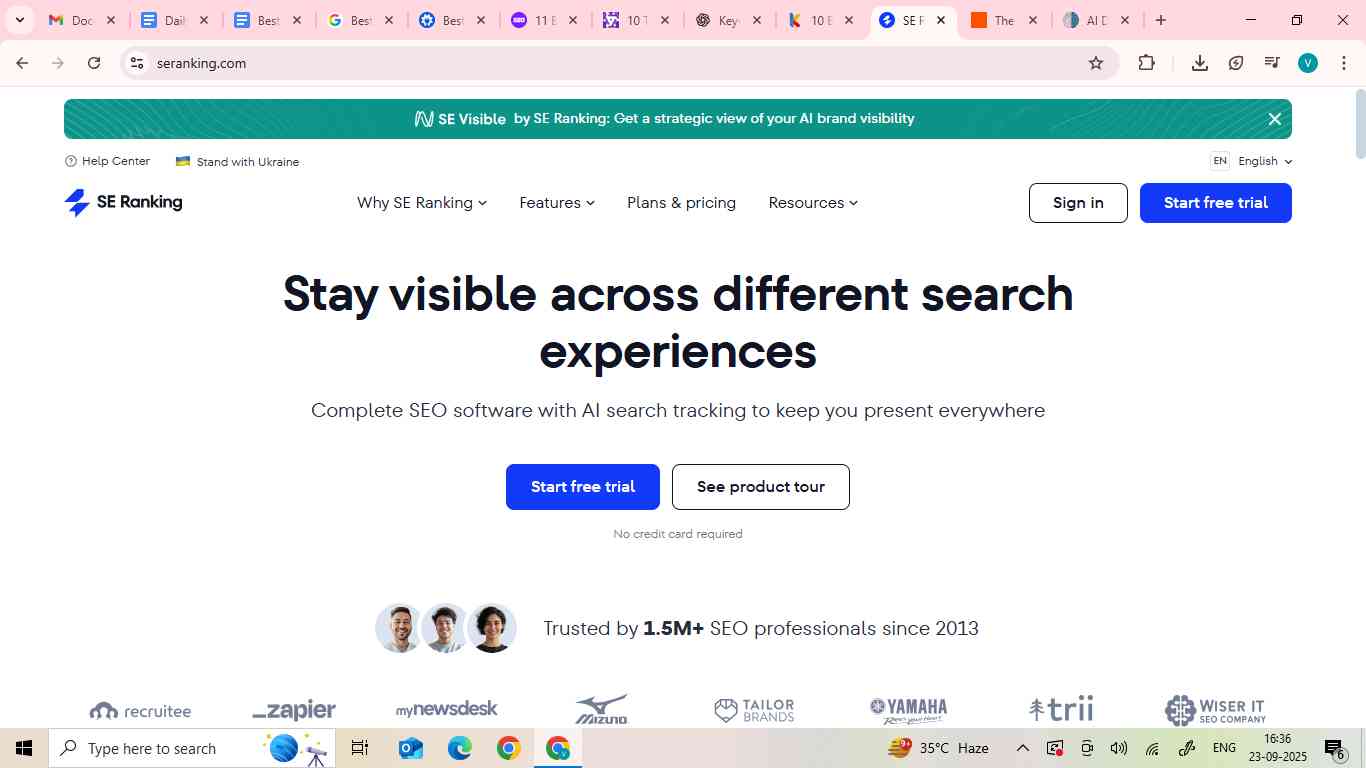
SE Ranking is a well-rounded keyword tracking solutions. It provides daily updates and Google Maps monitoring. It majorly focuses on local search optimization. It is a strong all-in-one choice because of its additional SEO features like:
- Website audits
- Backlink analysis
It’s key features are:
- 100% accurate tracking data
- Google Maps monitoring
- Competitor’s keyword rank tracking
- SERP features tracking
- Keyword grouping and tagging
Pricing: Starts at $52/month. It offers a 14-day free trial.
7. Seobility
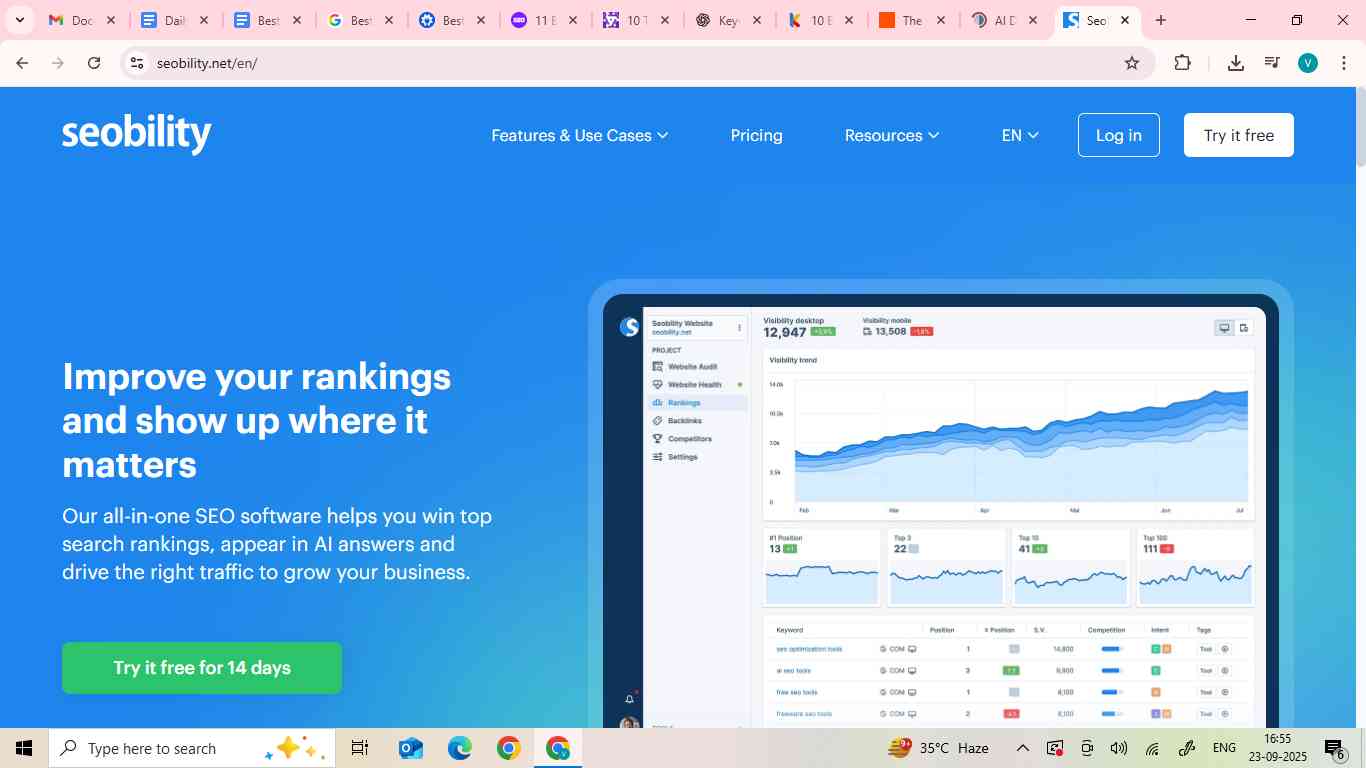
Seobility is a cloud-based keyword tracker. It is an all-in-one SEO platform designed for beginners as well as professional SEOs. It provides comprehensive Site Audit. Even on free Basic plan, it can:
- Crawls up to 1,000 pages
- Flags technical SEO
- Flags on-page SEO
It provides recrawl every three days that let you track progress and catch new issues.
Along with SEO audits, Seobility includes:
- Rank tracking
- Backlink checks
- Content tools
Here are its features:
- Website audit with actionable guidance
- Backlink monitoring & analysis
- Free individual SEO tools
- Multilingual support & local SEO capabilities
- Enhanced Seobility 2.0 interface
Pricing: It has a free basic plan. Paid plan starts at $40/month.
8. AccuRanker
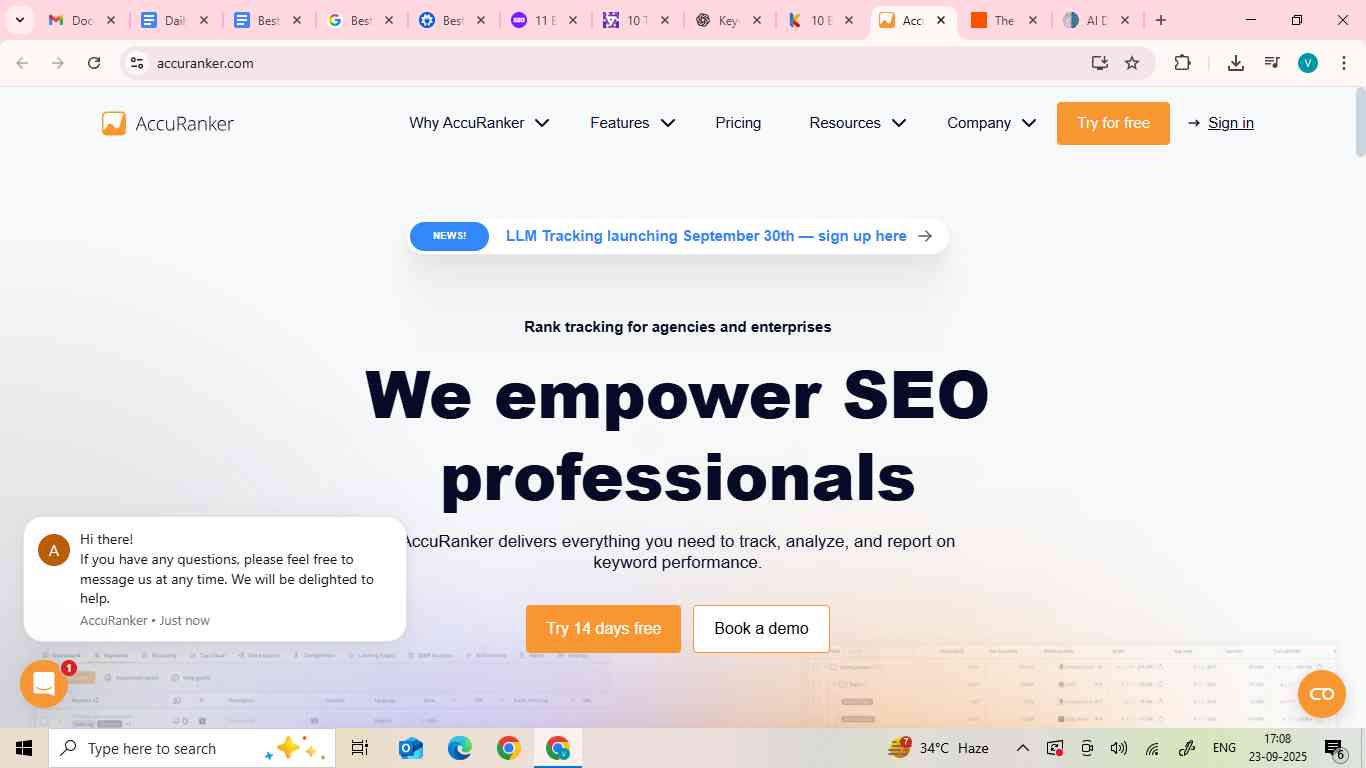
AccuRanker is a strong choice for enterprises. It is a fast keyword tracking tool having a clean, intuitive interface. It is useful for large-scale SEO operations because of its ability to segment and analyze ranking data.
However, if your business needs high-accuracy and flexible pricing, there aee other tools that provide enterprise-level precision at a more scalable cost.
Here are its features:
- Google Search Console integration
- Data segmentation for keyword categories
- Supports historical data importation
- Aggregated SERP analysis
Pricing: Starts at $129/month for 1,000 keywords.
9. Mangools / SERPWatcher
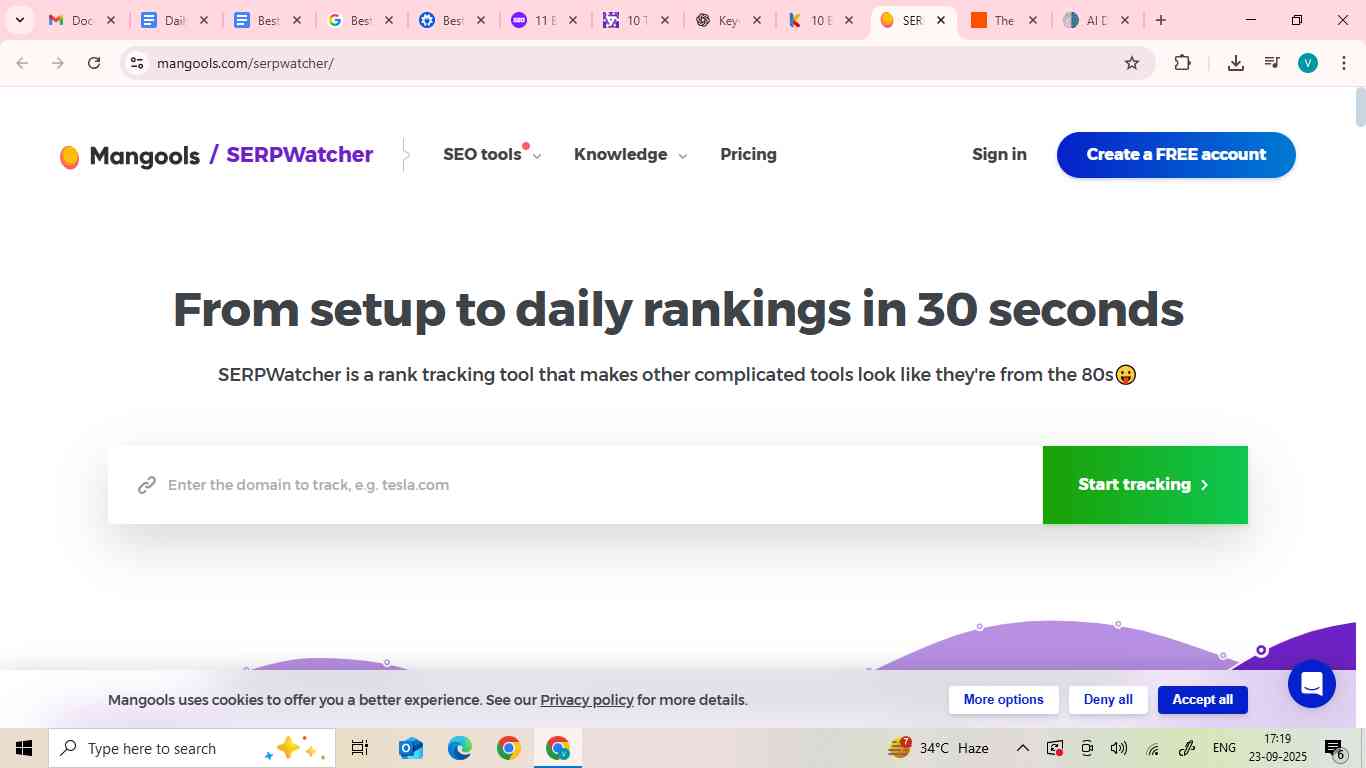
SERPWatcher by Mangools is a intuitive rank-tracking tools. It is ideal for freelancers and small agencies. It provides a user-friendly interface for effortless keyword monitoring without any complex enterprise SEO tools.
It’s key features are:
- Daily SERP reports for keywords
- Competitor keyword research
- Historical SERP data
- Performance index
Pricing: Starts at $25/month. It offers a 10-day free trial.
10. SEO Gets
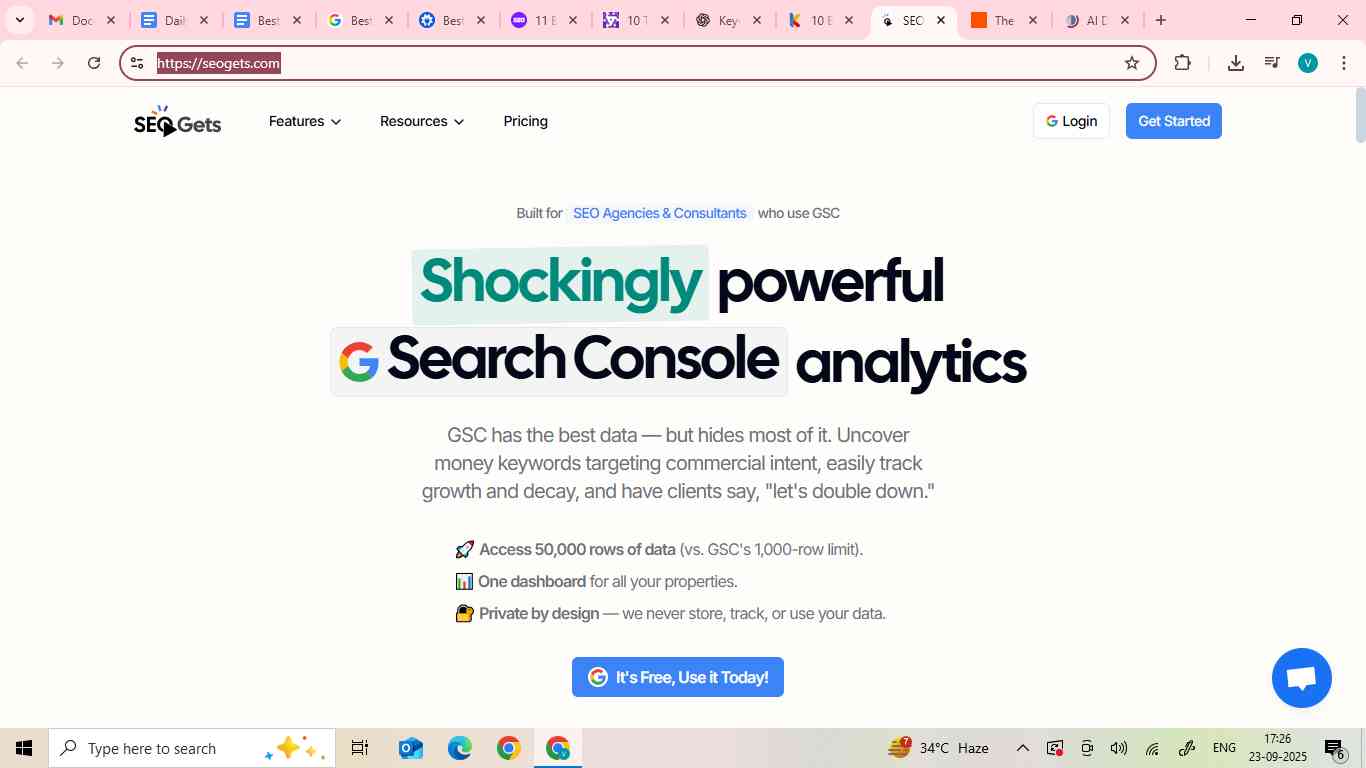
SEO Gets is a powerful alternative to Google Search Console. It is a SEO analytics platform that is designed to improve and simplify the experience of Google Search Console. It is built by Guilherme Oenning and Matthew Mellinger. It provides a centralized and user-friendly dashboard to manage unlimited websites and GSC accounts to:
- SEO professionals
- Digital marketing agencies
- Marketers
It has the features:
- Content grouping and topic clustering
- Unifies master dashboard
- Annotations and core updates
- Advanced filtering
- Accessible on mobile
Pricing: It has both free and paid versions. Paids version starts at $49/month.
How to Choose the Best Keyword Tracking Tool for Your Business
There are some important factors at play when you’re choosing a keyword tracking tool. We’ve explained these factors below to help you choose your next SEO tool!
- Your Goal: Not every keyword tracking tool is the same. It’s important to choose your SEO goal before you decide on a keyword tracking tool. For example, Google Analytics 4 is great, but doesn’t work well for tracking competitors. On the other hand, Nightwatch is excellent for automating your SEO research. So, understand your goal before making a purchasing commitment!
- Pricing: SEO tools don’t come for cheap. Tools like Ahrefs and Semrush offer paid pricing plans, but those can be expensive for a small team with a shoestring budget. If you’re short on funds, choose free alternatives like Google Search Console or GA4.
- Keyword Rank Tracking Accuracy: Most SEO tools do a decent job of tracking keyword rankings. However, if you need more control over the search data, you’ll have to choose tools like Semrush or Nightwatch. The latter offers excellent customization options for mobile and local SEO rank tracking.
- Integrations and Scalability: As your organization grows, you’ll have to ensure that your SEO tool can keep up. They must also integrate with evergreen tools like GSC or GA4 to get the latest data in real-time. So, go for tools that offer options for scaling their services, including the number of integrations.
- Custom Reports: Since SEO is data-driven, there will be times when you need to customize reports based on specific queries. Choose a tool that allows you to do this and creates personalized reports or dashboards for data-based insights.
Free vs Paid Keyword Tracking Tools
Here’s a comparison table that pits free keyword tracking tools against their paid counterparts. This will help you understand their nuances!
|
Feature |
Free Tool |
Paid Tool |
|
Accuracy |
Basic, infrequent updates |
High, real-time updates |
|
Number of keywords tracked |
Limited |
High |
|
Competitor tracking |
Limited |
Comprehensive |
|
Local and Mobile SEO |
Mostly unavailable |
Comprehensive |
|
Site analysis |
Basic |
Comprehensive |
|
Reporting |
Basic |
Comprehensive |
|
Integrations |
Limited or unavailable |
Extensive |
|
Support |
FAQs, free community |
Priority customer support |
|
Best for |
Beginners |
Agency, SEO professionals, marketers |
Common Mistakes to Avoid in Keyword Tracking
Keyword tracking is a powerful strategy. But you can’t afford to make any mistakes. Even a single mistake can lead to misleading results or waste your time. Here’s how you can avoid mistakes:
1. Focusing Only on Head Keywords
You must not only focus on high-volume keywords, as they are highly competitive. Also, look for long-tail keywords as they are easier to rank and can bring more targeted traffic.
2. Ignoring Local and Mobile Rankings
You should not ignore mobile rankings, as the results may vary on desktop and mobile. For local businesses, it is also important to track your site’s performance in specific locations.
3. Tracking Too Many Irrelevant Keywords
If you overstuff your content with irrelevant keywords, that won’t make your site rank on search engines. It is important ot focus on keywords that actually bring traffic, leads, and sales to your site.
5. Not Connecting Rankings to Traffic & Conversions
It is also possible that your keyword is ranking but not driving traffic. That keyword is invaluable. SO, it is important to pair keyword research with analytics.
6. Forgetting to Track Competitors
If you’re only tracking your keywords and not your competitors, then you’re making a big mistake. You must also focus on tracking your competitor’s keywords.
7. Using Only Free Tools When Scaling
Free tools can only help in the initial phase of your website. But you may need more advanced tools when you want to scale, as they provide deeper insights.
Wrapping Up
Hopefully, you now have a much clearer picture of keyword tracking tools. If you’re a beginner, new business owner, or agency head, tracking your industry-relevant keywords is key to formulating a unique content strategy to increase your search visibility.
Remember: Without online visibility on SERPs, your online business will not be easily discoverable. This can lead to a loss of trust from your audience, thereby costing you business in the long run.
To avoid this, use the tools we’ve listed here to create a content strategy, produce the content, and rank your keywords. If done correctly, you’ll be gaining leads in no time!
People are also reading:
- Content Marketing Trends
- AI Content Writer vs Human Writer
- Link-Building Strategies
- On-Page SEO Strategies
Frequently Asked Questions
1. What is the best free keyword tracking tool?
Google Analytics 4 is the best free keyword tracking tool.
2. How often should I track my keyword rankings?
Your keyword rankings should be tracked at least once a week to monitor any changes in SERP positions. Based on the changes, you can optimize the content to regain any lost positions.
3. Can keyword tracking tools monitor competitor rankings?
Yes, tools like Semrush and Ahrefs can monitor both your keyword and competitor rankings.
4. Which keyword tracking tool is best for local SEO?
Nightwatch is the best keyword tracking tool if you want to handle local SEO, thanks to its granular access and customization options
5. What are the best tools for keyword research for an SEO newbie?
Free tools are perfect for beginners, like:
- Google Keyword Planner
- UberSuggest
- AnswerThePublic
What is the best method for tracking true keyword ranking over time?
The most accurate way to track true keyword ranking over time is using a dedicated keyword tracking tool like:
- SEMrush
- Ahrefs
- AccuRanker
Pairing these tools with Google Search Console helps provide a clear long-term view of ranking trends.