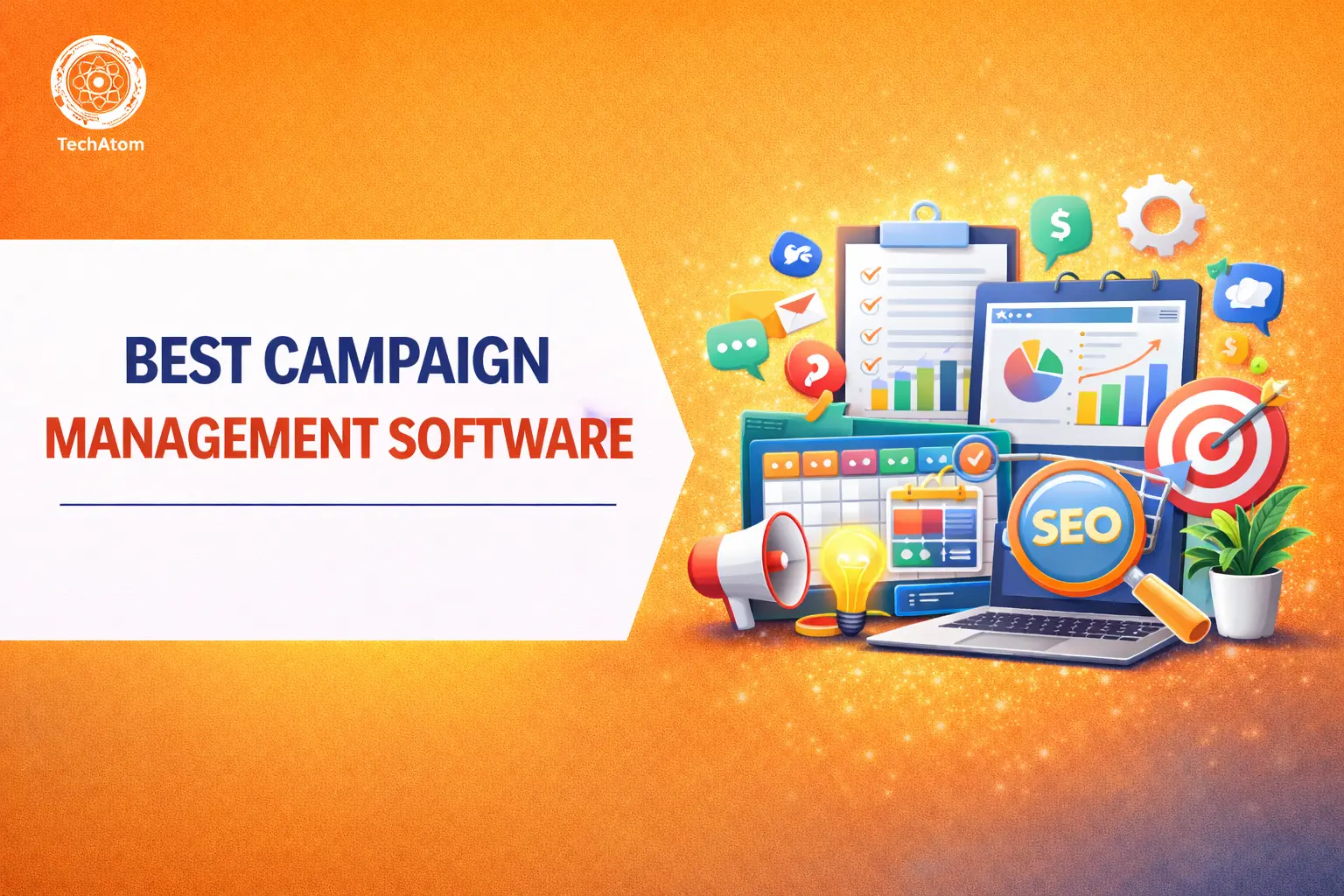

Running a successful marketing campaign in 2026 is no longer just about creative ideas it’s about execution, automation, and real-time optimization. With businesses operating across multiple channels like email, social media, paid ads, CRM systems, and SMS, managing campaigns manually has become nearly impossible.
This is where campaign management software plays a crucial role. These tools help businesses streamline their workflows, automate repetitive processes, and track performance efficiently. Instead of juggling multiple platforms, marketers can manage everything from a centralized system. Based on current industry trends and tool capabilities, businesses that adopt campaign management software see significantly better campaign performance and ROI.
In this detailed guide, you’ll explore the best campaign management software in 2026, along with their features, advantages, limitations, and ideal use cases.
|
Tool |
Best For |
Starting Price |
Key Feature |
|
HubSpot |
All-in-one |
Free / Paid |
CRM + automation |
|
Zapier |
Automation |
$19.99/mo |
App integrations |
|
Trello |
Beginners |
Free |
Kanban boards |
|
Asana |
Teams |
$10.99/mo |
Workflow automation |
|
Hootsuite |
Social media |
$99/mo |
Scheduling + analytics |
|
Mailchimp |
|
Free / $13/mo |
Email automation |
What is Campaign Management Software?
Campaign management software is a digital platform that allows businesses to plan, execute, monitor, and optimize marketing campaigns across different channels.
Instead of using separate tools for email, analytics, and social media, these platforms bring everything together into a unified dashboard. This not only improves efficiency but also ensures better coordination across teams.
These tools typically help with campaign planning, automation, performance tracking, and collaboration making them essential for modern marketing teams.
Why Campaign Management Tools Are Important in 2026
Marketing today is highly data-driven and multi-channel. Without proper tools, businesses often struggle with inefficiencies and missed opportunities.
One of the biggest challenges is managing campaigns across multiple platforms. A single campaign might involve email marketing, social media posts, paid advertisements, and CRM tracking. Handling all of this manually increases the chances of errors and delays.
Another major factor is automation. Modern tools allow businesses to automate tasks like email sequences, lead nurturing, and reporting. This not only saves time but also improves accuracy.
Additionally, campaign tools provide real-time analytics. Marketers can track clicks, conversions, and ROI instantly, allowing them to optimize campaigns quickly.
Finally, collaboration becomes much easier. Teams can assign tasks, track deadlines, and manage resources effectively without confusion.
Benefits of Using Campaign Management Software 2026
Using the best campaign management software in 2026 provides several advantages beyond just organization.
It helps businesses improve efficiency, reduce manual work, and gain better insights into performance. With automation and AI, campaigns become faster, smarter, and more effective.
Key benefits include the following:
- Improved productivity through automation
- Better campaign tracking and analytics
- Centralized data management
- Enhanced team collaboration
- Higher ROI with optimized campaigns
Types of Campaign Management Software
Not all tools serve the same purpose. Understanding different types helps you choose the right one.
- All-in-one platforms combine CRM, automation, and marketing tools in one place. These are ideal for businesses looking for a complete solution.
- Automation tools focus on connecting apps and automating workflows, reducing manual effort.
- Project management tools help teams organize tasks, timelines, and collaboration.
- Social media tools specialize in scheduling, monitoring, and analyzing social campaigns.
- Email marketing tools focus on creating and automating email campaigns.
- SMS tools are designed for mobile-based marketing and customer engagement.
Who Should Use Campaign Management Software?
Campaign management tools are not just for large companies. In fact, businesses of all sizes can benefit from using them.
Small businesses can use tools like Trello or Mailchimp to manage simple campaigns without complexity.
Agencies benefit from platforms like Teamwork.com, which help manage multiple clients, deadlines, and resources efficiently.
Enterprises often rely on advanced tools like HubSpot or ActiveCampaign for full automation, scalability, and deep analytics.
Best Campaign Management Software 2026 (Detailed List)
Below are the top tools, explained in detail with features, pros, and cons to help you choose the right one.
1. Teamwork.com – Best for Agencies
Teamwork.com is a powerful campaign and project management platform designed especially for agencies handling multiple clients. It brings together task management, time tracking, and reporting in one place, making it easier to manage complex campaigns. The platform helps teams stay organized, meet deadlines, and maintain profitability. Its visual dashboards and workload planner make resource management much more efficient.
Key Features:
- Workload and resource management
- Built-in time tracking
- Milestones and reporting dashboards
- Multiple project views (Kanban, Gantt, list)
Pros:
- Excellent for client-based work
- Strong reporting and tracking tools
- Helps manage multiple campaigns efficiently
Cons:
- Slight learning curve for beginners
- Advanced features require higher plans
2. HubSpot – Best All-in-One Tool
HubSpot is an all-in-one platform that combines CRM, marketing automation, and campaign management into a single system. It is widely used for managing leads, running campaigns, and tracking performance across channels. The platform is known for its clean interface and powerful automation features. It is ideal for businesses looking to manage both marketing and sales in one place.
Key Features:
- CRM with marketing automation
- Email campaign management
- AI-powered analytics and reporting
- Lead tracking and segmentation
Pros:
- Complete marketing ecosystem
- Easy to use and scalable
- Strong automation and analytics
Cons:
- Expensive as you scale
- Some features require paid plans
3. Zapier – Best for Automation
Zapier is not a traditional campaign tool but plays a crucial role in automating workflows between different apps. It connects thousands of tools and allows you to automate repetitive tasks like lead capturing, email sending, and reporting. In 2026, its AI capabilities make it even more powerful for campaign automation. It’s best used alongside other campaign tools.
Key Features:
- 8000+ app integrations
- Workflow automation (Zaps)
- AI-based automation triggers
- Real-time data syncing
Pros:
- Saves time by automating tasks
- Highly flexible and customizable
- Works with almost every tool
Cons:
- Not a complete campaign platform
- Can get complex for beginners
4. Trello – Best for Beginners
Trello is a simple and visual project management tool that helps organize campaign tasks using Kanban boards. It is perfect for beginners or small teams who want an easy way to track progress. You can create boards, lists, and cards to manage different stages of your campaigns. Its drag-and-drop interface makes it very intuitive.
Key Features:
- Kanban boards for task tracking
- Checklists and due dates
- Templates for campaigns
- Integration with other tools
Pros:
- Very easy to use
- Free plan available
- Visual and clean interface
Cons:
- Limited advanced features
- Not ideal for complex campaigns
5. Asana – Best for Teams
Asana is a robust project management tool that also works well for campaign management. It allows teams to create workflows, assign tasks, and track progress efficiently. With built-in automation and AI suggestions, it helps improve productivity and streamline campaign execution. It is suitable for both small and large teams.
Key Features:
- Task and workflow management
- Automation rules
- Timeline and calendar views
- AI-powered suggestions
Pros:
- Scalable for growing teams
- Clean and organized interface
- Strong collaboration features
Cons:
- Advanced features are paid
- Can be complex for beginners
6. Hootsuite – Best for Social Media Campaigns
Hootsuite is a leading social media management platform that helps businesses manage campaigns across multiple social channels. It allows you to schedule posts, monitor conversations, and analyze performance from a single dashboard. The platform also includes AI tools for content creation and optimization.
Key Features:
- Social media scheduling
- Social listening tools
- Analytics and reporting
- AI content creation
Pros:
- Supports multiple platforms
- Strong analytics features
- Saves time with scheduling
Cons:
- Expensive for small businesses
- Interface can feel complex
7. Mailchimp – Best for Email Campaigns
Mailchimp is one of the most popular email marketing tools, especially for beginners. It helps businesses design, automate, and track email campaigns easily. The platform also offers audience segmentation and analytics to improve campaign performance.
Key Features:
- Drag-and-drop email builder
- Email automation workflows
- Audience segmentation
- Campaign analytics
Pros:
- Easy to use
- Free plan available
- Great for beginners
Cons:
- Limited features in free plan
- Expensive at scale
8. ActiveCampaign – Best for AI Marketing
ActiveCampaign is known for its strong automation and AI-driven marketing capabilities. It allows businesses to create personalized campaigns based on user behavior. The platform is ideal for email marketing, lead nurturing, and customer journey automation.
Key Features:
- AI-powered email generation
- Automation workflows
- Lead scoring
- CRM integration
Pros:
- Powerful automation
- Advanced personalization
- Strong AI features
Cons:
- Slight learning curve
- Higher cost for advanced plans
9. Brevo – Best for Sales Campaigns
Brevo (formerly Sendinblue) is a multi-channel marketing platform focused on email and SMS campaigns. It provides tools for automation, segmentation, and tracking campaign performance. It is a great choice for businesses focused on sales-driven campaigns.
Key Features:
- Email + SMS campaigns
- Automation workflows
- Predictive sending
- Analytics dashboard
Pros:
- Affordable pricing
- Multi-channel support
- Easy to use
Cons:
- Limited advanced integrations
- Basic reporting features
10. Pipedrive – Best for Sales Teams
Pipedrive is a sales-focused CRM that helps teams manage leads and track campaign performance. Its simple interface and AI assistant make it easy to use for small businesses. It is best suited for sales-driven campaigns.
Key Features:
- Sales pipeline tracking
- AI sales assistant
- Email integration
- Reporting dashboards
Pros:
- Easy to use
- Great for sales teams
- Affordable
Cons:
- Limited marketing features
- Advanced features cost extra
11. Vtiger – Best Budget CRM
Vtiger is a cost-effective CRM that offers campaign management features for small businesses. It supports multiple campaign types, including email and social media. It is a great alternative to expensive CRM tools.
Key Features:
- CRM + campaign management
- Email and SMS campaigns
- Automation tools
- Reporting
Pros:
- Budget-friendly
- Good feature set
- Multi-channel support
Cons:
- UI can feel cluttered
- Limited advanced features
12. Planable – Best for Collaboration
Planable is designed for teams working on social media campaigns. It allows real-time collaboration, content approval, and post previews before publishing. It is ideal for agencies and marketing teams.
Key Features:
- Content calendar
- Real-time collaboration
- Post previews
- Approval workflows
Pros:
- Great for team collaboration
- Easy content planning
- Visual interface
Cons:
- Limited beyond social media
- Post limits in free plan
13. Buffer – Best for Content Planning
Buffer is a simple tool for scheduling and managing social media content. It helps maintain consistency and track performance. It is best for small businesses and creators.
Key Features:
- Post scheduling
- Content calendar
- Analytics
- AI content ideas
Pros:
- Easy to use
- Affordable
- Clean interface
Cons:
- Limited advanced features
- Not a full campaign tool
14. Textedly – Affordable SMS Tool
Textedly is a budget-friendly SMS marketing platform that allows businesses to send bulk messages and manage campaigns easily. It is useful for promotions and customer engagement.
Key Features:
- Bulk SMS campaigns
- Automation
- Contact management
- Custom forms
Pros:
- Affordable pricing
- Easy setup
- Good for small businesses
Cons:
- Limited features
- Editing contacts can be difficult
15. SlickText – Best for Engagement
SlickText focuses on SMS engagement and customer interaction. It offers tools like opt-ins, tagging, and automation to improve communication. It is ideal for businesses focusing on mobile marketing.
Key Features:
- SMS automation
- QR code opt-ins
- Audience segmentation
- Analytics
Pros:
- Strong engagement features
- Easy to use
- Good automation
Cons:
- Expensive for teams
Limited tracking features
Best Tools by Use Case
Choosing the right tool depends on your needs rather than just popularity.
For beginners, tools like Trello and Mailchimp are simple and effective. Agencies benefit more from Teamwork.com due to its project-focused features. If automation is your priority, Zapier is unmatched.
For social media campaigns, Hootsuite stands out, while Mailchimp and Brevo are better for email marketing.
How to Choose the Right Campaign Management Software
- Selecting the right software depends on your business goals and campaign requirements.
- Start by identifying your primary campaign type. If your focus is email marketing, choose a dedicated email tool. For social media, go with a specialized platform.
- Next, consider your budget. Many tools offer free plans, but advanced features often require paid subscriptions.
- You should also evaluate features like automation, analytics, and integrations. A good tool should not only meet your current needs but also scale with your business
AI Trends in Campaign Management (2026)
AI is transforming campaign management in several ways. From generating content to predicting user behavior, AI helps businesses run smarter campaigns.
Modern tools now offer:
- AI-generated content
- Predictive analytics
- Smart automation
- Personalized marketing
Tools like ActiveCampaign and Zapier are leading this transformation.
Common Mistakes to Avoid
- Many businesses fail to get the most out of campaign tools due to common mistakes.
- One major issue is using too many tools without proper integration. This creates confusion and inefficiency.
- Another mistake is ignoring automation. Manual processes slow down campaigns and increase errors.
- Finally, not tracking ROI can lead to poor decision-making. Always rely on data.
Conclusion
The best campaign management software 2026 is essential for businesses that want to stay competitive in today’s fast-paced digital landscape. With increasing complexity in marketing, these tools help businesses stay organized, efficient, and competitive.
The best tool depends on your needs. If you want automation, go with Zapier. For an all-in-one solution, HubSpot is a strong choice. Beginners can start with Trello.
Choosing the right platform can significantly improve your campaign performance and overall business growth. If you’re just starting out, begin with a free tool like Trello or Mailchimp and scale as your campaigns grow.
Frequently Asked Questions
1. What is the best campaign management software in 2026?
HubSpot, Zapier, and Teamwork.com are among the top choices.
2. Are free tools available?
Yes, tools like Trello and Mailchimp offer free plans.
3. Which tool is best for beginners?
Trello is the easiest to use and great for starting out.
4. Which campaign management software is best for small businesses?
Trello, Mailchimp, and Brevo are great options for small businesses due to their affordability and ease of use.
5. Is campaign management software worth it?
Yes, it saves time, improves efficiency, and helps track performance, making it essential for modern marketing.
6. Can I use multiple campaign tools together?
Yes, many businesses combine tools like Zapier with CRM or email platforms for better automation.