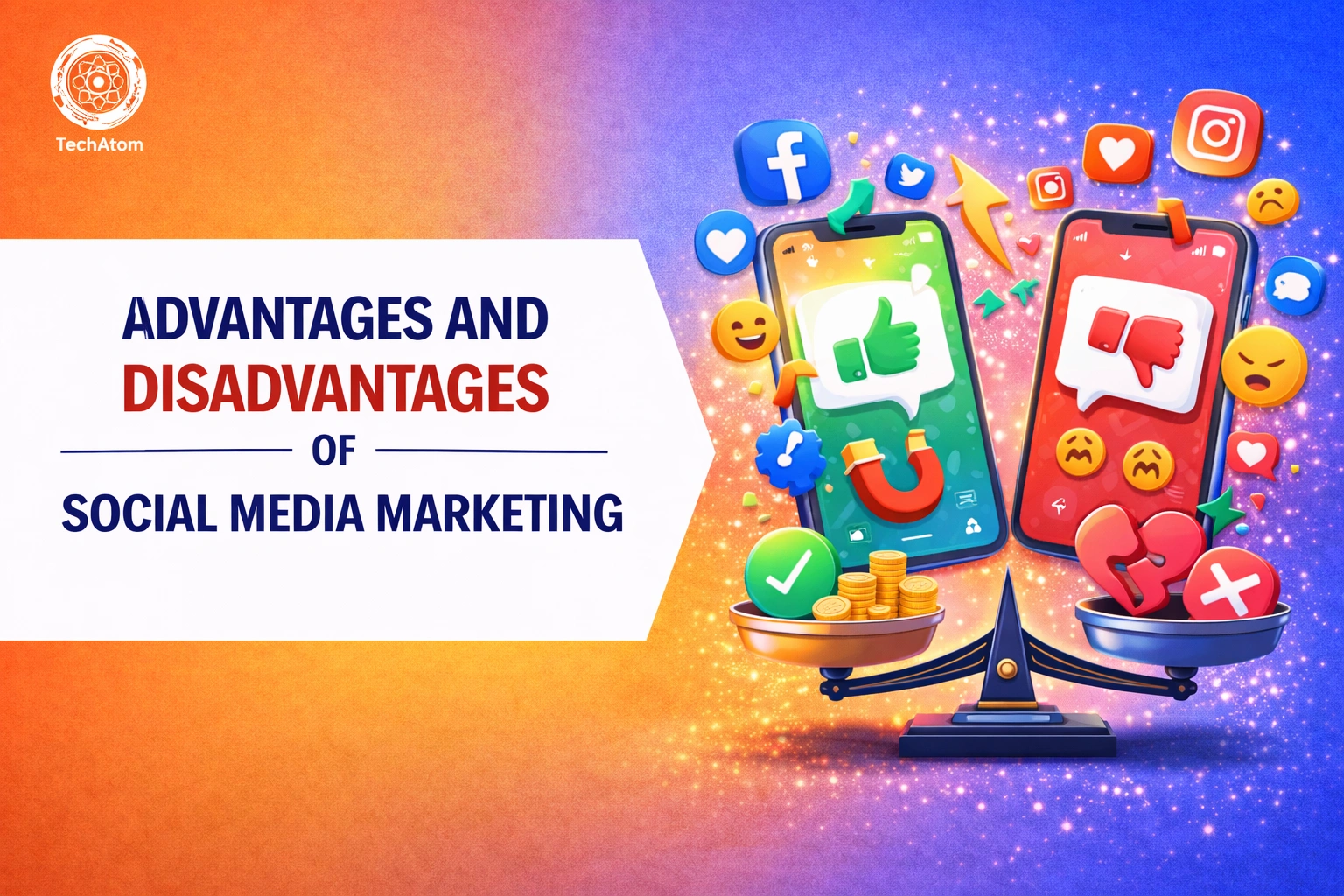
In today’s fast-moving digital world, social media has become much more than just a platform for sharing photos or staying in touch with friends. It has evolved into a powerful marketing tool that businesses of all sizes are using to connect with their audience, build their brand, and drive sales.
From startups to global companies, everyone is investing time and effort into social media marketing because of the massive opportunities it offers. However, while it brings many benefits, it also comes with certain challenges that cannot be ignored.
This article gives you a complete understanding of social media marketing, including its meaning, importance, advantages, disadvantages, and what the future holds.
What is Social Media Marketing?
Social Media Marketing (SMM) is the process of promoting a business, product, or service using platforms like Instagram, Facebook, TikTok, LinkedIn, and YouTube. It involves creating and sharing valuable content that attracts, informs, and engages users.
This content can include posts, images, videos, stories, reels, live sessions, and paid advertisements. The goal is to reach the right audience at the right time and build a strong connection with them.
Over time, social media marketing has become more strategic. It is no longer just about posting content but about understanding audience behavior, analyzing performance, and continuously improving results.
Example: Nike uses Instagram to showcase inspiring sports content and interactive campaigns, while Starbucks leverages user-generated content to boost brand engagement globally.
Why is Social Media Marketing Important?
Social media marketing is important because it allows businesses to connect with their audience where they already spend most of their time. It not only increases visibility but also builds strong relationships with customers and supports overall business growth.
With the right strategy, businesses can promote their products, engage users, and achieve their marketing goals more effectively.
Key reasons why social media marketing is important:
- Reaches a large and active audience
- Builds brand awareness and online presence
- Helps connect and engage directly with customers
- Drives website traffic and generates leads
- Supports sales growth and business expansion
- Provides real-time insights and performance tracking
- Helps understand customer needs and behavior
- Cost-effective compared to traditional marketing
Actionable Tip: Focus on platforms where your target audience is most active and create content that speaks directly to their interests and pain points.
Primary Objectives and Uses of Social Media Marketing
Every business uses social media with specific goals in mind. These goals may vary, but the overall purpose is to grow and strengthen the business.
Some of the key objectives include:
- Building strong brand awareness so that more people recognize and trust the brand
- Generating leads by attracting interested users
- Increasing website traffic through engaging content and links
- Boosting sales by promoting products and services
- Engaging with customers through comments, messages, and interactive content
- Providing customer support quickly and efficiently
- Creating a community of loyal followers
Social media is also used for market research, competitor analysis, and understanding customer preferences.
Top 11 Advantages of Social Media
Social media marketing offers numerous benefits that make it one of the most preferred marketing strategies today. With real data and trends, it becomes even clearer why businesses rely heavily on it.
1. Cost-Effective Marketing
Social media is one of the most affordable marketing channels available today. Businesses can start promotions with minimal investment and run paid advertising campaigns at a fraction of the cost of traditional media like TV or print ads. In 2026, social media advertising is projected to account for over 33% of all digital ad spend worldwide, indicating a major shift in where brands are investing money. This cost advantage makes it accessible for small businesses and startups to compete with larger brands.
2. Massive Global Reach
Social media platforms provide access to an enormous global audience without geographic limitations. As of 2026, there are approximately 5.66 billion social media users, which means over 70% of the world’s population is reachable through social networks. This massive audience allows businesses to expand beyond local markets and connect with international customers. For brands looking to scale, social media offers a platform where global visibility is achievable with consistent effort.
3. Increased Brand Awareness
People spend a significant part of their day online, and the average person now spends about 2 hours and 40 minutes daily on social platforms. This level of engagement gives brands repeated opportunities to be seen by potential customers. By posting regularly, businesses can stay top‑of‑mind and ensure that users recognize and remember their brand when making purchase decisions. Brand visibility increases trust and makes it easier for users to choose a business over competitors.
4. Enhanced Customer Engagement
Social media allows direct and immediate interaction between businesses and their audiences, creating meaningful two‑way conversations. Unlike traditional advertising, users can comment, share, and react to content instantly, which creates higher levels of engagement. Engagement helps build community and loyalty, especially when customers feel heard and valued. Higher interaction often leads to increased trust, stronger customer relationships, and more user‑generated recommendations.
5. Advanced Targeted Advertising
Platforms such as Facebook, Instagram, and TikTok offer sophisticated targeting options that allow brands to reach users based on demographics, interests, behaviors, and online activity. This makes marketing more efficient because ads are shown to people who are most likely to be interested in the product. Targeted ads improve conversion rates by reducing wasted impressions and focusing budget on quality leads. For example, businesses can target users who have visited their website or shown interest in similar products.
6. Increased Website Traffic and Leads
Social media acts as a major driver of website visitors when links to blog posts, product pages, or special offers are shared with followers. Many businesses report that social media is one of their top referral sources of traffic. The more compelling the content, the higher the click‑through rate, which can lead to increased conversions and sales. Social platforms also support call‑to‑action buttons that make it easier for users to take the next step, such as “Buy Now” or “Learn More.”
7. Better Brand Loyalty and Trust
When customers interact with a brand consistently on social media, they begin to feel a stronger connection and trust toward it. Responding to comments and addressing customer concerns quickly helps brands appear reliable and approachable. Today’s customers often check social profiles before buying, and positive interactions can influence purchase decisions. Loyal followers are also more likely to become repeat customers and recommend the brand to others.
8. Real‑Time Analytics and Insights
One of the great advantages of social media marketing is the ability to track campaign performance in real time. Most platforms provide detailed analytics such as impressions, engagement, click‑through rates, and conversion data. This data helps marketers understand what works and what doesn’t so they can adjust strategies quickly. Real‑time insights make it easier to optimize content, improve ad targeting, and achieve better results with each campaign.
9. Higher Engagement Through Rich Content
Engaging content such as short‑form videos, stories, and interactive posts consistently performs better and keeps audiences interested. Platforms like Instagram, TikTok, and YouTube Shorts have shown that video content often receives more engagement than static posts. Because users prefer visually engaging formats, brands that focus on creative content can significantly increase visibility and user interaction. Rich content also encourages sharing, which amplifies reach organically.
10. Competitive Advantage
Many successful brands are already using social media to connect with customers, build community, and drive sales. According to recent industry trends, over 80% of marketing leaders plan to increase their social media budgets in the coming year, showing confidence in its effectiveness. Being active and responsive on social platforms helps brands stay ahead of competitors who may be less consistent or less engaging. A strong social presence also makes it easier to capture audience attention before competitors do.
11. Supports Overall Marketing Strategy
Social media does not work in isolation but it complements other digital marketing channels such as SEO, email marketing, and content marketing. For example, over 73% of internet users research products on social media before making a purchase, indicating its impact on the customer journey. Social content also improves SEO by driving traffic and increasing visibility. It ties together various marketing efforts, creating a unified and effective growth strategy.
Tools Tip: Platforms like Hootsuite, Buffer, Canva, Sprout Social, and Meta Business Suite help manage content, analytics, and engagement effectively.
Top 7 Disadvantages of Social Media
While social media offers many benefits, it also comes with challenges that can affect businesses and users if not managed strategically. Understanding these drawbacks helps you prepare better and avoid common pitfalls.
1. Time‑Consuming Effort
Effective social media marketing demands consistent content creation, posting, and engagement. Managing multiple platforms, responding to comments, and tracking performance can take significant time. Small teams or solo marketers often find it challenging to maintain quality and consistency without dedicated resources.
2. Negative Feedback and Public Criticism
Social media is a public space, which means unhappy customers can share negative reviews or complaints for everyone to see. When negative comments spread quickly, they can harm brand reputation if not addressed promptly. Handling criticism professionally and transparently is crucial, but many businesses struggle with this in real time.
3. Requires Consistency and Commitment
Inconsistent posting leads to lower visibility and reduced engagement, as social media platforms tend to reward regular activity. Brands that go long periods without meaningful content often lose followers or fail to stay relevant. Consistency, therefore, requires ongoing planning and creative effort to keep audiences interested.
4. Algorithm Dependency
Social networks continuously update their algorithms, which can change how many followers actually see your content. Even high‑quality posts may receive lower reach if the algorithm shifts. This makes it difficult for marketers to rely solely on organic engagement, pushing many to invest more in paid promotions.
5. Difficulty in Measuring Exact ROI
Although social media platforms offer metrics, linking them directly to revenue or business growth can be challenging. For example, likes and comments don’t always translate to real conversions or sales. Businesses often need advanced tools and strategies to measure the actual impact, which adds complexity and cost.
6. Risk of Overposting and Audience Fatigue
Posting too frequently or sharing irrelevant content can overwhelm followers and lead to reduced engagement. Users may unfollow brands that appear too often or seem overly promotional. Balancing frequency with quality is essential, but many businesses struggle to strike the right tone.
7. Security and Privacy Concerns
Social media accounts can be vulnerable to hacking, phishing, or unauthorized access if not properly secured. Data breaches and privacy issues have affected major brands, causing customer distrust and legal concerns. Protecting sensitive information requires strong security measures, which not all businesses are prepared for.
Tips to Overcome Disadvantages: Use social media management tools, maintain a content calendar, and monitor analytics to balance posting frequency and measure ROI accurately.
Advantages vs Disadvantages (Quick Comparison Table)
|
Advantages |
Disadvantages |
|
Low cost and high reach |
Requires time and effort |
|
Builds strong brand awareness |
Negative feedback risk |
|
Direct communication |
Needs regular posting |
|
Targeted audience reach |
Algorithm dependency |
|
Drives traffic and sales |
Hard to measure exact ROI |
|
Improves customer relationships |
Risk of overposting |
|
Supports business growth |
Security issues |
Future Of Social Media In 2026 And Beyond
The future of social media is going to be more advanced, personalized, and technology-driven. Businesses will need to adapt quickly to stay ahead in the competition.
With the rise of new technologies, social media platforms are becoming smarter and more user-focused. Content will be more interactive, and user experience will play a major role in success.
Brands that focus on authenticity, creativity, and value-driven content will perform better in the long run.
Key Trends Defining the Future of Social Media
Here are some major trends that will shape the future of social media marketing:
- Rise of Short-Form Videos: Short videos will continue to dominate as users prefer quick and engaging content.
- Growth of Influencer Marketing: Influencers will play a bigger role in building trust and promoting products.
- Artificial Intelligence Integration: AI tools will help in content creation, customer support, and personalized marketing.
- Expansion of Social Commerce: Users will increasingly shop directly through social media platforms.
- Focus on Authentic Content: People are more likely to connect with real and relatable content rather than overly polished ads.
- Increased Importance of Data Privacy: Stronger privacy rules will require businesses to be more transparent and responsible.
- Community-Based Marketing: Brands will focus more on building communities rather than just gaining followers.
Actionable Tip: Start experimenting with short-form video campaigns, monitor engagement, and use insights to refine your strategy for long-term results.
Conclusion
Social media marketing has become an essential tool for businesses to connect with audiences, build brand awareness, and drive growth. While it offers numerous advantages such as cost-effectiveness, global reach, and enhanced engagement, it also comes with challenges like time demands, negative feedback, and security concerns.
By understanding both the benefits and drawbacks, businesses can create strategies that maximize results while minimizing risks. Staying consistent, engaging authentically, and adapting to trends will ensure social media remains a powerful driver of long-term success.
Frequently Asked Questions
1. What is social media marketing?
Social media marketing is promoting a business through platforms like Instagram, Facebook, and TikTok. It helps increase brand awareness, drive traffic, and engage customers through posts, videos, and ads.
2. Which platforms are best for marketing?
It depends on your audience:
- Instagram & TikTok - visual content for younger users
- Facebook - wide reach across demographics
- LinkedIn - B2B and professional services
- YouTube - long-form videos and tutorials
3. How much does social media marketing cost?
You can start for free with organic posts. Paid ads vary by platform and target audience, but even small budgets of a few hundred dollars per month can deliver meaningful results.
4. How long until I see results?
Some engagement or website traffic can appear in weeks, but significant growth, leads, or sales usually take a few months of consistent posting and strategy adjustments.
5. How do I measure success?
Track metrics like engagement (likes, comments, shares), reach, clicks, leads, and conversions. Using platform analytics or tools helps improve campaigns and measure ROI effectively.
People are also reading: